Best Hair Color for Professional Women Over 35
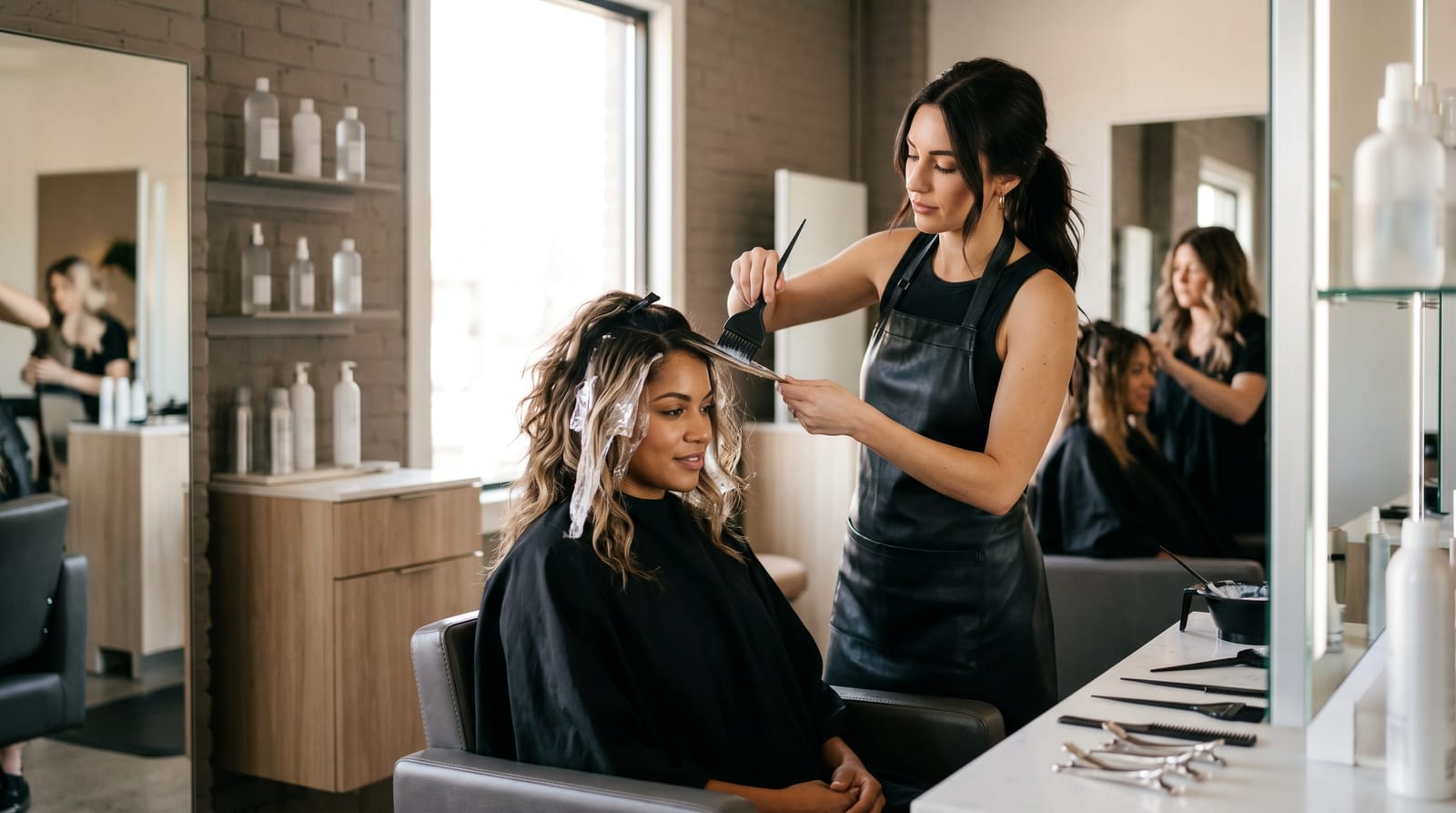
Choosing the right hair color after 35 is about more than covering grays: it's about looking polished, confident, and effortlessly put-together in every boardroom, client meeting, and professional setting. As part of our broader conversation about balayage and professional hair coloring services, this guide focuses specifically on color choices that serve career-driven women: flattering for mature skin tones, forgiving as they grow out, and stunning in professional environments.
Why Hair Color Decisions Change After 35
Skin tone shifts significantly in your mid-thirties and beyond. Melanin production slows, collagen decreases, and the warm, rosy undertones many women enjoyed in their twenties often give way to cooler, more sallow, or ashy complexions. Hair color that looked vibrant at 25 can appear harsh or aging at 40, not because you've changed, but because the relationship between your hair, skin, and light has evolved.
Professionally, the stakes are different too. Overly trendy colors, think vivid fashion shades or heavy, blocky highlights, can read as distracting in conservative industries like law, finance, or corporate management. Meanwhile, color that looks flat, brassy, or visibly grown-out signals a lack of attention to detail. The goal is hair that looks deliberately beautiful and perpetually well-maintained.
The good news: the most flattering, low-maintenance professional color techniques for women over 35 are also the most sophisticated. Balayage, dimensional color, and soft highlights are not compromise options: they're the gold standard for this demographic, and for good reason.
The Most Flattering Color Choices for Professional Women
Dimensional Brunettes and Warm Caramel Tones
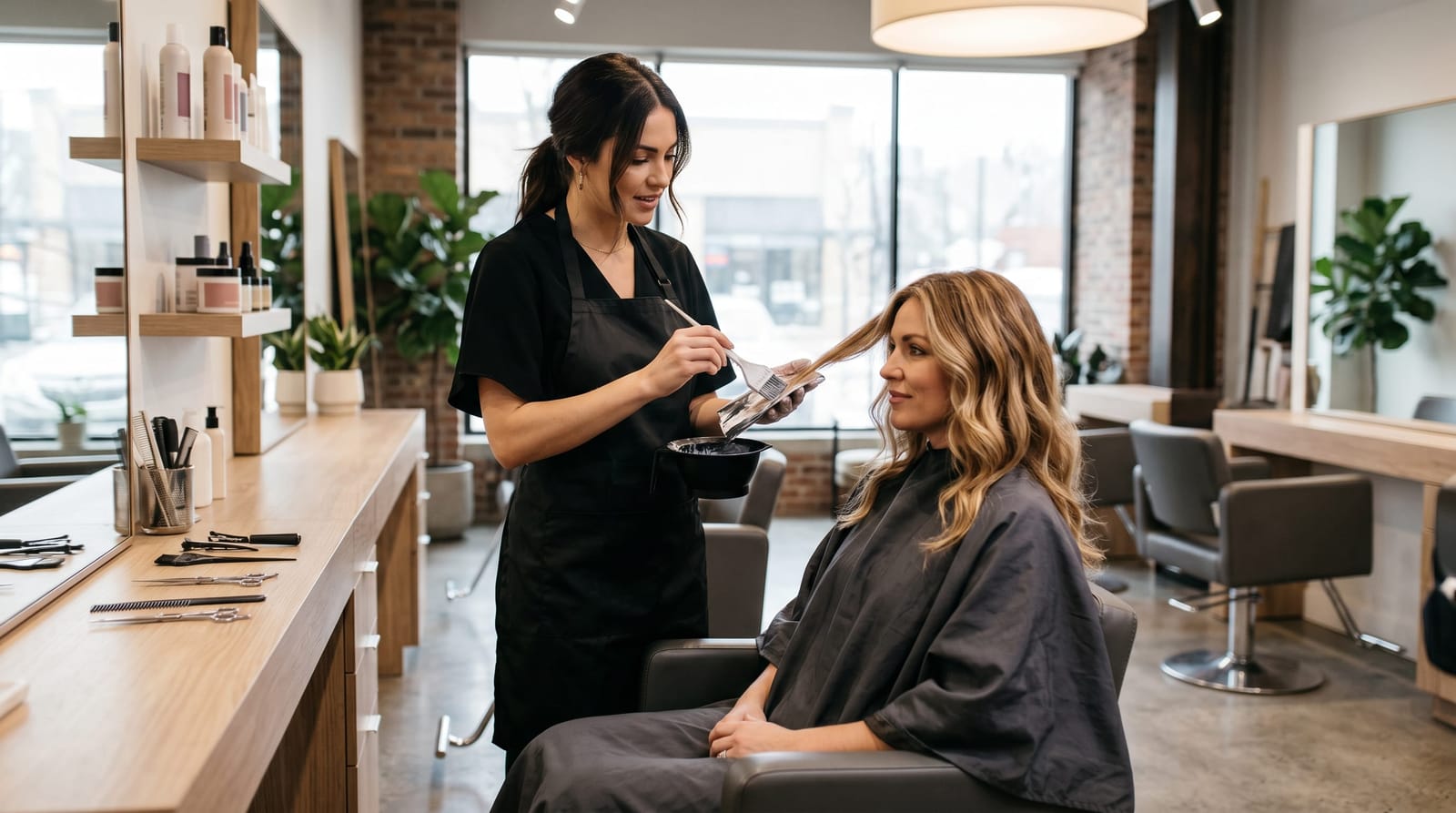
For women with medium to dark brown base hair, adding warm caramel, chestnut, or butterscotch highlights creates immediate dimension without dramatic contrast. These tones work brilliantly because they mimic natural sun-kissed color, making the overall look appear youthful without screaming "highlighted." Warm brunette shades are particularly effective for women with olive or warm-neutral skin tones who find cooler colors wash them out.
The key is avoiding single-tone, flat color application. A rich, multidimensional brunette with subtle lighter pieces framing the face adds life and warmth that flat box color simply cannot replicate. This is exactly why professional salon techniques produce results that at-home options, regardless of brand quality, struggle to match.
Soft Blondes: Champagne, Beige, and Sandy Tones
For naturally lighter-haired women or those transitioning from medium blonde, the post-35 sweet spot lies in muted, sophisticated blonde families: champagne blonde, beige blonde, and warm sandy tones. These shades complement changing skin tones far more gracefully than the icy platinum or stark golden blondes that dominated earlier decades.
Champagne and beige blondes are particularly forgiving at the root line, making them ideal for professional women who cannot commit to six-week touch-up schedules. A well-executed balayage in these tones can look intentional and refined at 12 to 16 weeks of growth, which is a genuine lifestyle advantage for busy executives and entrepreneurs.
Graceful Gray Integration
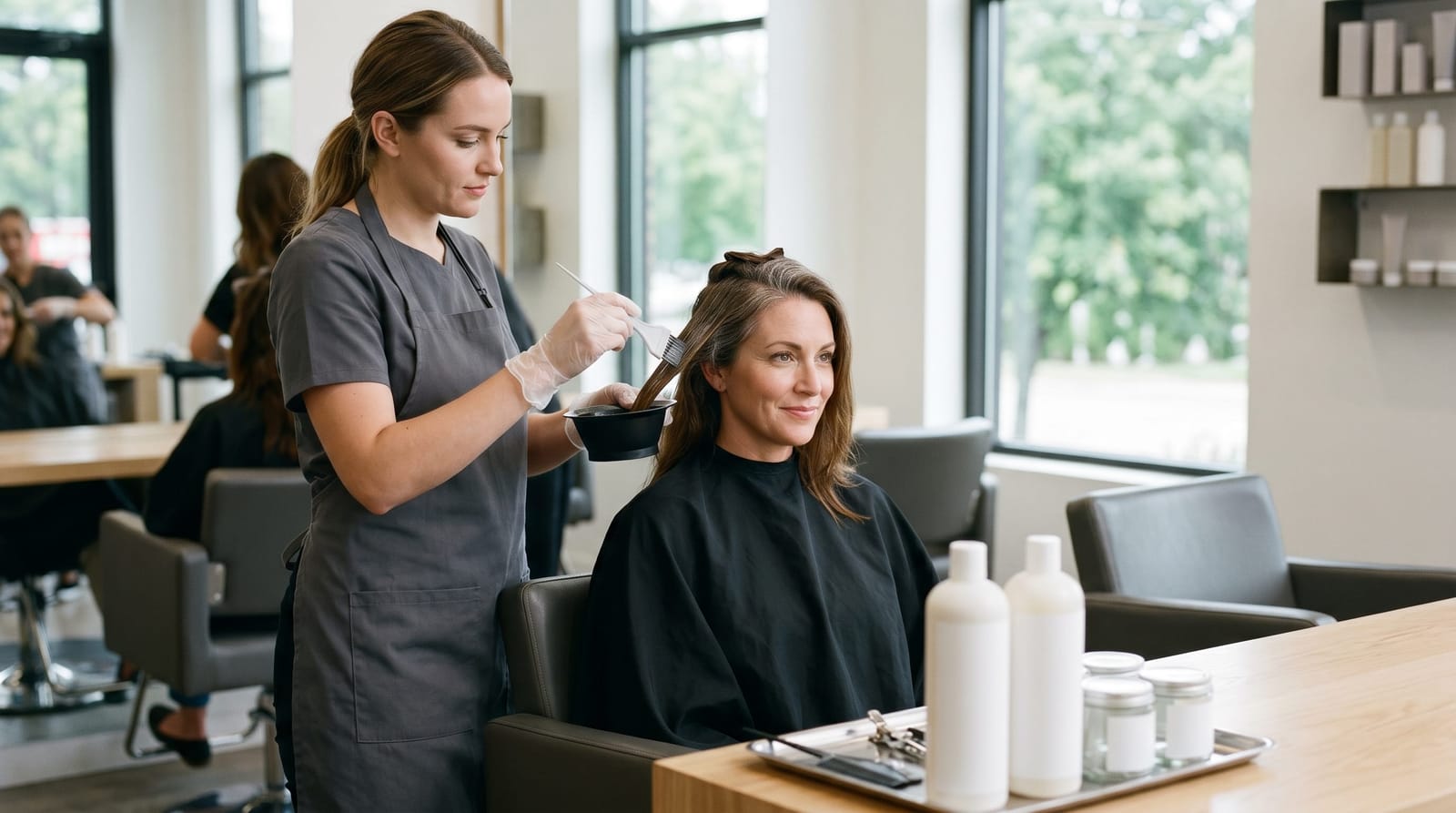
Gray blending has become one of the most requested services among professional women over 35, and rightfully so. Rather than fighting gray hair with aggressive all-over color (which requires constant maintenance and can damage aging hair), gray blending techniques weave natural silver and gray tones into a cohesive, intentional color story. The result is sophisticated, low-maintenance, and increasingly recognized as a power aesthetic in professional spaces.
Whether you're 30% gray or 70% gray, a skilled colorist can blend your natural silver into highlights, babylights, or a softly graduated balayage that eliminates the hard demarcation line between colored and natural growth. This approach dramatically reduces salon visits while maintaining a polished, expensive-looking result.
Low-Maintenance Color Techniques That Suit Busy Professionals
Maintenance is arguably the most important factor for professional women choosing hair color. A color that requires touch-ups every four to six weeks is a significant time and financial commitment, and when life gets busy, a neglected color grows out in ways that look far more obvious than well-planned low-maintenance color.
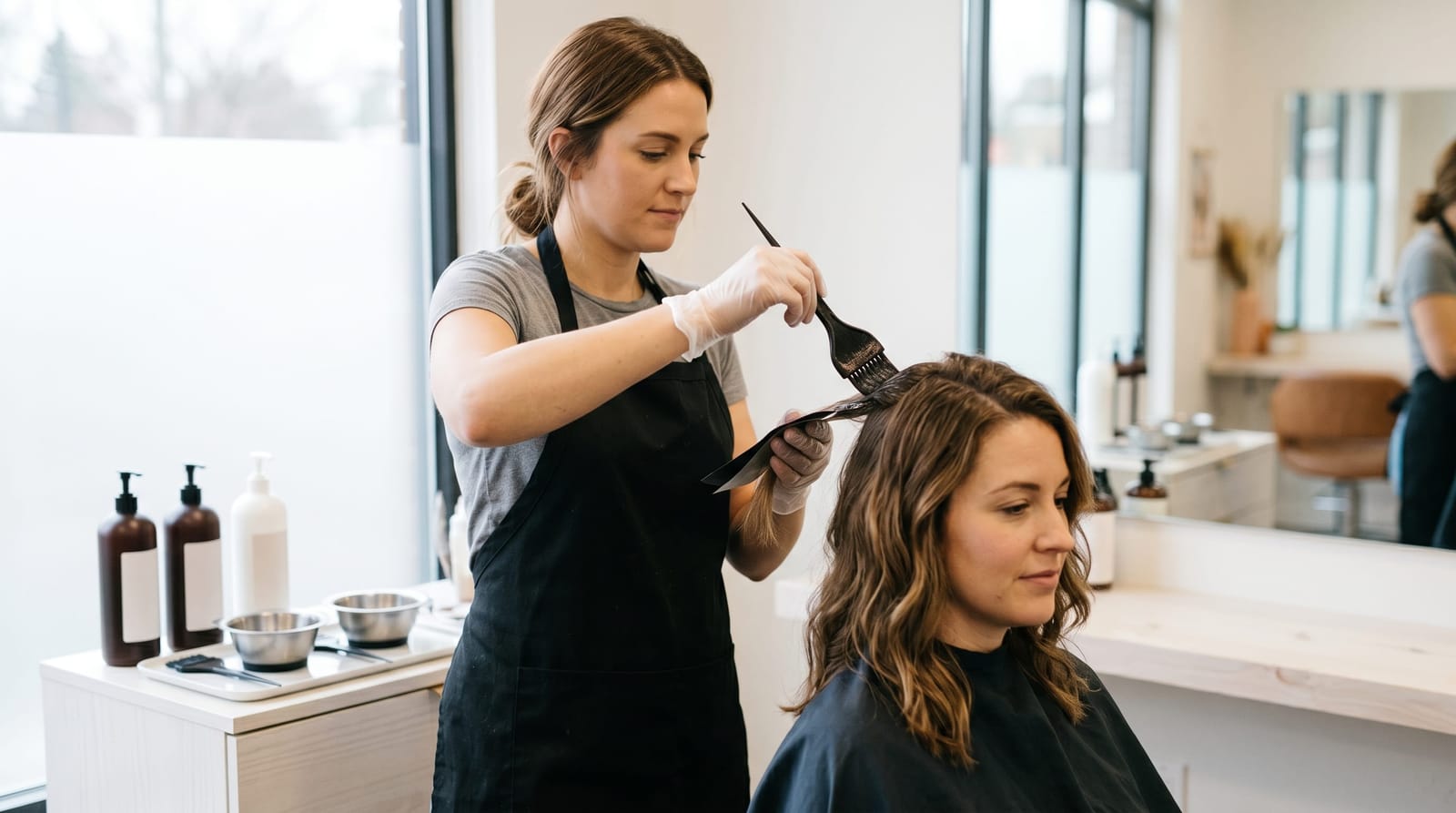
Balayage remains the gold standard for low-maintenance professional color because the freehand application technique naturally avoids harsh lines at the root. When a balayage grows out, it simply looks like hair, not like a color that's overdue for a salon visit. For professional women, this translates to genuine flexibility: a premium balayage treatment every 12 to 16 weeks versus single-process root touch-ups every 4 to 6 weeks.
Understanding the difference between color application methods matters here. When weighing your options, it helps to understand single process vs double process color, because double process techniques, while capable of dramatic results, carry higher maintenance demands and more significant upkeep costs over time.
Additional low-maintenance approaches include:
- Babylights: Ultra-fine, delicate highlights that mimic natural childhood hair color: virtually seamless at the root and incredibly natural-looking
- Root smudging: A technique that softens and blurs the transition between natural roots and colored lengths, extending the life of any color service by weeks
- Gloss treatments: Semi-permanent toning services that refresh color vibrancy and add shine between full color appointments
Colors to Approach with Caution in Professional Settings
This isn't about restricting self-expression: it's about strategic choices in environments where perception influences outcomes. Certain color directions, while beautiful, come with practical considerations for professional women:
- Very high-contrast highlights: Heavy, chunky highlights with stark light-to-dark contrast can look dated and require frequent maintenance to avoid harsh regrowth lines
- Ultra-cool ashy tones without warmth: While ash tones are sophisticated, going too cool, particularly with yellow or pink undertones in the skin, can create a tired, washed-out appearance
- Vivid or fashion colors: Deep reds, copper, and burgundy can absolutely work in professional settings when executed subtly, but vivid blues, greens, or intense fashion shades may not align with certain industry cultures
- Overly dark all-over color: Very dark, flat single-process color on mature skin tones can emphasize lines and shadows rather than softening them
The common thread: choose color with dimension, softness, and a natural growth pattern in mind, and you'll almost always land in the right place professionally.
Frequently Asked Questions
What hair color makes women over 35 look younger?
Warm, dimensional color tends to be the most universally flattering. Caramel balayage, soft honey highlights, and warm brunette tones add light and vibrancy to the face in ways that flat or very cool-toned color doesn't. Face-framing highlights, lighter pieces placed specifically around the hairline, are particularly effective at brightening the complexion and softening the overall appearance.
How often do professional women need hair color touch-ups?
It depends entirely on the technique. Traditional single-process root color typically requires touch-ups every 4 to 6 weeks. Well-executed balayage or babylights, on the other hand, can last 12 to 16 weeks before needing a refresh. For busy professional women, investing in a higher-cost balayage service upfront often results in lower annual maintenance time and comparable or better annual cost than frequent single-process appointments.
Is balayage appropriate for professional work environments?
Absolutely: balayage is one of the most professionally appropriate color techniques available because it produces natural, dimensional results that read as polished rather than heavily processed. In conservative industries, opt for subtle, tonal balayage in shades close to your natural base. In creative or client-facing industries, you have far more latitude with contrast and dimension.
What's the best color approach for women embracing their gray hair?
Gray blending is the most sophisticated approach for women with noticeable gray growth who want to look intentional rather than neglected. A colorist can use techniques like highlights, lowlights, and toning glosses to integrate natural gray into a cohesive, elegant color palette. The goal is to make gray hair look like a deliberate, beautiful choice, because at its best, it absolutely is.
Choosing Color That Works for Your Life and Career
The best hair color for professional women over 35 isn't defined by a single shade: it's defined by the principles of dimension, wearability, and a grow-out pattern that keeps you looking polished between appointments. Warm balayage, soft highlights, and thoughtfully blended grays consistently deliver the most flattering, career-appropriate results for women navigating demanding professional and personal lives.
At Substance Salon in Montclair, NJ, our colorists specialize in precisely these kinds of nuanced, personalized color decisions. A thorough consultation: covering your skin tone, lifestyle, maintenance preferences, and professional context: is the foundation of every exceptional color result. If you're ready to explore what's possible, we'd love to talk through your options.