Best Men's Haircuts for Thinning Hair
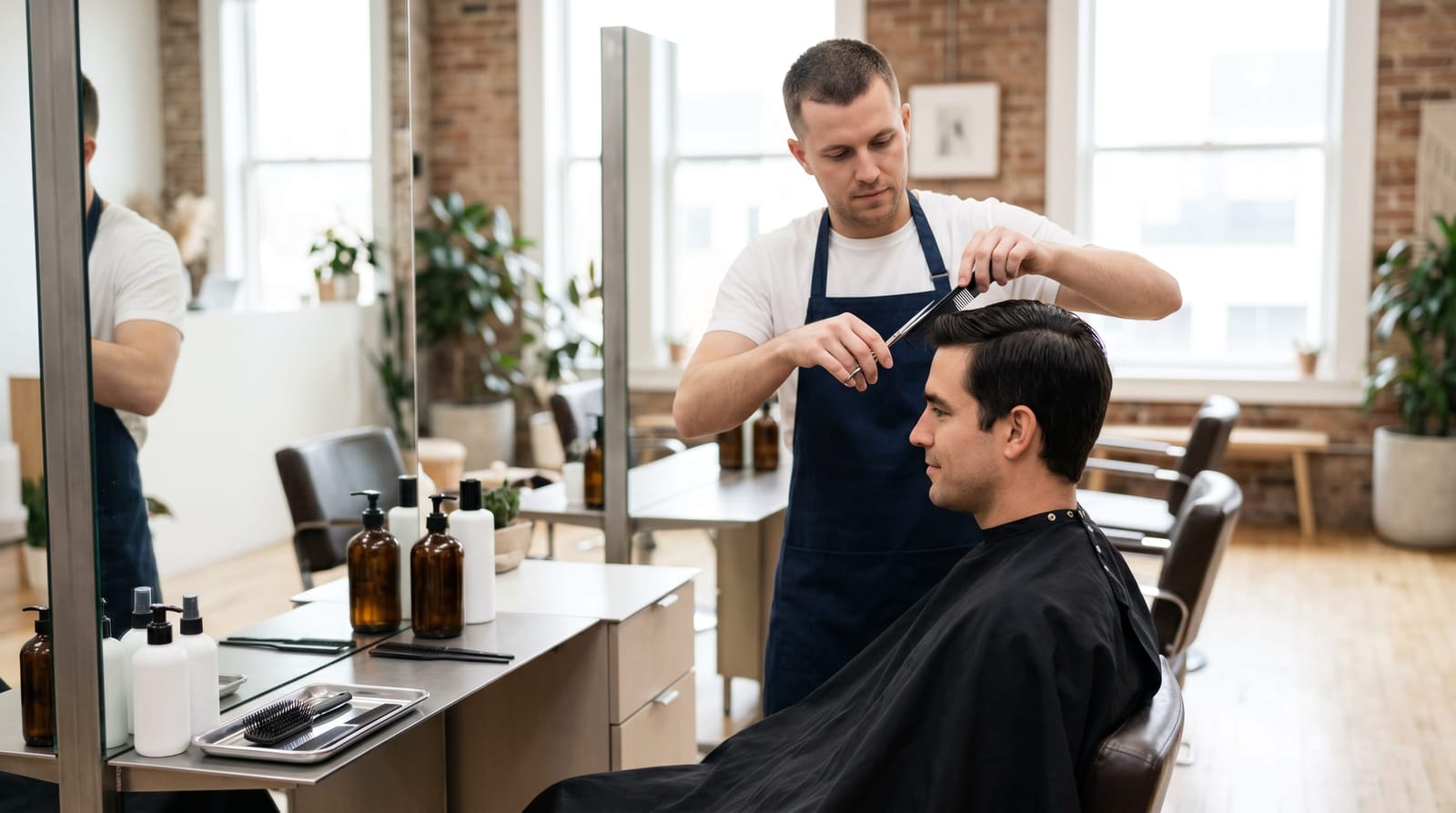
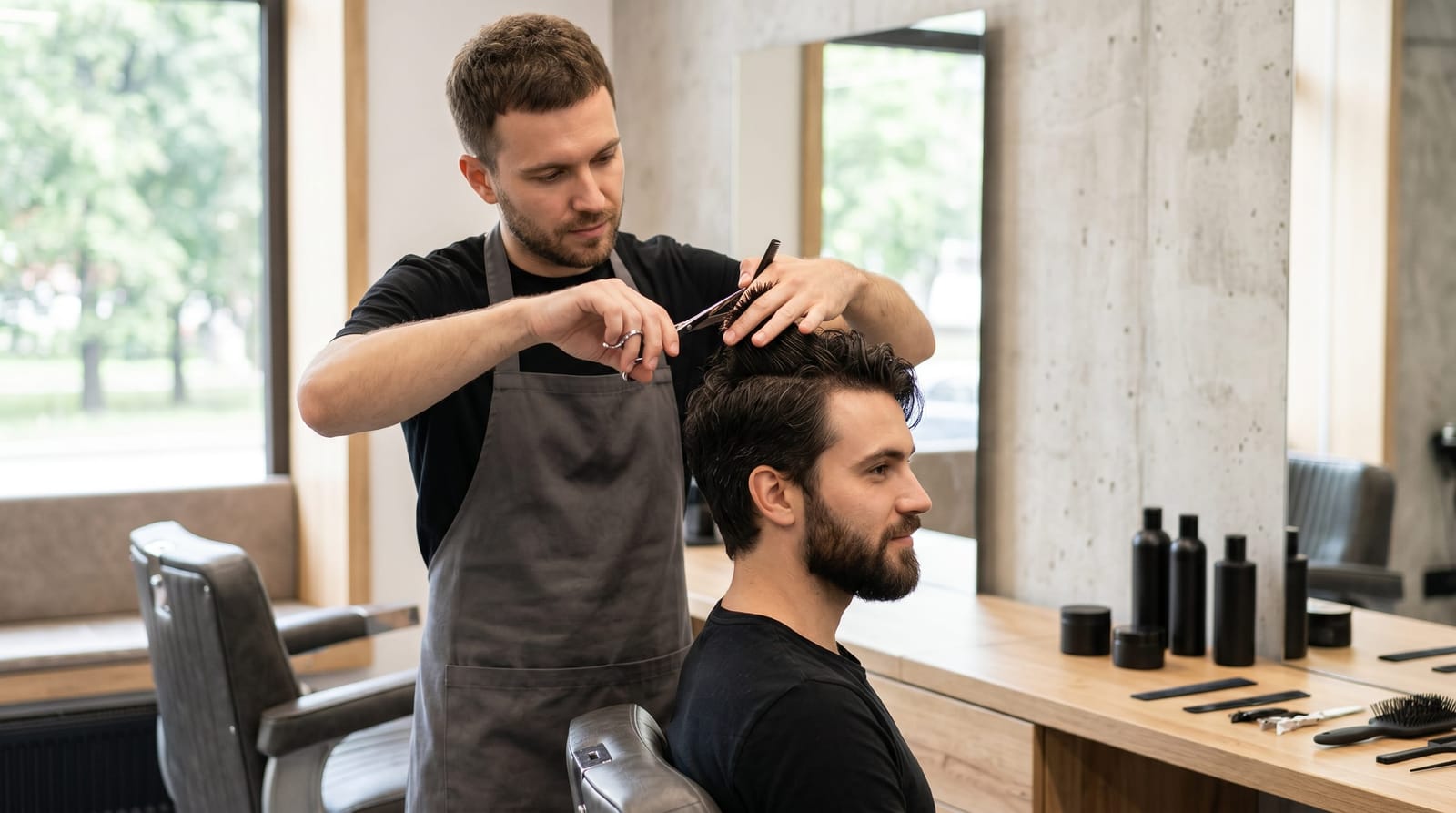
Thinning hair affects roughly 85% of men by age 50, and nearly 25% begin noticing significant hair loss before they turn 21. Yet one of the most overlooked solutions isn't a pill or a serum: it's simply getting the right haircut. When it comes to the best men's haircuts for thinning hair, the goal is choosing styles that work with your hair's natural density rather than fighting against it. Whether you're visiting a professional men's haircut salon in Montclair NJ or exploring your options for the first time, this guide will walk you through the cuts and strategies that genuinely make a difference.
Why the Right Haircut Matters More Than You Think
Hair loss can feel discouraging, but the right cut can visually restore fullness and completely change how your hair, and you, present to the world. The key insight that professional stylists rely on is this: length is the enemy of thinning hair. Longer strands weigh hair down, making sparse areas appear flatter and more noticeable. Shorter, well-structured cuts, on the other hand, create the illusion of density by maximizing the volume of each strand relative to the scalp.
According to hair care professionals, men who switch from longer, unstyled hair to a shorter, intentional cut often appear to have significantly more hair, not because the hair grew back, but because the cut itself redistributes visual weight. Studies show that over 60% of men with thinning hair report higher confidence after finding a style suited to their hair type. A skilled stylist can assess your specific thinning pattern, whether it's a receding hairline, crown thinning, or overall diffuse thinning, and recommend a cut engineered for your exact situation.
The Best Haircuts for Thinning Hair: 5 Proven Styles
1. The Buzz Cut
The buzz cut remains one of the most powerful tools in the thinning-hair playbook, and for good reason. By keeping hair uniformly short, typically between a #1 and #3 guard length (roughly 3mm to 10mm), the buzz cut eliminates the contrast between thicker and thinner areas of the scalp. There's simply no long hair to reveal bald patches. This style works especially well for men experiencing diffuse thinning across the entire scalp or significant crown loss. It's low maintenance, always looks intentional, and carries a confident, masculine aesthetic that's entirely on trend.
2. The Crew Cut
The crew cut is a slightly longer alternative to the buzz cut, typically leaving 1-2 inches on top while fading or tapering tightly on the sides and back. This contrast draws the eye upward and creates the appearance of added height and volume on top. For men with a receding hairline, the crew cut works particularly well because it keeps the hairline area short enough that recession is far less noticeable. Ask your stylist for a textured finish on top, using a matte clay or fiber product, to create separation between strands and amplify the illusion of fullness.
3. The Skin Fade or High Fade
Fades are exceptional for thinning hair because the graduation from bare skin up through increasingly longer hair on top creates a visual framework that makes the top section look fuller by comparison. A high fade, where the fade starts near the temples, draws the eye to the upper portion of the head, naturally minimizing attention to thinning areas. When paired with 1.5 to 2 inches of textured hair on top, a high fade can make hair appear nearly twice as dense. This is a particularly effective option for men with thinning temples or a receding hairline.
4. The Crop Top
The crop top has surged in popularity precisely because of how well it handles thinning hair. It features a short, even length on top, usually 1 to 2 inches, often with a slight fringe that falls forward over the forehead. This forward-falling fringe is strategic: it conceals a receding hairline while creating visual texture and density at the front of the head. The short, uniform length means that sparse patches are far less visible than they would be with longer, parted styles. A skilled stylist can customize the crop top to suit your specific thinning pattern.
5. The Modern Comb-Over (Not Your Father's Version)
The modern comb-over bears little resemblance to the dated style it's named after. Today's version keeps hair short on the sides with a low fade and uses 2 to 3 inches of length on top, swept to one side with texture and natural movement. Rather than plastering hair over a bald spot, the modern comb-over uses deliberate styling to create volume and a natural-looking sweep. When done correctly by a professional stylist, it adds fullness where hair is thinnest. Pair this look with a volumizing mousse or a light-hold pomade for the best results.
Styling Products and Techniques That Amplify Your Cut
Even the best haircut for thinning hair will fall flat without the right product support. Here are the stylist-recommended strategies that make a measurable difference:
- Matte clay or fiber products add texture and separation without weighing hair down, which is critical for thinning strands. Avoid heavy waxes or gels that clump hair together and make the scalp more visible.
- Volumizing shampoos and conditioners, specifically those formulated with biotin, keratin, or caffeine, can increase strand diameter by up to 10% with consistent use, providing a modest but real boost in density.
- Blow-dry technique matters enormously. Drying hair against its natural fall direction with a round brush lifts roots and adds height that lasts throughout the day.
- Dry shampoo applied at the roots absorbs oil and adds grit that mimics the feel of thicker, fuller hair: an underrated trick used by professional stylists.
- Scalp treatments that include niacinamide or minoxidil (under medical guidance) can complement a good haircut strategy by supporting the underlying hair health over time.
If you're unsure which products suit your specific hair type, ask your stylist during your appointment: most professionals at full-service salons (as opposed to quick-service barbershops) can provide personalized product recommendations tailored to your hair density and scalp condition. You can learn more about the distinctions in service and expertise by reading our guide on professional men's haircuts vs. barbershop.
Finding the Right Cut for Your Face Shape and Hair Loss Pattern
Not every thinning-hair cut works for every man. A buzz cut flatters certain face shapes more than others, and the best approach for a receding hairline differs from the best approach for crown thinning. Before committing to a style, consider your face shape, round, oval, square, rectangular, or diamond, since this significantly influences which silhouette will look most balanced on you. Our detailed resource on choosing the right men's haircut based on face shape walks through exactly how to match the two.
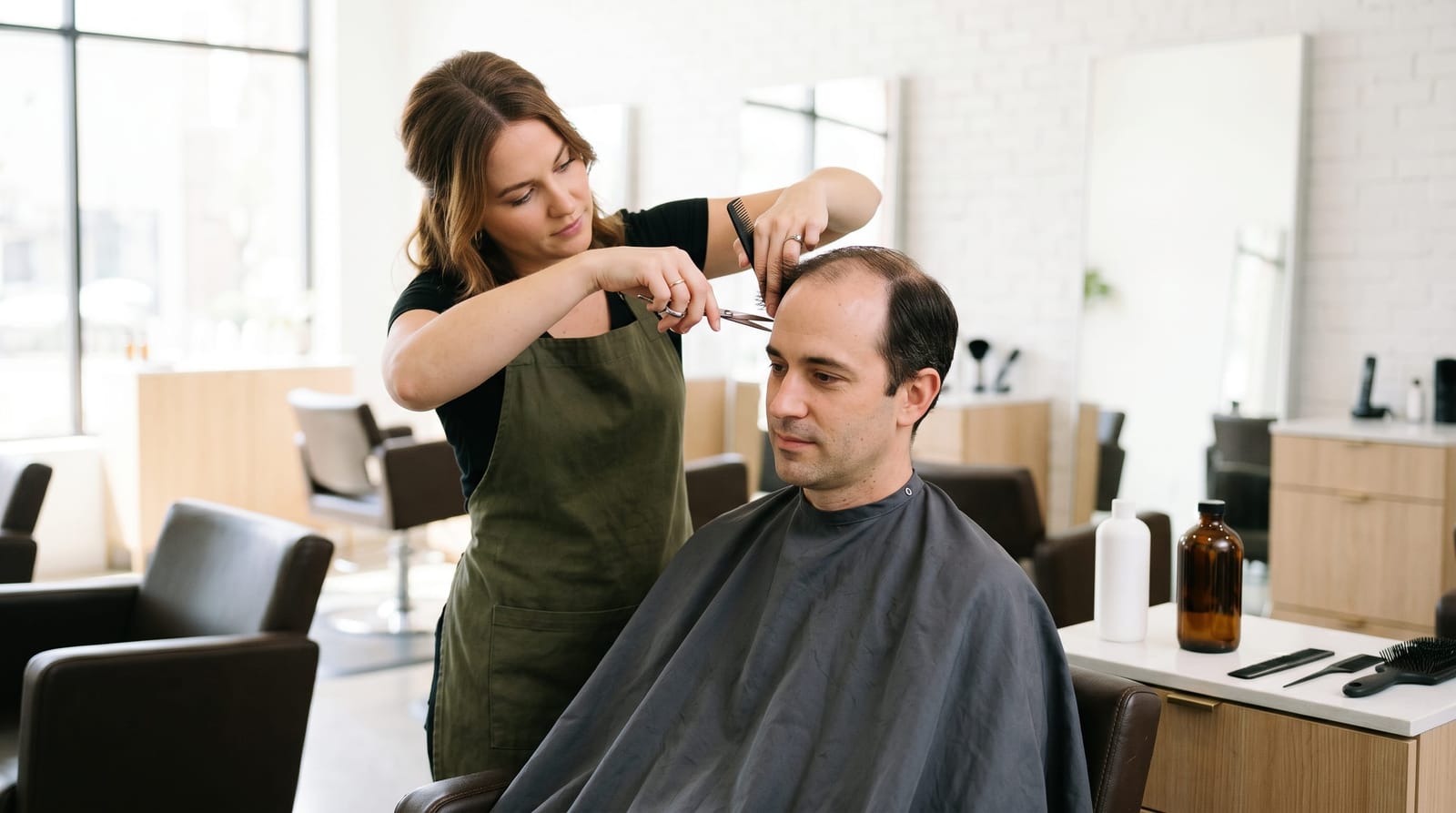
Additionally, communicate your specific thinning pattern to your stylist before they pick up the scissors. A professional men's stylist will assess where the thinning is most pronounced and tailor the cut accordingly: something a quick-service chain simply doesn't have the time or training to do consistently.
Frequently Asked Questions
What is the single best haircut for men with thinning hair?
There's no one-size-fits-all answer, but the buzz cut and the crew cut are consistently the most effective because they keep hair uniformly short, eliminate contrast between thick and thin areas, and look intentional rather than like hair is being "managed." The best cut for you also depends on your face shape and specific thinning pattern, which is why consulting a professional stylist is always recommended.
Should men with thinning hair avoid long styles entirely?
Generally, yes: longer hair tends to lie flat against the scalp, which emphasizes thinning areas rather than concealing them. Hair longer than 3-4 inches also becomes heavy enough to pull sparse sections downward, making bald patches more visible. Most professional stylists recommend keeping hair under 2.5 inches on top for men experiencing noticeable thinning.
How often should men with thinning hair get a haircut?
Men with thinning hair generally benefit from more frequent trims, every 3 to 4 weeks: rather than the standard 6-week cycle. Shorter cuts grow out faster and can quickly lose their shape, which matters more when the cut's structure is doing significant work to manage the appearance of thinning. Regular maintenance keeps the style looking intentional and polished.
Can a haircut at a professional salon make a real visual difference for hair loss?
Absolutely. A professionally executed cut that accounts for your specific thinning pattern, hair texture, and face shape can dramatically change the perceived density of your hair. Over 60% of men with thinning hair report increased confidence after finding the right style, and a skilled stylist who specializes in men's hair can make recommendations a standard barbershop visit simply won't provide.
Conclusion
Thinning hair doesn't have to mean limited options: it just means smarter ones. The best men's haircuts for thinning hair, buzz cuts, crew cuts, fades, crop tops, and modern comb-overs, all share one principle: working with your hair's natural density rather than against it. Pair the right cut with the right products and a professional stylist who understands your specific hair loss pattern, and the results can be genuinely transformative. If you're in the area and ready to explore what a tailored approach to men's hair services can do, our team at a professional men's haircut salon in Montclair, NJ is here to help you find the style that fits your life, and your hair.