Can You Add Clip-In Extensions to Formal Hairstyles?
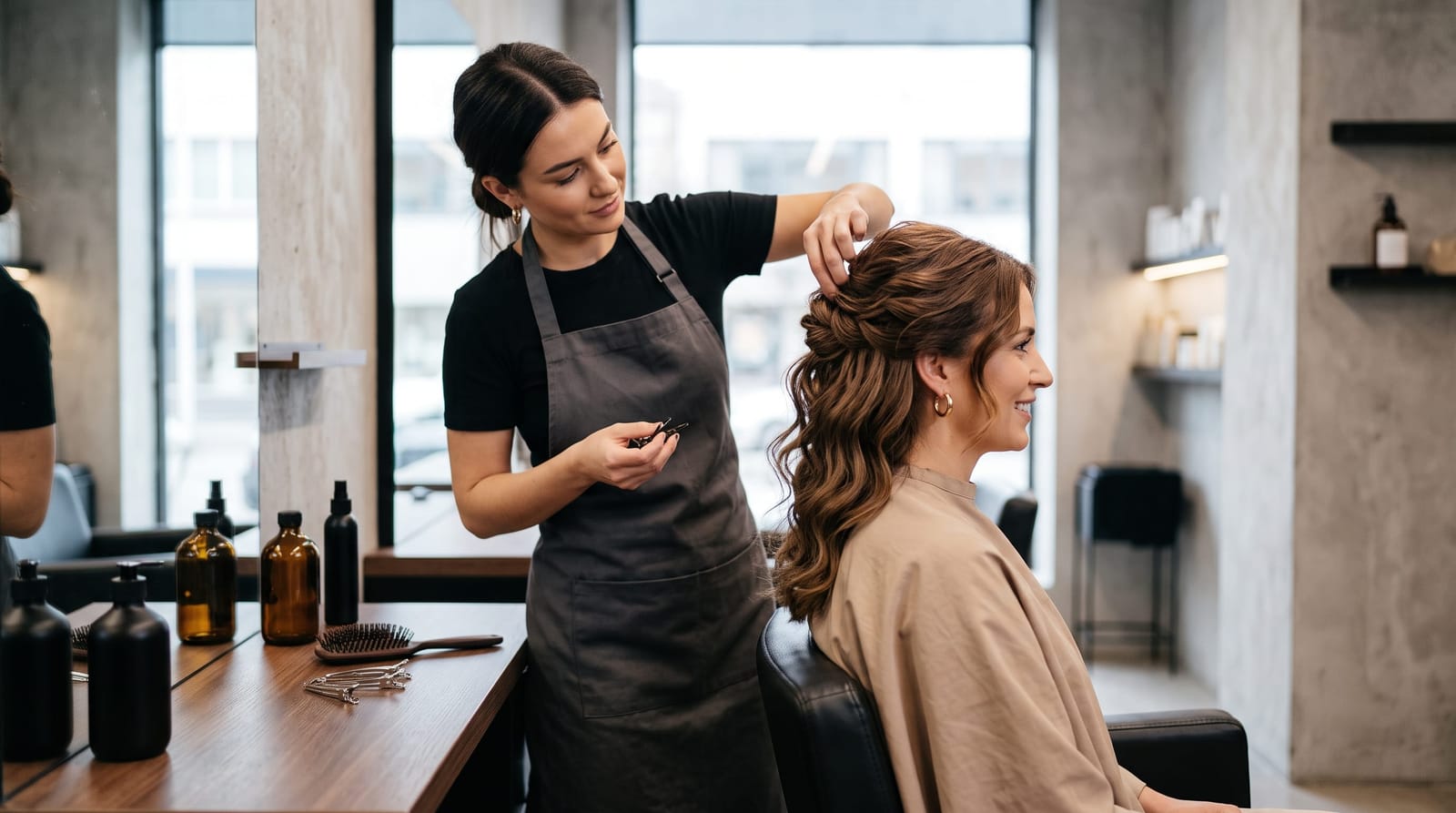
If you've ever looked at a photo of a full, voluminous updo and wondered how someone with fine or medium-length hair achieves that kind of dimension: the answer is often extensions. Clip-in hair extensions have become one of the most popular add-ons for formal styling appointments, and for good reason. They're temporary, versatile, and when applied by a professional stylist, completely undetectable. Whether you're planning a wedding updo, a half-up prom style, or a polished look for a gala, here's everything you need to know about incorporating extensions into your formal appointment.
What Are Clip-In Extensions and How Are They Used in Formal Styles?
Clip-in extensions are wefts of hair, typically made from 100% Remy human hair, that attach to your natural hair using small, secure pressure clips. Unlike permanent extension methods, clip-ins are designed to be installed and removed within a single appointment, making them an ideal solution for special occasions.
During a formal styling appointment, a professional stylist uses clip-in extensions strategically, not just to add length, but to create fullness, body, and structure within a style. This is especially valuable for:
- Updos that need extra volume to look polished rather than flat
- Half-up styles where the down portion benefits from added thickness
- Braided styles that incorporate flowing pieces or cascading texture
- Low buns and chignons that need more hair to work with for structure
- Bridal styles where fullness from every angle matters for photography
The key distinction between a DIY clip-in application and a professional one is placement and concealment. A skilled stylist knows exactly where to clip each weft so that the hardware and the root line of the extension are hidden within the finished style: never visible in photos or in person.
How Much Natural Hair Do You Need for Extensions to Work?
This is one of the most common questions clients ask during a formal styling consultation, and the honest answer is: it depends on the style. But there are some useful general guidelines.
For most formal updo work, your natural hair should be at least:
- 4 to 6 inches for structured updos where extensions add volume rather than length
- 6 to 8 inches for half-up styles where the down portion will incorporate extension hair
- 8 inches or more for styles where the extensions will be visible as part of a braid, curl, or flowing piece
Very short hair, pixie cuts or bobs under four inches, can make clip-in extension application more challenging because there's less natural hair to anchor and conceal the wefts. That said, a professional stylist can sometimes work creatively even with shorter lengths depending on the style. The best way to know for certain is to schedule a formal styling consultation before your event, where your stylist can assess your hair texture, density, and length together.
Hair texture also plays a role. Fine, straight hair requires more careful placement than thick or wavy hair, since the clips need enough hair to grip securely without slipping throughout a long event.
How Extensions Are Hidden Within a Formal Style
The skill behind professional clip-in hair extensions application at a salon isn't just attaching the wefts: it's making them disappear. Here's how experienced stylists approach concealment within formal looks:
- Sectioning first: Your stylist will section your natural hair before placing any clips, so each weft is covered by a layer of your own hair sitting on top of it.
- Placing clips at structural points: In an updo, wefts are often positioned where the style has twists, folds, or gathered sections: areas that naturally cover the clip attachment.
- Blending texture: If your natural hair is wavy or curled for the event, the extension hair will be styled to match before or after clipping in, so the texture transition is seamless.
- Using shorter wefts at the hairline: Near the face and nape, stylists use narrower wefts that are easier to tuck and hide without any visible lines.
- Finishing with pins and spray: The final style locks everything in place, with the extensions integrated into the overall shape rather than sitting on top of it.
When done correctly, clip-in extensions are completely invisible, even in close-up photos. This level of finish is difficult to achieve without professional placement, which is why it's worth discussing the option with your stylist at your trial appointment.
What to Expect: Cost and Appointment Planning
Adding clip-in extensions to a formal style is typically offered as an add-on service during a bridal, prom, or special event appointment. At most boutique salons in the North Jersey area, here's what you can generally expect:
- Extension add-on service fee: This covers the stylist's time for placing, blending, and integrating the extensions into your style. Fees vary by salon and the complexity of the look.
- Clip-in sets: your options: Some salons have extension sets available for purchase or rental; others may ask you to bring your own. Confirm this when booking.
- Trial appointment: For weddings or high-stakes events, scheduling a trial run that includes extensions is strongly recommended. This ensures the extensions match your hair color and the look is perfected before the actual event day.
- Appointment length: Adding extensions to a formal style typically adds 20 to 40 minutes to your appointment, depending on how many wefts are being used and how complex the final style is.
When booking, let your stylist know upfront that you're interested in incorporating extensions. This helps them reserve enough time and prepare accordingly, especially important for bridal party bookings where multiple clients may be scheduled back-to-back.
If you're exploring the full range of formal styling possibilities for your event, our guide to formal hairstyles for medium length hair covers updo options, half-up styles, and what to discuss during your consultation.
Frequently Asked Questions
Can I bring my own clip-in extensions to a formal styling appointment?
Yes, in most cases you can bring your own clip-in extensions to your appointment. If you do, make sure they're matched to your hair color as closely as possible and ideally made from human hair so they can be heat-styled to match your natural texture. Let your stylist know in advance so they can plan the timing and approach for your appointment.
Will clip-in extensions damage my hair if used for a formal style?
When applied and removed correctly by a professional, clip-in extensions don't cause damage to your natural hair. They're one of the most gentle extension methods available because there's no bonding, heat, or chemical process involved. The key is proper placement: clips should never be attached too tightly or left in longer than the event requires.
How do I make sure extension hair matches my natural color?
Bringing a few shed strands in a small bag or sending a well-lit photo of your natural hair color to your stylist before your appointment can help ensure a good match. Many clients also come in for a quick color consultation before purchasing extension sets. During a bridal trial, your stylist can evaluate the match in person under natural light.
Can extensions be used for half-up prom styles, or are they only for full updos?
Extensions work beautifully for half-up styles. They're actually one of the best applications for this look, because the down portion of a half-up style benefits enormously from added thickness and length. A stylist can clip wefts into the lower section of your hair so the flowing pieces look naturally full and polished, without any visible attachment points.
The Bottom Line
Clip-in extensions aren't just for adding length, in the hands of a skilled stylist, they're a tool for creating the kind of full, structured, camera-ready formal styles that feel truly special. Whether you're preparing for a wedding, prom, or any significant event, discussing extensions during your styling consultation opens up a wider range of possibilities for your look. Plan ahead, book a trial if you can, and trust your stylist to make everything blend seamlessly. For more guidance on planning your formal style from start to finish, explore our complete resource on formal hairstyling for special events in New Jersey.