Does a Glaze Damage Your Hair?
A no-developer, deposit-only hair glaze is generally a gentle way to add shine or refresh tone without lightening your natural color. But not every service called a “glaze” uses the same formula, so the name alone does not tell you how it will affect your hair.
The important distinctions are whether the product uses developer, what condition your hair is in, and whether your appointment also includes lightening. A glaze can make hair feel smoother and look more polished, but those cosmetic benefits are different from repairing existing damage.
The Formula Matters More Than the Name
Glaze, gloss, and toner are sometimes used interchangeably in salon conversations. They describe overlapping goals, such as shine and tone refinement, rather than one universal formula.
Here are the differences that matter when considering potential damage:
- A no-developer glaze: Adds shine or deposits temporary color without a chemical lightening step. This is a lower-impact option when the goal is a subtle refresh.
- A glaze mixed with developer: Uses an activator, commonly containing peroxide, as part of the coloring process. It may be designed to deposit color rather than lighten, but it is still a different process from a no-developer product.
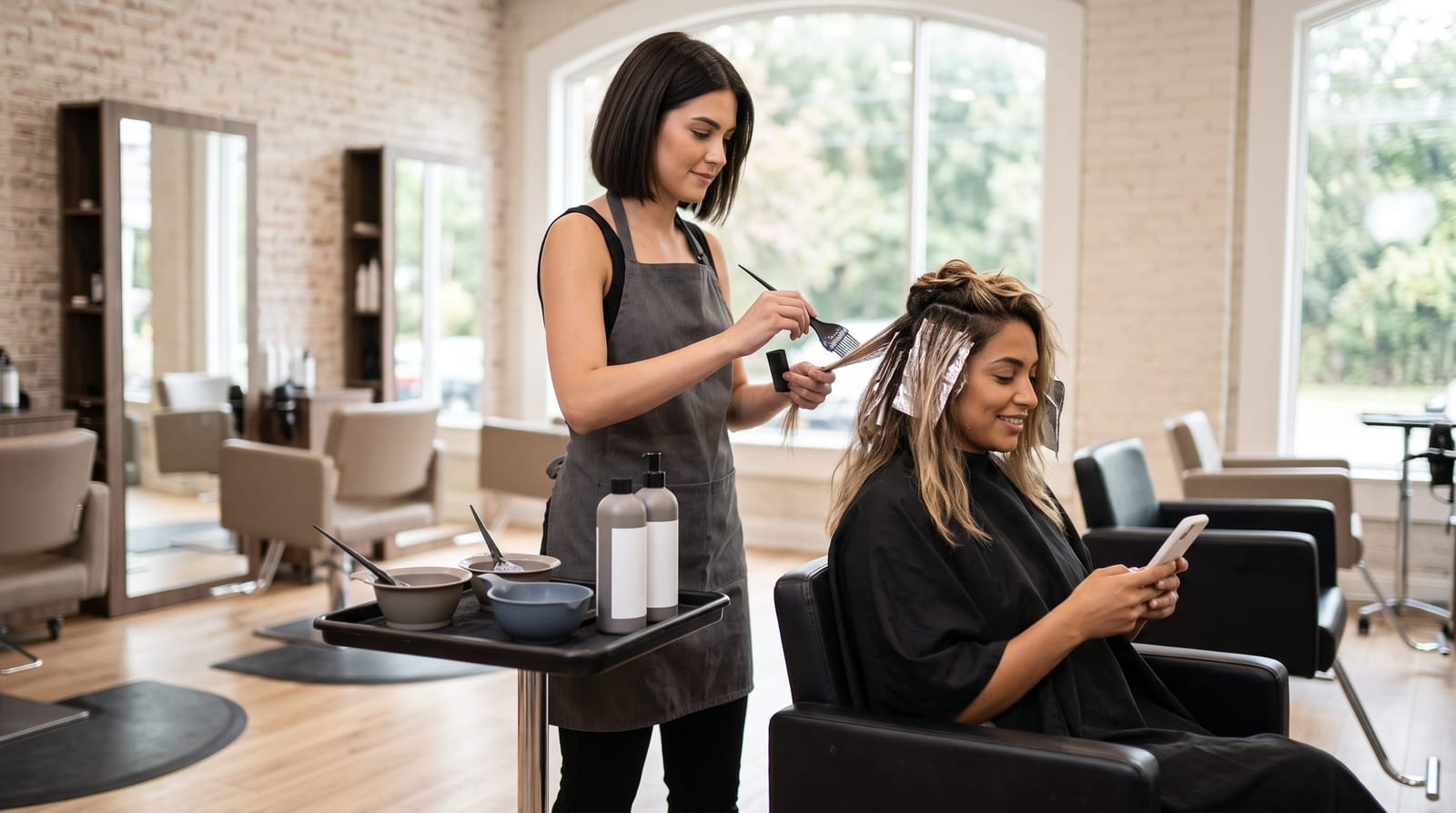
- A glaze after highlights or balayage: Refines the finished color. The lightening and glazing are separate steps, with different effects on the hair.
A clear glaze and a tinted glaze also serve different purposes. Clear formulas focus on shine and finish; tinted formulas add pigment to adjust the appearance of your color. “Clear” does not automatically mean developer-free.
What Conditioning Benefits Can a Glaze Offer?
Depending on the formula, conditioning ingredients can leave hair feeling softer, smoother, and easier to detangle. A more even-looking surface can also reflect light better, creating the glossy finish people associate with a glaze.
These benefits are cosmetic and temporary. A glaze does not permanently mend split ends, undo previous bleaching, or make fragile hair ready for unlimited color services. Shine alone is not a measure of hair strength.
Think of a glaze as a finishing layer for your color and texture. It can improve how your hair looks and feels without replacing the care your lengths need between appointments.
Your Hair’s Starting Condition Changes the Decision
The same color formula can behave differently on untouched hair and heavily lightened ends. Your recent color history is therefore more useful than a blanket promise that a glaze is harmless.
Previously lightened or fragile lengths
If your hair already feels brittle or breaks easily, adding shine does not resolve that underlying condition. The decision is whether a color refresh is worthwhile now, which formula fits the goal, and whether further lightening can be avoided. A glaze and bleach are not interchangeable ways to brighten hair.
Porous or unevenly processed hair
Porous hair, which absorbs and releases moisture and color more readily, can take up pigment unevenly. Lightened ends may look darker or more strongly toned than expected. That is a color-result concern, not automatically evidence of new damage. A strand test can help preview how a tinted formula will look.
Several services in one appointment
When an appointment includes highlights, a glaze, and heat styling, consider the whole service rather than attributing every change in texture to the glaze. Each step has a different purpose and deserves its own discussion.
Match the Glaze to What You Want to Change
A useful consultation starts with the result you want, not just the treatment name.
- You like your color but want more shine: A clear glaze may fit better than adding pigment you do not need.
- Your blonde looks too yellow: A tinted formula may help balance that warmth. Toning changes the color’s appearance; it does not necessarily make the hair lighter.
- You want a noticeably lighter overall color: A deposit-only glaze cannot deliver that change on its own.
Useful questions include whether the proposed formula uses developer, how it may affect your lightest ends, and whether shine or tone correction is the main goal.
At Substance Salon in Rutherford, we include a glaze with our Full Balayage and Partial Foil services. That finishing step is distinct from the lightening itself and helps refine the completed color.
Scalp Sensitivity Is Separate From Hair Damage
A product can be gentle on the hair fiber and still contain ingredients that irritate skin or cause an allergic reaction. Product directions, including any allergy-testing instructions, remain important. For a history of hair-color reactions or ongoing scalp irritation, a licensed healthcare professional can assess your individual situation before another color service.
Keep the Finish Without Overdoing the Refresh
After a glaze, gentle cleansing, conditioning suited to your texture, and less frequent high-heat styling help keep the overall routine manageable. Richer conditioning products may suit dry lengths, while fine hair may feel better with lighter products concentrated toward the ends.
As a temporary glaze fades, your previous tone and texture can become more noticeable again. That does not, by itself, mean the glaze damaged your hair.
Understanding how long a hair glaze lasts can help distinguish normal fading from a reason to change your routine. Refresh decisions are best tied to the formula, your hair’s condition, and the result you still want, rather than automatically layering on more color.
Frequently Asked Questions
Does “ammonia-free” mean a glaze cannot cause damage?
No. “Ammonia-free” describes the absence of one ingredient, not the entire coloring process. A product may still use developer. The full formula and its intended use matter more than a single label claim.
Can I use a hair glaze at home?
Some products are designed for home use. Their directions determine mixing, application, and timing. Substituting a different developer or leaving a product on longer changes how it is intended to be used. Previously lightened hair also needs careful color selection because it can take up pigment strongly.
Can a glaze replace conditioner?
No. Even when a glaze provides a conditioned feel, it serves a different purpose from regular conditioning. Conditioner supports softness and manageability between washes; a glaze primarily refreshes the appearance of shine or color.
The Bottom Line
A deposit-only, no-developer glaze offers a gentle route to shine and tone refinement. The best choice comes from understanding the actual formula and your hair’s starting condition. Expect a cosmetic refresh, not permanent repair, and keep the glazing step separate from any lightening when evaluating the service.