How to Choose the Right Haircut for Your Face Shape: Men's Guide
When it comes to getting a great men's haircut, the style itself is only half the equation. The other half? How that style interacts with the unique shape of your face. A cut that looks incredible on one man can fall flat on another, and face shape is often the reason why. Whether you're navigating the broader question of salon vs barbershop men or simply trying to figure out what to ask for at your next appointment, understanding your face shape is one of the most practical tools you can have. This men's haircut face shape guide walks you through how to identify your face shape, which styles work best for each one, and how a skilled stylist uses that knowledge to build a cut that's genuinely designed for you, not just the guy in the photo you brought in.
Step 1: Identify Your Face Shape
Before you can choose the right haircut, you need to know what you're working with. Face shape is determined by the relationship between four key measurements: forehead width, cheekbone width, jawline width, and face length. You don't need a tape measure: a close look in the mirror after pulling your hair back is usually enough to get a clear picture.
Here's a simple way to assess each zone:
- Forehead: Is it wide and prominent, narrow, or roughly average?
- Cheekbones: Are they the widest point of your face, or does your face taper above and below them?
- Jawline: Is it angular and sharp, soft and rounded, or somewhere in between?
- Face length: Does your face appear longer than it is wide, roughly equal, or notably short and wide?
According to grooming and style research, the six most common men's face shapes are oval, round, square, rectangular (also called oblong), diamond, and heart. Most men fall clearly into one of these categories, though some sit closer to two. Once you've identified yours, the rest of this guide will give you a clear direction to bring to your next appointment.
Step 2: Match Your Face Shape to the Right Haircut
Each face shape has a set of cuts and proportions that tend to look especially strong, and a few common pitfalls worth avoiding. Here's a breakdown of what works for each.
Oval Face Shape
Oval is considered the most versatile face shape for men, with a balanced ratio of forehead width to jawline and a face length that's approximately one and a half times the width. Because the proportions are already well-balanced, oval-faced men have a wide range of flattering options. Slicked-back styles, mid-length cuts, textured crops, and even longer lengths all work well. The main thing to avoid is anything that adds too much width at the sides without volume on top, which can make the face appear shorter and rounder than it is.
Round Face Shape
Round faces are roughly equal in width and length, with soft, curved lines at the jaw and cheeks. The goal with a round face shape is to create the illusion of length and definition. Styles with more height and volume on top, think a textured pompadour, a high fade with length on top, or a side part, help elongate the face visually. Bed-head and slightly disheveled textures on top also work well. What to avoid: cuts that are cropped short all over, buzz cuts, or anything that adds bulk at the sides, all of which emphasize width over length. If you're specifically curious about detailed style options, our post on men's haircut face shape guide for round faces goes deeper into the best specific cuts for this shape.
Square Face Shape
Square faces have a strong, angular jawline that's nearly as wide as the forehead, with sharp corners and minimal tapering. This is a naturally striking face shape, and the right haircut enhances that structure without making it feel too harsh. Textured styles that soften the top work beautifully: think loose waves, messy quiffs, or layered cuts with movement. A side part adds asymmetry that balances the strong symmetry of the jaw. Avoid extremely geometric cuts or very short, flat tops, which can make a square jaw feel overpowering rather than striking.
Rectangular (Oblong) Face Shape
Rectangular or oblong faces are noticeably longer than they are wide, with a relatively even width throughout the forehead, cheeks, and jaw. The goal here is to add visual width and reduce the perception of length. Well-proportioned haircuts with medium length on top and some fullness at the sides, rather than height, work best. Side-swept styles, textured cuts with horizontal movement, and styles that avoid adding significant height on top are ideal. Crew cuts, medium-length crops, and styles with some side volume are strong choices for this shape.
Diamond Face Shape
Diamond face shapes are widest at the cheekbones, with a narrow forehead and a narrower, sometimes pointed chin. Because the middle of the face dominates, the goal is to balance the top and bottom. Styles that add some width at the forehead, side parts, textured fringes, or styles with volume at the temples, help create proportion. At the jawline, a bit of length or a beard can soften and widen the chin area. Close-cropped cuts that emphasize cheekbone width without balancing the rest of the face tend to work against this shape.
Heart Face Shape
Heart-shaped faces are widest at the forehead and taper to a narrower chin. Think of the shape as an inverted triangle. The most flattering cuts for heart-shaped faces minimize forehead prominence while adding visual weight near the jaw. Side parts, textured fringes that break up a wide forehead, and styles with length or movement toward the chin line all work well. Avoid styles that push hair back and fully expose a wide forehead, or anything that significantly adds volume at the top while leaving the lower face bare.
Step 3: Understand What a Skilled Stylist Actually Does Differently
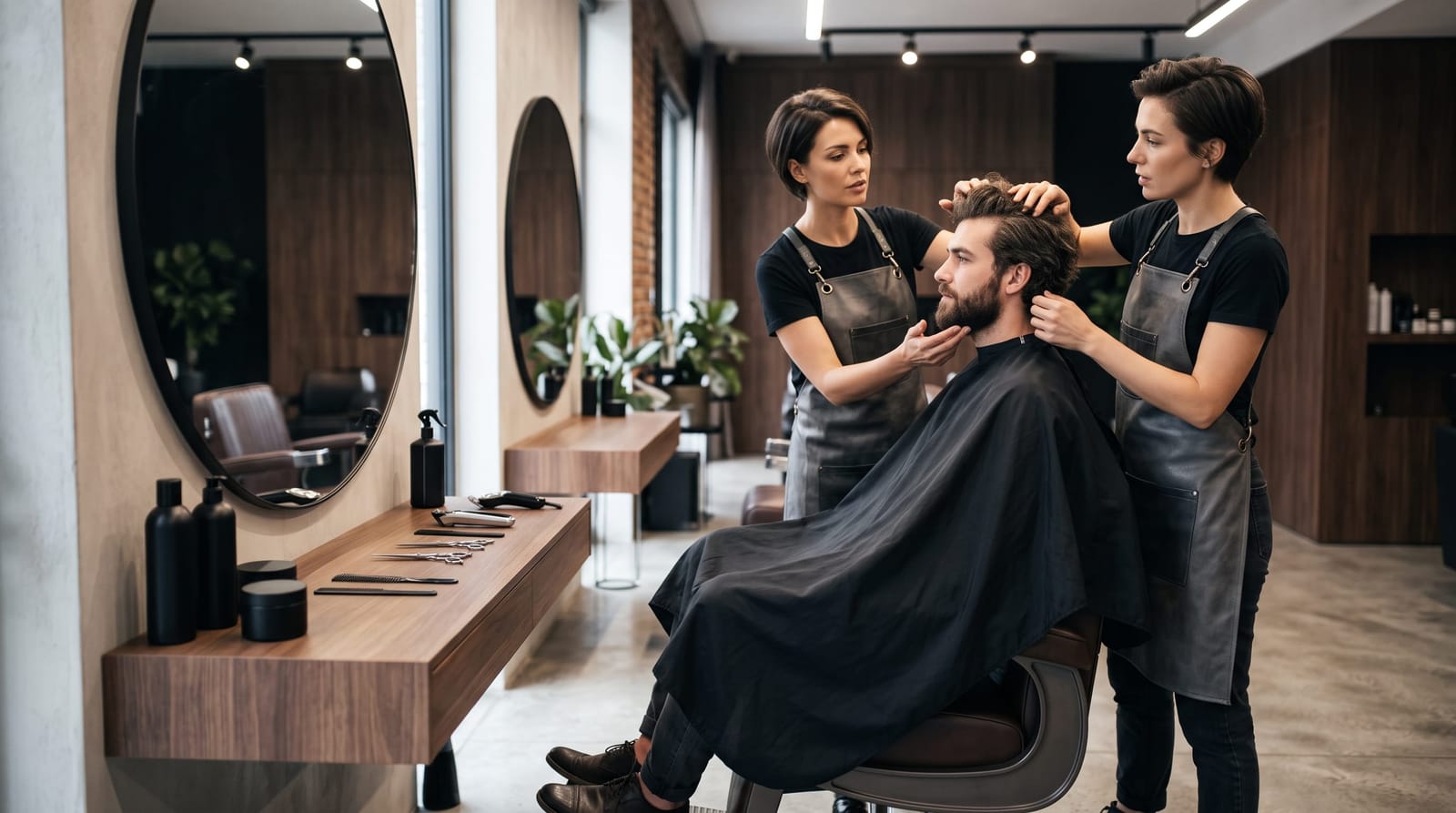
Knowing your face shape is genuinely useful, but applying that knowledge to a specific haircut on a real person, accounting for hair texture, density, growth patterns, and lifestyle, is where professional expertise makes a meaningful difference. Research consistently shows that one of the top reasons men are dissatisfied with a haircut is that the style chosen didn't account for their individual proportions, not just their face shape, but how their hair naturally behaves.
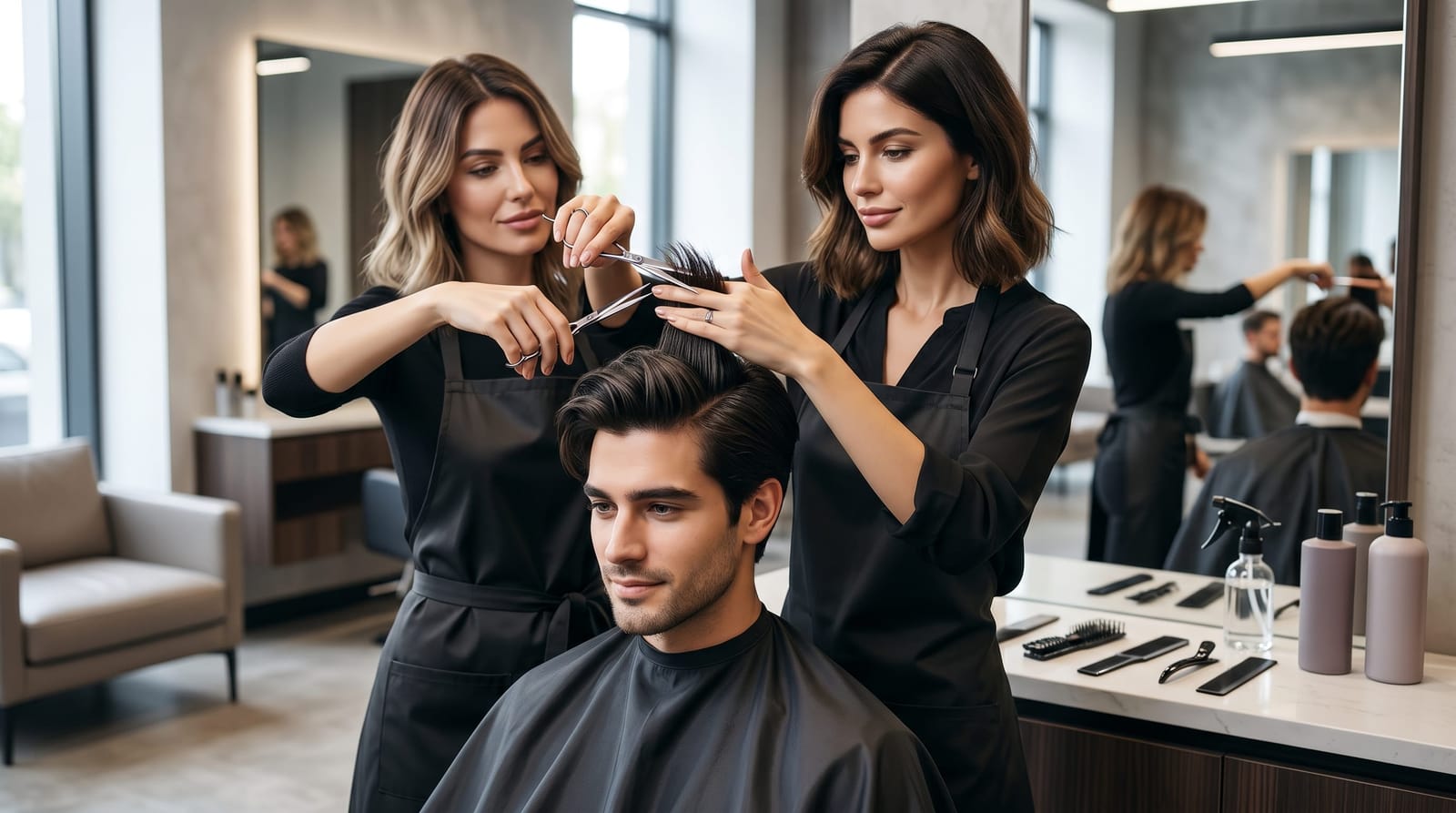
A trained salon stylist approaches a men's haircut as a design problem. They're not just trimming to a set length: they're considering:
- How your hair's natural growth direction affects the finished shape
- Whether your hairline is symmetrical or has variations that should influence the cut
- How much texture or weight your hair naturally carries, and how that interacts with the intended style
- The relationship between your hair density and the volume a particular style requires
- Your daily routine and how much time you realistically want to spend styling
This level of customization is part of what distinguishes a consultation-based salon cut from a standard trim. Studies on client satisfaction in grooming services suggest that men who receive a pre-cut consultation report significantly higher satisfaction with their results, which tracks, given that the cut is being built around their specific features rather than a general template.
If you're also exploring other services, like whether a men's perm cost maintenance situation is worth looking into for texture and style: understanding face shape is equally relevant there, since wave and curl patterns interact directly with face shape in terms of volume placement and proportion.
Step 4: Come Prepared to Your Appointment
Even with the best stylist, a great result starts with a productive conversation. Here's how to walk into your appointment ready to collaborate effectively:
Bring Visual References
Photos of styles you like are genuinely helpful, not because a stylist will replicate them exactly, but because they give both of you a starting point for discussing texture, length, and overall direction. Bring two or three examples rather than one so your stylist can identify what the styles have in common rather than guessing what specifically appeals to you.
Know Your Maintenance Preferences
Be honest about how much time you spend on your hair in the morning. A style that requires daily blow-drying and product layering isn't going to serve you if your routine is three minutes and out the door. A good stylist will build the cut to suit the version of you that actually exists, not the aspirational version.
Mention What Hasn't Worked Before
If a previous cut left you feeling like the proportions were off, your hair wouldn't cooperate, or the style just didn't feel like you: say so. That feedback is some of the most valuable information a stylist can have going into a new cut.
Step 5: Consider How Face Shape Applies to Men's Haircuts for Thinning Hair
Face shape doesn't exist in isolation from other hair considerations. For men navigating changes in hair density, the way a cut interacts with face shape becomes even more important, because the strategies that work for thinning hair can sometimes conflict with what's traditionally recommended for certain face shapes. For a detailed look at how to approach this, our guide on best men's haircuts thinning hair covers which styles work best when density is a factor, and how to balance that with face shape proportions.
The key takeaway here is that face shape is one layer of the decision, not the whole picture. The most successful haircuts account for multiple factors simultaneously, and that's exactly the kind of nuanced, personalized thinking a skilled stylist brings to every appointment.
Related Details Worth Exploring
If you want to go deeper on specific face shape guidance, there's more to explore within this topic. Men with a round face shape in particular often have the most questions about which specific cuts and lengths will genuinely flatter them, and there's a lot of useful detail to unpack beyond the general guidance above.
The Takeaway
Your face shape is one of the most reliable guides you have when choosing a haircut, and once you know how to read it, every appointment gets easier and more productive. Whether you have a square jaw that deserves a style with real movement, a round face that benefits from height and length, or an oval shape with the flexibility to try almost anything, understanding your proportions helps you ask for what you actually want and recognize when a cut is working. At Substance Salon, our stylists approach every men's cut as a personalized design consultation, not a one-size-fits-all trim. If you're ready to find a haircut that genuinely fits your face, book your appointment and let's figure it out together.