Is Hair Smoothening Right for Damaged or Color-Treated Hair?
If you've been exploring the world of smoothening treatments, from Brazilian blowouts to keratin services, you've probably already discovered that not all hair is the same going into the chair. When you factor in color history, bleaching, or general wear on your strands, the questions get more specific: Is hair smoothening for damaged hair even safe? Will it help or hurt? What do you need to know before you book?
This guide is designed to walk you through exactly that. As part of our broader breakdown of smoothening treatments and what makes each one unique, this post zooms in on compromised hair: the kind that's been colored, lifted, chemically processed, or simply stressed over time. We'll cover how treatments interact with pre-existing damage, what conditioning prep looks like, which options tend to be gentler, and why a thorough professional consultation is the most important step you can take before committing.
Understanding What "Damaged" or "Compromised" Hair Actually Means
Before we talk about smoothening, it helps to understand what we mean when we say hair is "compromised." This isn't a clinical diagnosis: it's a practical description of how hair behaves and responds after it's been through chemical or mechanical stress.
Common Signs of Hair That's Been Through a Lot
Hair that has been colored repeatedly, lightened with bleach, relaxed, permed, or heat-styled frequently tends to show some common characteristics: it may feel drier than usual, snap more easily when wet, appear frizzy or dull, or feel rough to the touch. Fine hair that's been lightened multiple times, especially hair that's been taken to platinum or very pale blonde, sits at a particularly delicate intersection of texture and elasticity.
Porosity is the key concept here. Highly porous hair has a more open cuticle layer, which means it absorbs products quickly but loses moisture just as fast. Studies on hair porosity and chemical processing show that bleaching alone can increase hair porosity by up to 30%, which dramatically changes how the hair responds to any subsequent chemical service, including smoothening. Understanding where your hair sits on the porosity spectrum is one of the first things a skilled stylist will assess during your consultation.
Why This Matters for Smoothening
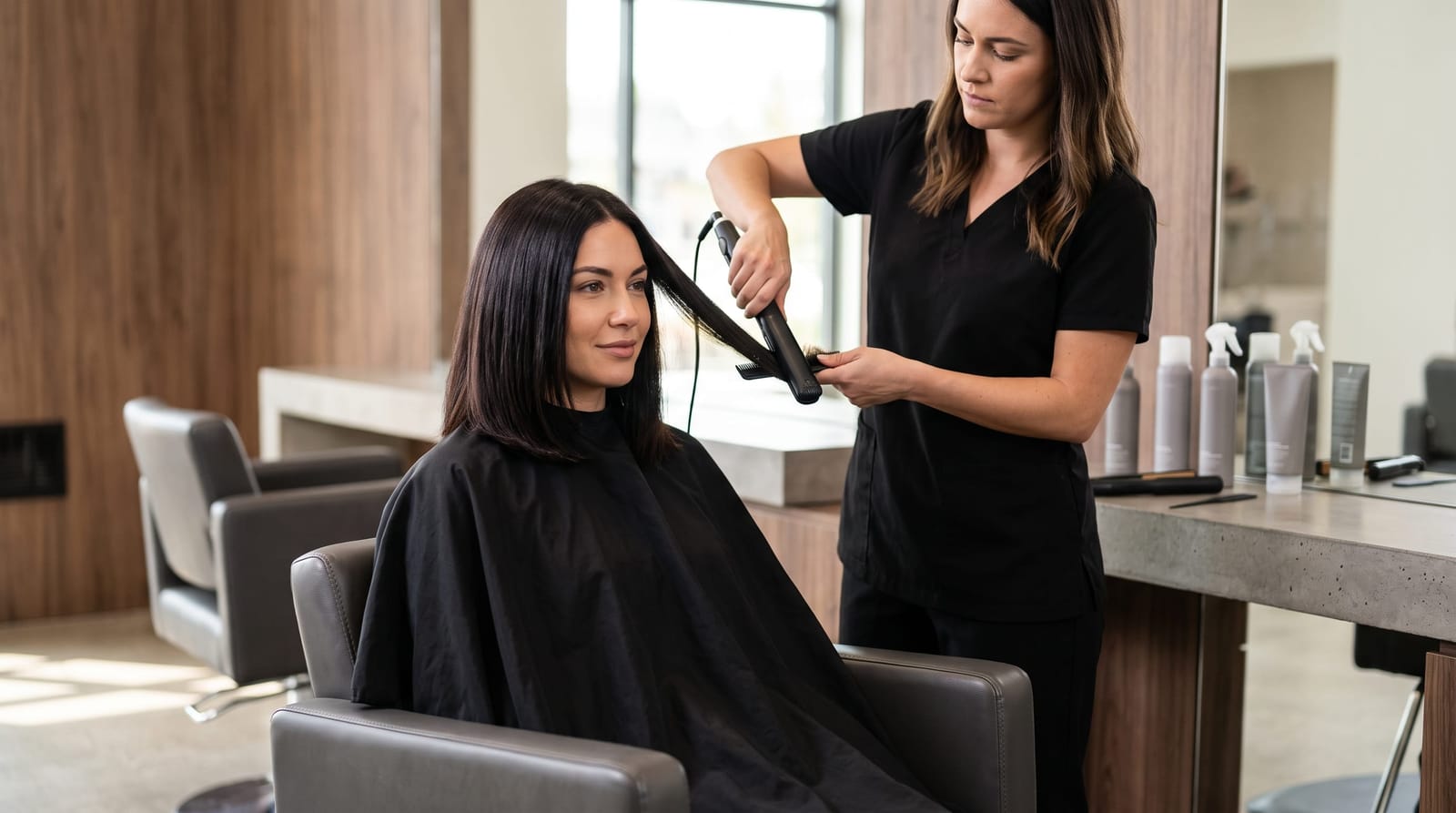
Smoothening treatments work by temporarily restructuring or coating the hair's surface to reduce frizz and add manageability. For hair that's already stressed, the interaction between the treatment's active ingredients and compromised strands requires a more careful, individualized approach. It's not automatically a hard no, but it is a conversation that needs to happen with a professional who can see and feel your hair in person.
How Smoothening Treatments Interact With Color-Treated Hair
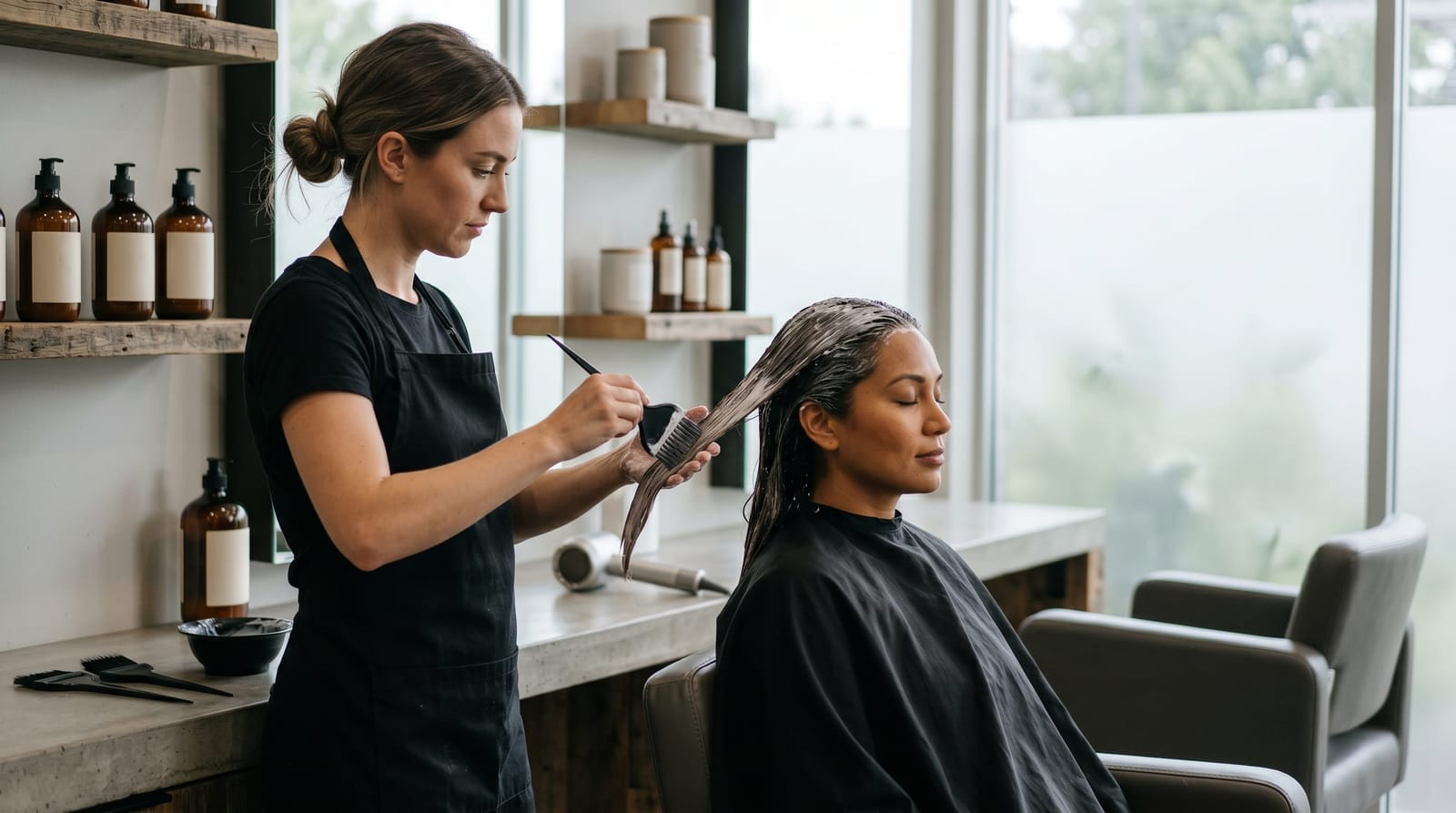
Color-treated hair is probably the most common scenario stylists encounter when clients ask about hair smoothening for damaged hair. Whether you're a highlights regular, a balayage devotee, or someone who refreshes their all-over color every few weeks, your hair has been through chemical processing, and that's worth factoring in.
Keratin and Color: The Timing Question
One of the most important things to understand is that the sequence of services matters enormously. Keratin-based smoothening treatments and color services don't always play nicely when applied too close together. In general, most professional recommendations suggest allowing at least one to two weeks between a color service and a keratin treatment, though the exact timing will depend on the specific products being used and your hair's current condition. For more detail on navigating this decision, our post on hair color after smoothening treatment walks through the timing and sequencing considerations in depth.
What Happens to Color After Smoothening
A common concern among color-treated clients is whether a smoothening treatment will affect their shade. The short answer: it can, depending on the treatment type and how the service is performed. Some keratin treatments use high heat during the sealing process, which can slightly shift warm or vivid tones. A well-formulated, professionally applied treatment on well-prepared hair tends to have a minimal impact on color, and in many cases, clients notice their color actually appears more vibrant afterward because the smoothed cuticle reflects light more evenly.
Bleached and Heavily Lifted Hair: A Closer Look
Bleached hair deserves its own section because it presents a more nuanced scenario than standard color services. When hair has been lifted significantly, particularly to very pale blonde levels, the internal structure of the strand has been altered more substantially than with a deposit-only color. Approximately 60 to 70 percent of the hair's disulfide bonds can be weakened through repeated bleaching, according to cosmetic hair science research, which directly impacts how the hair handles additional chemical exposure.
Can Bleached Hair Receive a Smoothening Treatment?
Yes, but with careful assessment. The candidacy depends on the overall integrity of the hair. A skilled stylist will perform a strand and elasticity test before committing to a treatment plan. Hair that stretches significantly when wet and doesn't spring back, or that breaks easily, may need a strengthening protocol before a smoothening treatment is appropriate. Hair that has been bleached but is still in relatively good structural condition may be a strong candidate for gentler smoothening options.
Bond-Building Prep Treatments
This is where pre-treatment conditioning becomes a key part of the process. Bond-building treatments, like those using Olaplex technology or Kérastase's professional protocols, work by reinforcing weakened internal bonds within the hair strand before a smoothening service. Incorporating these into the pre-treatment routine is a common practice at professional salons working with bleached or heavily processed hair. Think of it as preparing the foundation before you renovate: the smoothening treatment performs better, lasts longer, and the hair comes out in better overall condition when the structure is strengthened beforehand.
Which Smoothening Treatments Are Generally Considered Safer for Compromised Hair?
Not all smoothening treatments are created equal, and some formulations are better suited to hair that's already been through the wringer. When we talk about hair smoothening for damaged hair specifically, the goal is to find an approach that delivers the smoothing and frizz-reduction benefits without adding additional stress to an already-taxed strand.
Gentler Keratin Options
Formaldehyde-free or low-aldehyde keratin treatments have become the standard at reputable professional salons. These formulations tend to rely on amino acid-rich proteins and conditioning agents that coat and smooth the cuticle without requiring the same degree of chemical reactivity as older formulations. For hair that has been colored or slightly compromised, these treatments are often well-tolerated when applied by an experienced professional at the correct timing.
Conditioning-Forward Smoothening Services
Some smoothening services sit closer to the "deep conditioning with smoothing benefits" end of the spectrum rather than the "chemical restructuring" end. These may not deliver as dramatic or long-lasting results as a full keratin treatment, but they can be an excellent starting point for clients whose hair needs rebuilding before it's ready for something more intensive. Your stylist can help you understand where on this spectrum your ideal treatment falls based on your current hair condition and your smoothing goals.
Fine Hair Considerations
Fine hair that's been processed faces a slightly different challenge: the risk of the treatment making hair feel weighed down or limp rather than smoothed and lifted. If your hair is both fine and color-treated, it's worth reading our breakdown of hair smoothening for damaged hair and whether the investment makes sense for your specific hair type and texture goals.
Pre-Treatment Conditioning: What to Expect Before Your Appointment
Preparation is one of the most underrated parts of the smoothening process for clients with compromised hair. Showing up to your appointment with the right foundation in place can meaningfully affect both how the treatment performs and how your hair feels afterward.
At-Home Prep in the Weeks Before
In the weeks leading up to your treatment, your stylist may recommend shifting to a moisturizing, sulfate-free shampoo and incorporating a weekly deep conditioning or protein-moisture balance mask into your routine. The goal is to bring your hair's hydration and porosity to a more stable baseline before introducing the treatment. Clients who arrive at their smoothening appointment with well-conditioned, moisturized hair consistently report better results and more even coverage.
In-Salon Prep on the Day
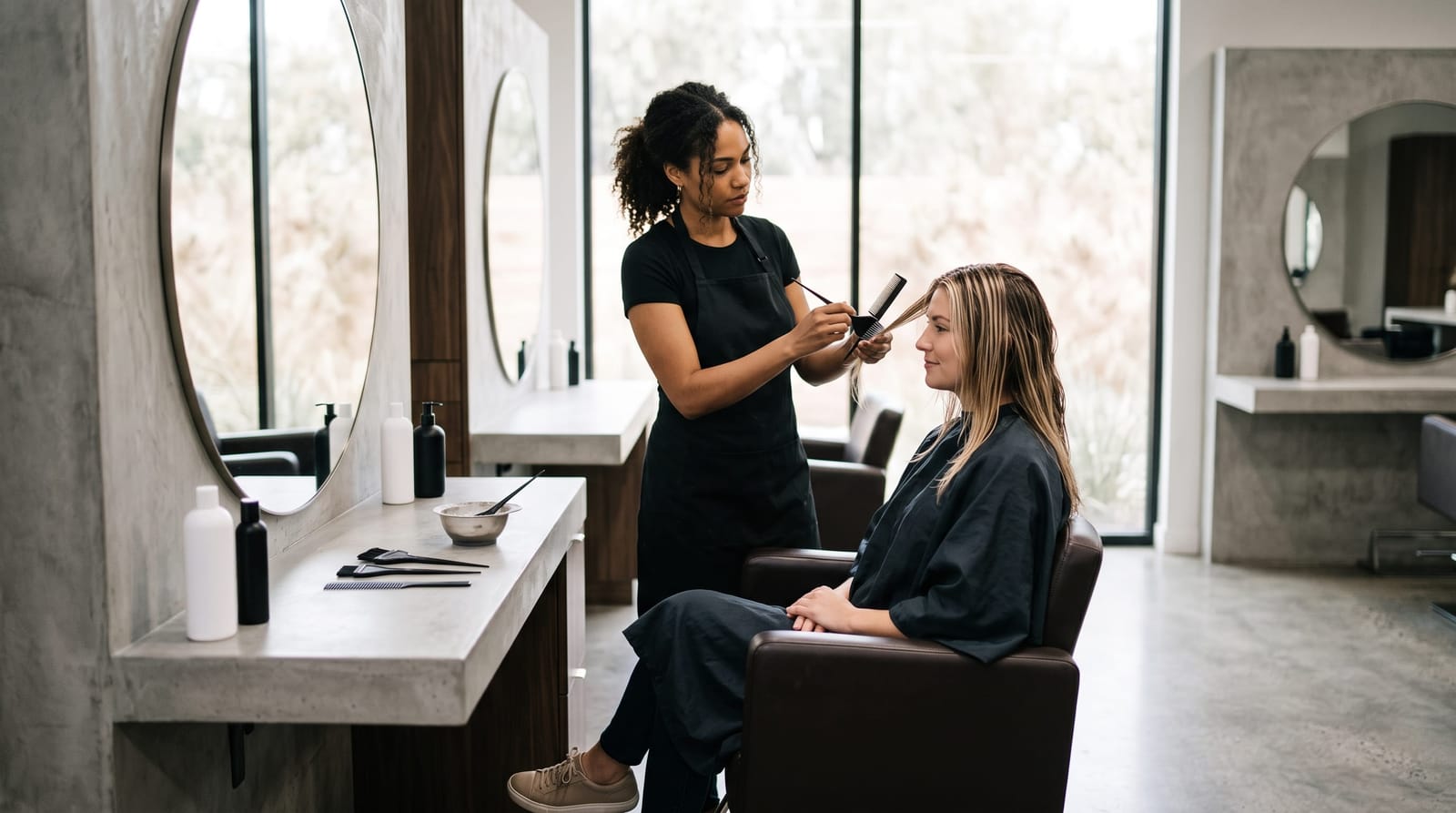
On the day of your service, a thorough professional consultation will typically include a visual and tactile assessment of your hair's elasticity, porosity, and overall condition. Your stylist may perform a strand test in a small section before committing to the full application. Depending on the results, they may recommend a bond-building treatment additive or a conditioning pre-treatment step as part of your service. This isn't an upsell: it's skilled professional practice.
Why the Professional Consultation Is Everything
If there's one theme running through this entire guide, it's this: the professional consultation isn't a formality. For clients asking about hair smoothening for damaged hair, it's genuinely the most important part of the process.
No online guide, including this one, can replicate what a trained stylist assesses when they physically examine your hair. They're looking at how your ends feel compared to your roots, how your hair responds to water, how much elasticity it retains, what your color history looks like, and how your hair has reacted to past chemical services. All of that information shapes the recommendation they make for your specific situation.
A skilled stylist will also be honest with you if your hair needs a strengthening phase before a smoothening treatment is appropriate. That honesty is a sign of expertise, not hesitation. The goal is always for you to leave with hair that feels better, not hair that's been pushed past its current limits.
Once you've gone through the treatment, the aftercare phase is equally important. Understanding how to wash hair after smoothening and maintaining the results properly is what makes the investment last, especially for hair that has been colored or processed.
Related Topics Worth Exploring
If you're researching smoothening treatments for compromised hair, you may also find these specific areas helpful as you make your decision:
- Color and smoothening sequencing: The timing of your color services in relation to your smoothening treatment is a nuanced topic with real consequences for your results. Our dedicated post on hair color after smoothening treatment covers this in detail.
- Fine hair and smoothening: If your hair is both fine and damaged, the considerations around weight, texture, and treatment selection are worth understanding before you book.
- Post-treatment maintenance for compromised hair: Clients with color-treated or previously damaged hair often need to follow a slightly more attentive aftercare routine to maintain their results.
Key Takeaways
Hair smoothening for damaged hair is not a one-size-fits-all scenario, but it's also not automatically off the table. Color-treated, bleached, and otherwise compromised hair can often receive smoothening treatments safely and beautifully when the approach is thoughtful, the timing is right, and the preparation is thorough. The most important steps you can take are investing in pre-treatment conditioning, being transparent with your stylist about your full color and chemical history, and trusting the consultation process.
Ready to find out whether a smoothening treatment is the right next step for your hair? Book a consultation at Substance Salon and let's take a real, honest look at where your hair is and where it can go.