Modern Men's Perm vs Traditional Perm: What's Changed
If you've been considering adding texture or waves to your hair, you've probably wondered whether today's perms are anything like the stiff, crunchy styles your dad might have rocked in the 1980s. The honest answer is: not even close. The gap between a modern men's perm vs traditional perm techniques is significant, in chemistry, results, and overall hair health. This post breaks down exactly what changed, what stayed the same, and how to decide which approach makes sense for your hair type and lifestyle.
What Traditional Perms Actually Did to Your Hair
Traditional perms, which peaked in popularity from the 1970s through the early 1990s, relied on a single chemical process using ammonium thioglycolate: a strong alkaline solution with a pH level typically ranging from 9.0 to 9.6. That's harsh. The solution broke down the disulfide bonds in the hair shaft, allowed rods to reshape those bonds, and then a neutralizer locked everything in place.
The results were uniform and often unnatural looking. Every curl came out roughly the same size and spring, regardless of whether it suited the person's face shape or natural texture. More critically, the damage was significant:
- Hair became brittle and prone to breakage within weeks of the service
- Color-treated or highlighted hair risked severe protein loss and snapping
- Scalp sensitivity and chemical burns were reported far more frequently than today
- The "wet dog" smell from ammonium thioglycolate could linger for 48-72 hours after the service
- Curl patterns loosened unevenly as the hair grew out, creating an awkward two-texture look after just 6-8 weeks
Traditional perms also offered essentially zero customization. You chose rod size, small for tight curls, large for looser waves, and that was the extent of the conversation. The chemistry did the rest, for better or worse.
How Modern Men's Perm Techniques Work Differently
The modern men's perm vs traditional comparison starts with the chemistry itself. Contemporary formulas use significantly milder reducing agents, including cysteamine and glyceryl monothioglycolate, which operate at a lower pH, often between 6.5 and 8.5. That difference in alkalinity translates directly into less structural damage to the hair shaft.
Beyond the chemicals, today's perm services include several advances that simply didn't exist 30 years ago:
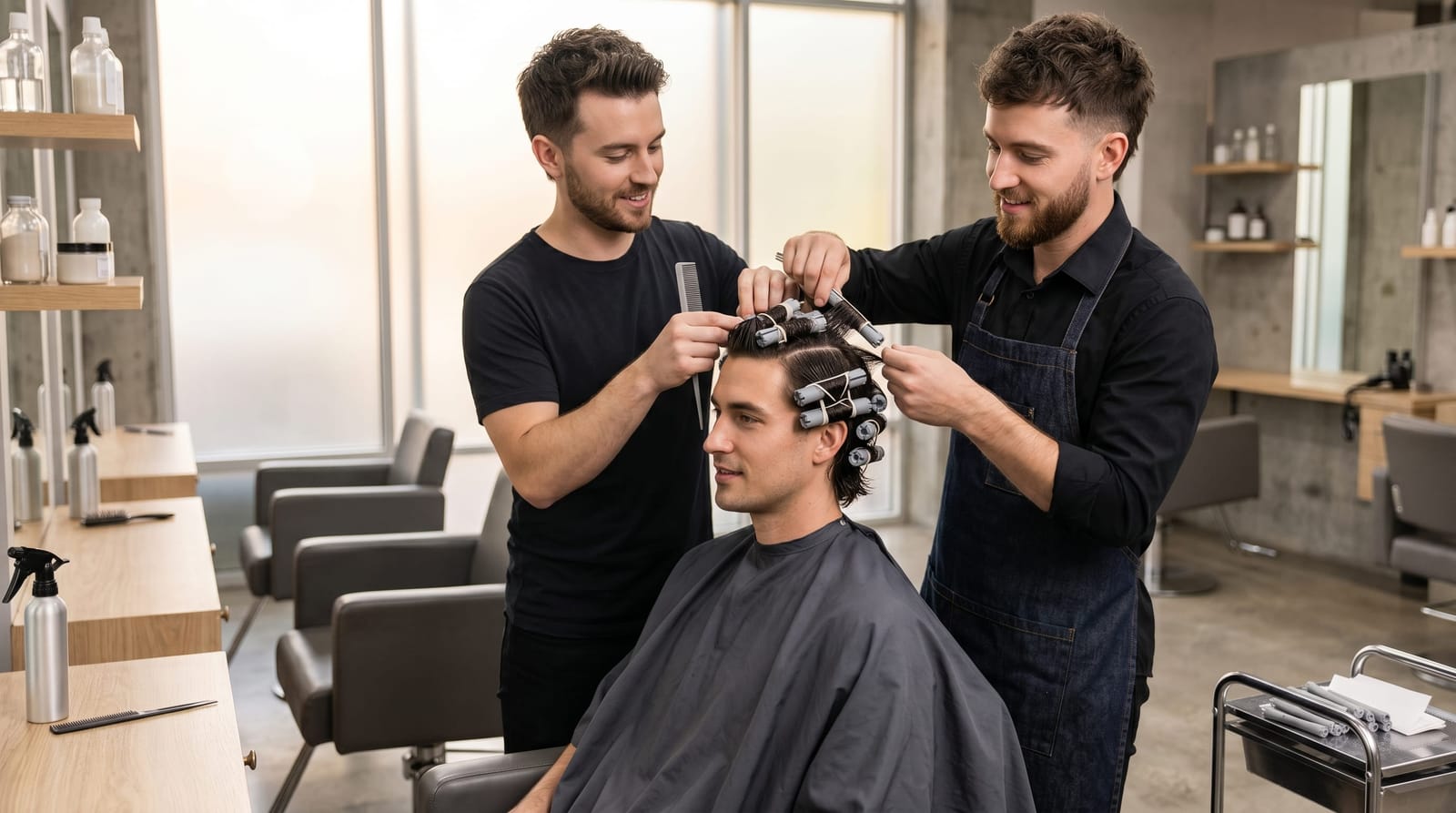
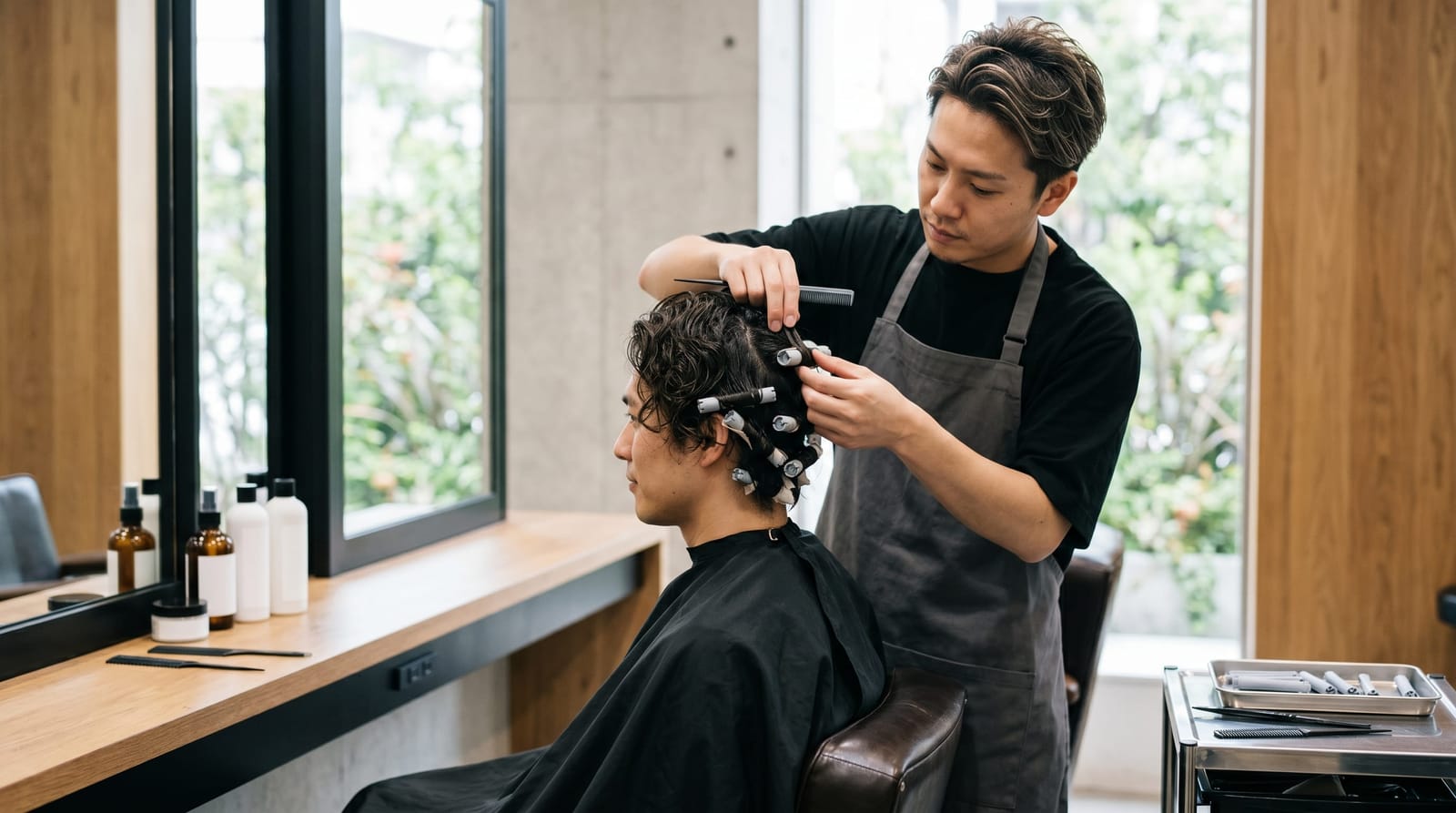
- Digital perms: Use controlled heat (typically 60-80°C) applied through electronically regulated rods to create more defined, lasting curl patterns: particularly effective for coarser or Asian hair types
- Acid perms: Work with the hair's natural pH rather than against it, resulting in softer, shinier curls with dramatically reduced frizz
- Wave perms: Use larger rods and specific sectioning patterns to produce loose, natural-looking movement rather than defined spiral curls
- Spot or partial perms: Target specific sections, like just the top or the fringe, leaving the sides and back natural for a more blended result
- Texturizing perms: Focus on adding body and movement to fine, flat hair without creating visible curl at all
A 2022 survey of professional stylists found that approximately 68% now offer at least three distinct perm variations compared to the single-formula approach standard in traditional salons. That flexibility is the single biggest shift in how modern perms serve male clients specifically.
Results: Natural Movement vs the Classic Curl
This is where the modern men's perm vs traditional perm difference is most visible: literally. Traditional perms created a look that read immediately as "permed." The curls were uniform, springy, and dense from root to tip. For men's hair in particular, this rarely looked intentional in a good way after the mid-1990s.
Modern techniques prioritize results that look like your hair could naturally grow that way. Stylists now consider:
- Your natural growth pattern and existing wave or texture
- Hair density: fine hair needs different rod tension than thick, coarse hair
- The haircut itself, since the perm is designed to complement the shape rather than override it
- How you actually style your hair at home, so the result works with minimal effort
- Whether you want definition (digital or spiral) versus movement (wave or body perm)
The goal for most men requesting a modern perm is a result that looks like they simply have great natural texture, not like they sat under a processing cap for two hours. When done well, the difference between a modern perm and natural waves can be nearly indistinguishable.
Damage, Aftercare, and Hair Health Compared
Traditional perms caused measurable structural damage in almost every case. Studies on hair fiber stress found that traditional alkaline perm formulas reduced tensile strength by 15-30% on average. For men with fine or previously color-treated hair, that number climbed higher.
Modern formulas, particularly acid perms and cysteamine-based systems, reduce that damage window significantly, with some professional-grade systems showing as little as 5-8% tensile strength reduction when applied correctly. That's a meaningful improvement for anyone planning to maintain color or continue regular styling.
Aftercare has also evolved. Recommended maintenance now typically includes:
- Sulfate-free shampoo starting 48-72 hours after the service (not 1-2 weeks as old guidance suggested)
- Lightweight curl-enhancing cream or mousse applied to damp hair to define without crunch
- Monthly deep conditioning treatments to maintain elasticity
- Avoiding excessive heat styling, particularly on digital perm results where the curl structure is heat-sensitive
Understanding men's perm cost maintenance is an important part of planning for any perm service: modern formulas may cost more upfront, but the reduced need for damage-repair treatments often balances that out over time.
Which Option Is Right for You?
Traditional perms are rarely the right choice for men in 2024. There are very few scenarios where the old alkaline formula offers an advantage over modern alternatives. However, the specific type of modern perm that suits you depends on several factors:
- Fine, straight hair: Acid perm or body wave for added volume and movement without visible curl
- Medium, slightly wavy hair: Wave perm to enhance existing texture into consistent, intentional waves
- Thick, coarse hair: Digital perm for definition that holds well and resists humidity
- Previously color-treated hair: Low-pH acid perm only, with a thorough consultation to assess current hair integrity
- Short to medium men's cuts (2-5 inches): Almost any modern technique works; the cut itself guides the perm design
The longevity of your result will also factor into this decision, how long a men's perm lasts varies by technique, hair type, and home maintenance habits, and that timeline should be part of your pre-service consultation.
Frequently Asked Questions
Is a modern men's perm vs traditional perm actually less damaging?
Yes, measurably so. Modern acid and cysteamine-based perm formulas operate at a lower pH than traditional ammonium thioglycolate systems, which reduces structural protein damage by an estimated 10-25% depending on hair type and application technique. Color-treated hair still carries more risk than virgin hair, regardless of formula.
Can men with short hair get a modern perm?
Most perm techniques require a minimum of about 2 inches of length to wrap the rods and create movement. Wave perms and texturizing perms tend to work best on hair that's at least 3-4 inches long. Very short fades and crops are generally not suitable candidates.
How do I know which type of modern perm to ask for?
Bring reference photos showing the texture and movement level you want, not just a hairstyle you like. Your stylist will assess your hair's current condition, natural texture, and the length of your cut to recommend the appropriate technique. A good consultation should take 10-15 minutes before any chemicals are mixed.
Will a modern perm work on highlighted or bleached hair?
Chemically lightened hair is the highest-risk category for any perm service. A thorough strand test and protein assessment is essential before proceeding. Some low-pH acid perms can be safely applied to lightly highlighted hair, but heavily bleached or repeatedly processed hair may not be a suitable candidate at all until the integrity improves.
The Bottom Line
The modern men's perm vs traditional perm comparison really comes down to one central fact: modern techniques were designed with natural-looking results and hair health in mind, while traditional methods prioritized chemical uniformity regardless of the consequences. Today's perm options offer genuine customization, significantly reduced damage, and results that integrate with how men actually want to wear their hair in 2024. If the idea of a perm has always felt dated or risky to you, it's worth reconsidering: the process and the results have changed more than most people realize. A thorough consultation at a salon experienced in men's services is the right first step.