Clip-In Hair Extensions: Professional Application and Styling Tips
When exploring the full world of professional hair extensions, clip-in styles stand apart as the ultimate no-commitment option for women who want dramatic length and volume on their own terms. As part of our comprehensive guide to professional hair extensions: application, maintenance, and removal services in NJ, this deep dive focuses specifically on clip-in extensions: what makes them unique, why professional involvement still matters even for a "temporary" solution, and how to get the most out of every wear. Whether you're a first-time extension wearer or a seasoned stylist client, understanding the nuances of clip-in application, color blending, and styling will transform your results from obviously fake to effortlessly gorgeous. Here's everything you need to know before booking your clip in hair extensions application salon appointment in Montclair, NJ.
Why Clip-In Extensions Deserve More Credit Than They Get
Clip-in hair extensions have a reputation problem. Many people assume they're the DIY option: the amateur's choice before committing to something "real" like tape-ins or fusion extensions. That perception dramatically undersells what clip-ins can do when they're selected carefully, applied correctly, and styled with intention.
The truth is that clip-in extensions are one of the most versatile tools in modern hair enhancement. They provide immediate length and volume without any chemical bonding, heat application, or long-term commitment. You can wear them for a wedding on Saturday, remove them Sunday morning, and have your natural hair fully intact by Monday. For women who love variety, or who want to test-drive longer hair before committing to a permanent method, clip-ins are genuinely the smartest starting point.
They're also the preferred choice for protecting natural hair through seasonal or hormonal changes. If your hair is in a growth or recovery phase, clip-ins let you enjoy full, voluminous styles without adding stress to your strands. And for special occasions, galas, photoshoots, anniversaries, they create impact without the two-hour salon appointment that other methods require.
The key distinction between mediocre and stunning clip-in results almost always comes down to three factors: hair quality, proper color matching, and application technique. All three are areas where a professional salon makes a measurable difference.
What Happens During a Professional Clip-In Hair Extensions Application
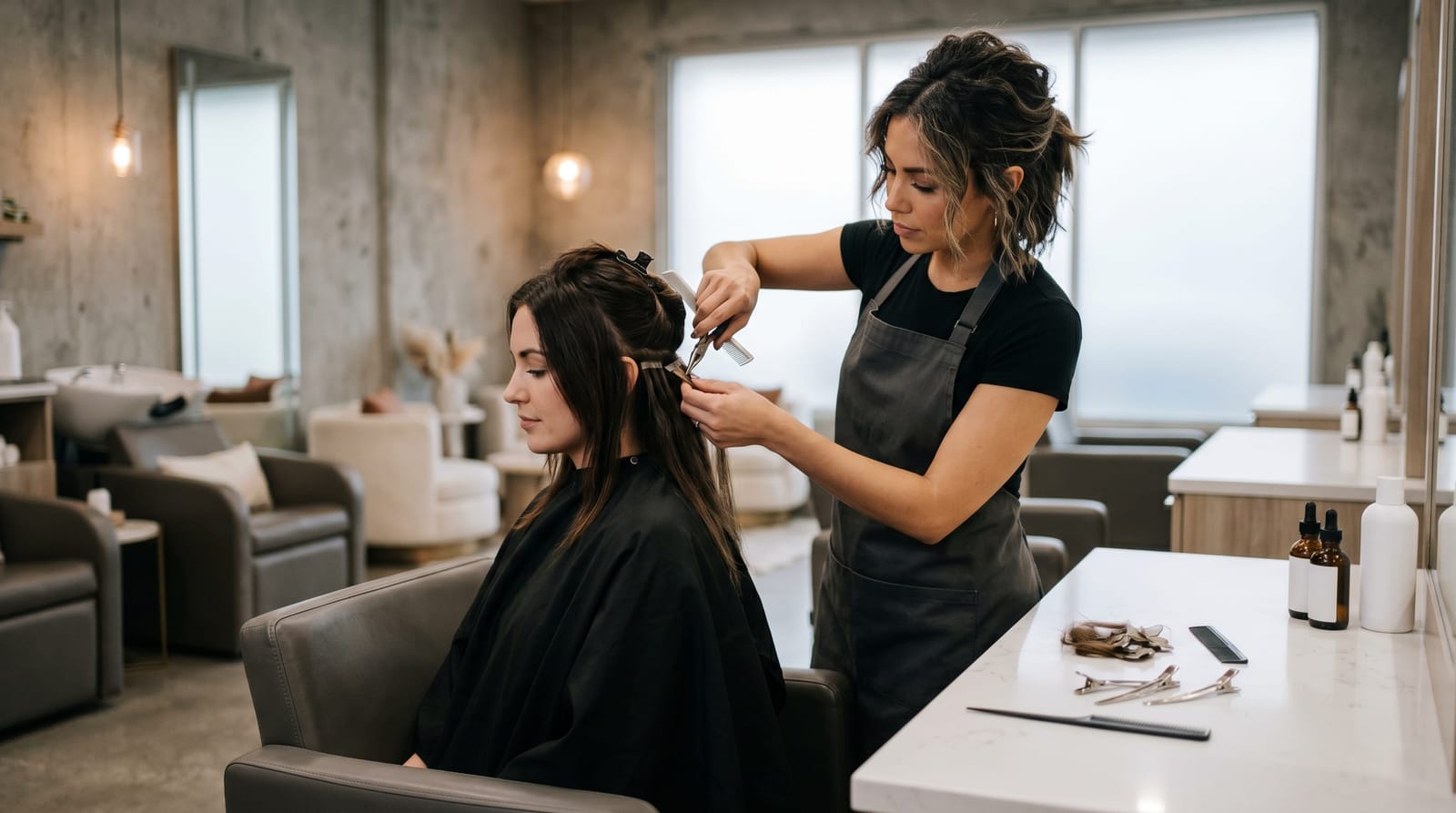
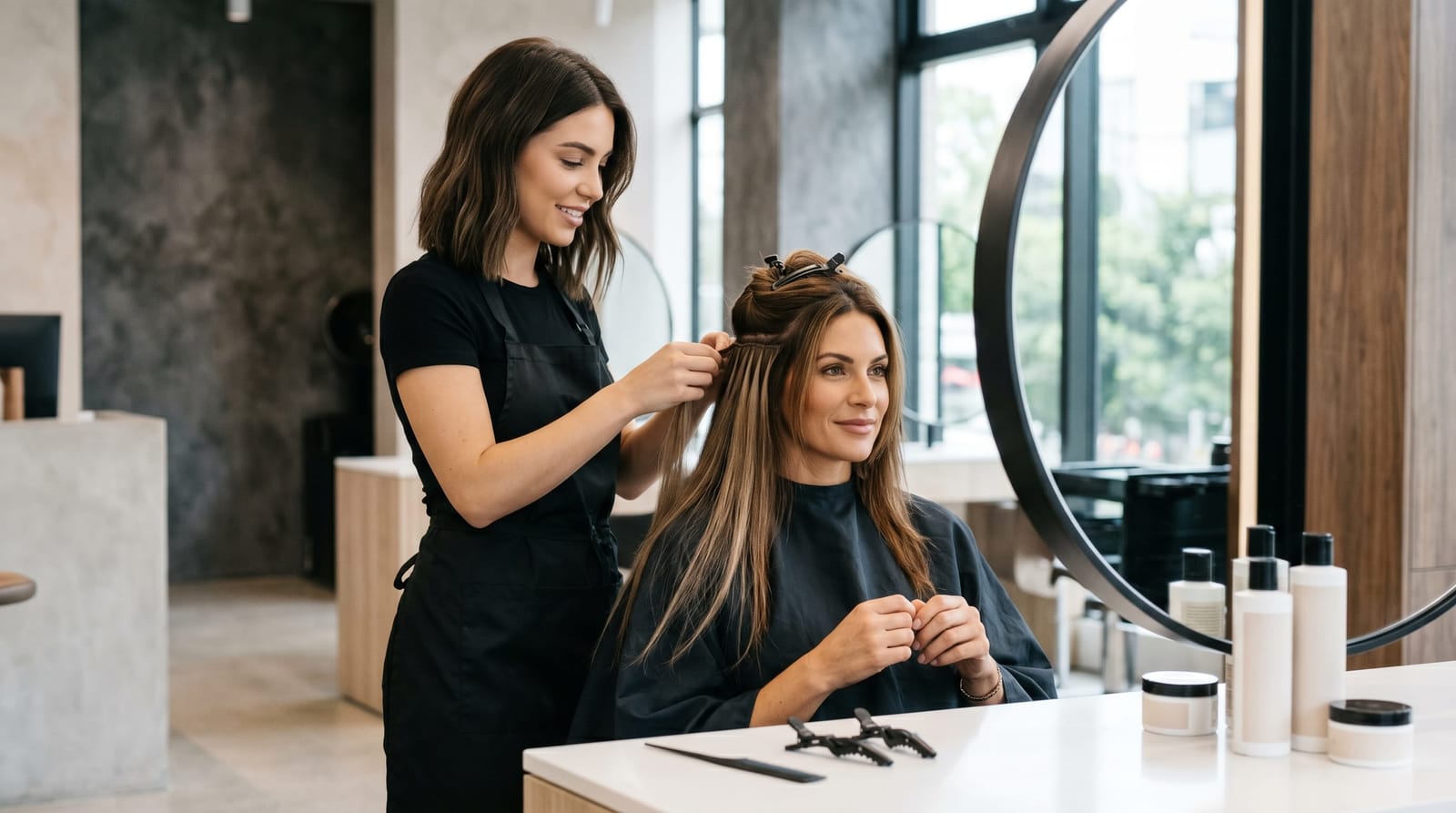
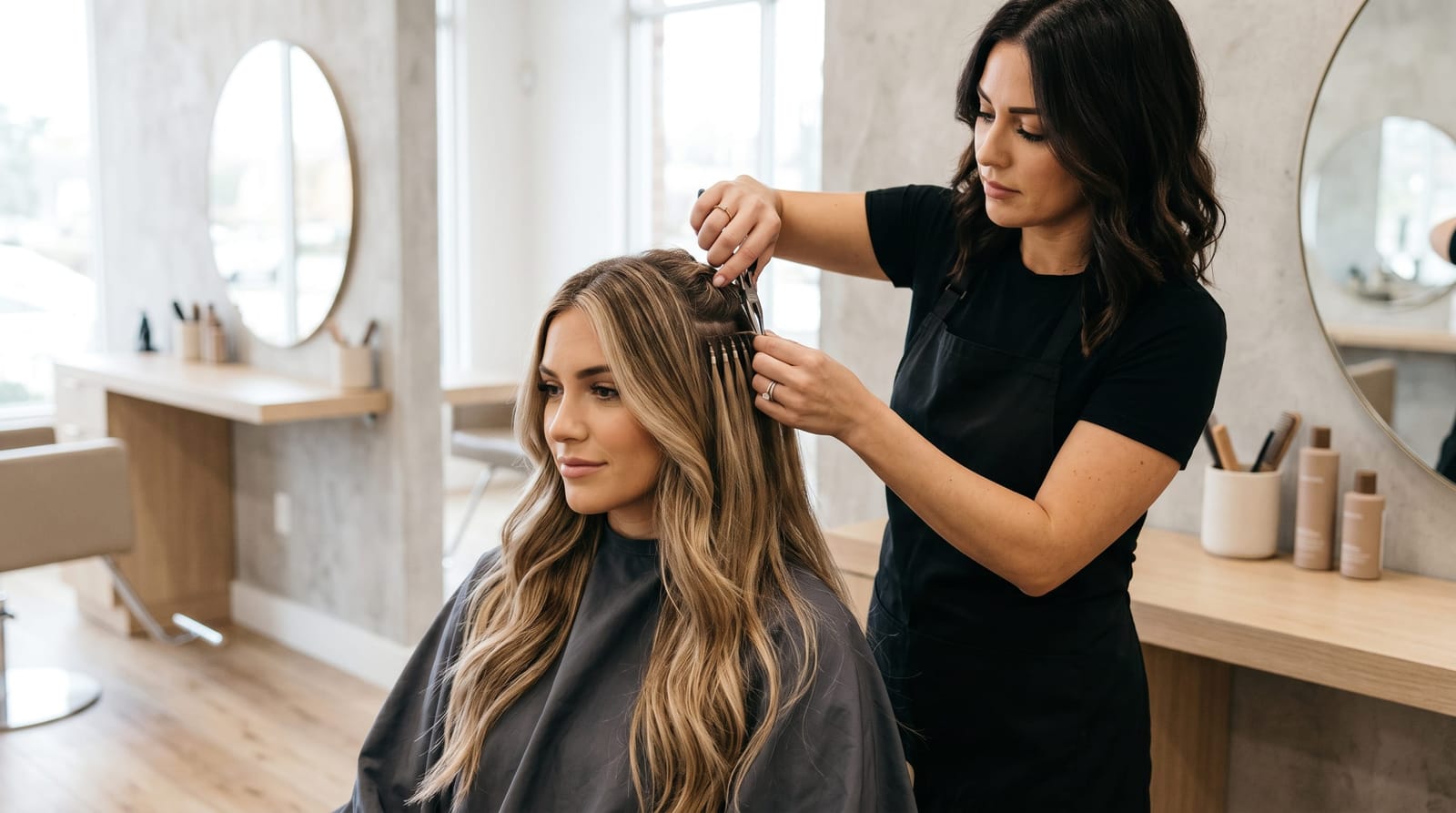
Many clients are surprised to learn that a professional clip in hair extensions application salon visit involves more than simply snapping in a few wefts. A skilled stylist approaches the session as a full hair enhancement consultation: analyzing your natural hair, selecting the right wefts, and customizing the placement strategy for your head shape and desired outcome.
The Consultation and Color Assessment
Before any extension touches your head, a reputable salon will evaluate your natural hair color under multiple lighting conditions. This matters enormously because color looks different in fluorescent salon light versus natural daylight, and an extension that matches perfectly in one environment can look mismatched in another. For detailed guidance on this process, our post on hair extension color matching salon techniques covers the professional approach to achieving a seamless blend.
The stylist will also assess your hair texture, density, and any layers or face-framing cuts that need to be accounted for in placement. Fine hair requires a different weft strategy than thick or coarse hair: something we explore further in the guide to best hair extensions for fine hair.
Sectioning and Strategic Placement
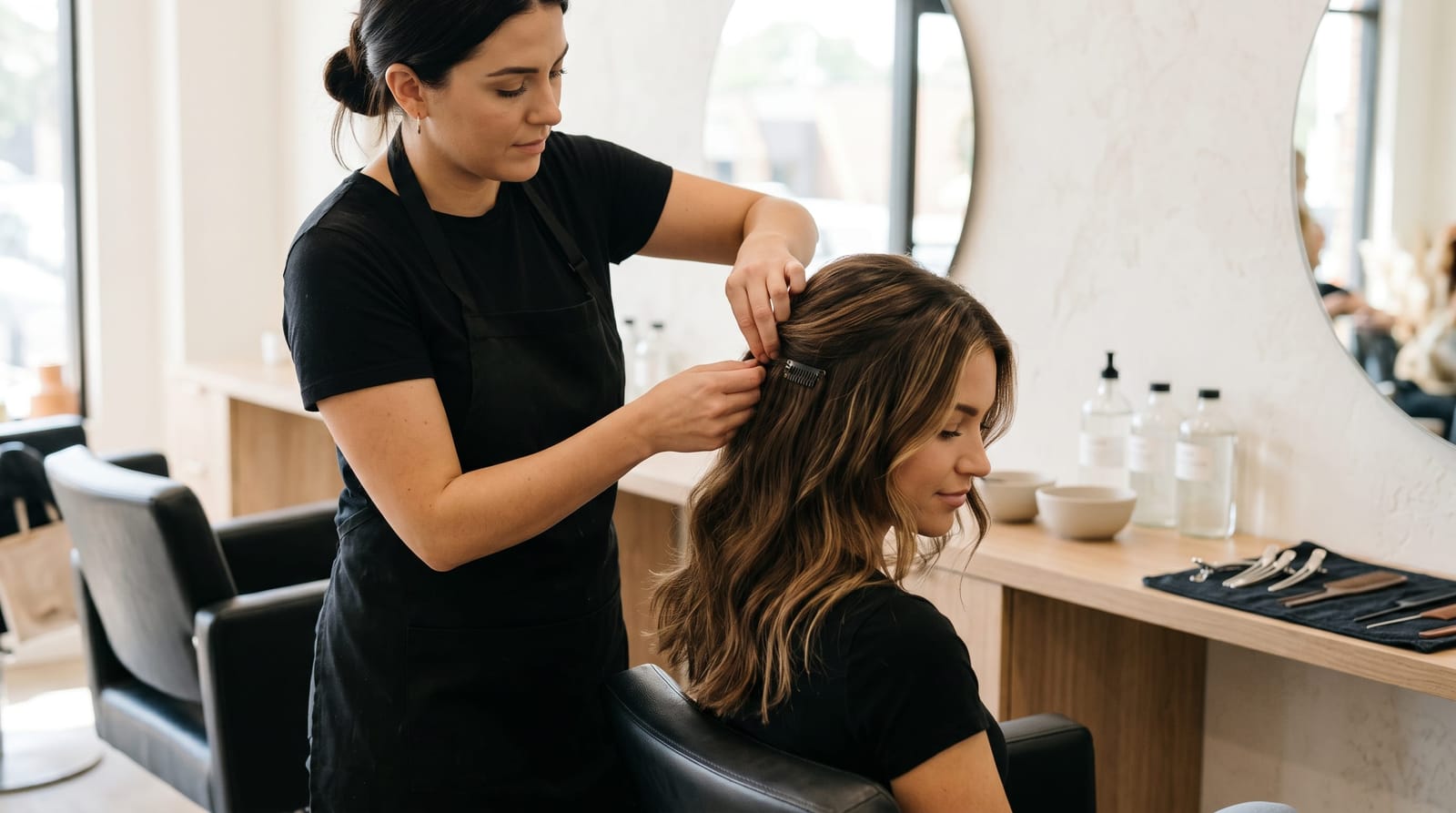
Professional application begins with precise horizontal sectioning, typically starting from the nape of the neck and working upward. Each section is parted cleanly, the clips are opened and positioned close to the root (without touching the scalp), and then snapped shut with firm, even pressure. The magic is in the layering: each subsequent row of wefts is hidden beneath the section of natural hair above it, creating a seamless visual effect that's nearly impossible to achieve without practice.
A stylist will also balance weft weight across the head, avoiding over-concentration in any one area, which can cause slippage throughout the day or visible bulk under thinner sections of hair.
Blending and Cut-In Styling
Once all wefts are placed, the final and most artful step is blending. This often involves trimming the extension ends to match your natural haircut, using a diffuser or flat iron to match curl or wave patterns, and sometimes adding face-framing pieces for dimension. This step alone can take 20-30 minutes in skilled hands and is what separates salon-applied clip-ins from a home application that looks "added on."
Choosing the Right Clip-In Extensions: What Quality Actually Means
Not all clip-in extensions are created equal, and the price range, from $30 drugstore sets to $500+ salon-grade collections, reflects genuine differences in quality, longevity, and how natural they look and feel.
Remy Human Hair vs. Synthetic
Remy human hair extensions are the gold standard for clip-ins. "Remy" refers to hair where all cuticles are aligned in the same direction, which prevents tangling and matting over time. These extensions can be heat styled, dyed (with caution), and treated much like natural hair. Synthetic options are significantly cheaper but cannot withstand heat styling and tend to look artificial under direct light.
For clients investing in quality clip-ins that will be worn regularly, Remy human hair is worth every dollar. Your salon can source or recommend specific brands based on your hair type and budget.
Weft Weight and Clip Construction
Heavier wefts provide more volume but can be uncomfortable for fine-haired clients. Quality clip sets include a variety of weft widths, wide wefts for the back panels, narrow wefts for the sides and crown, so placement can be customized precisely. The clips themselves should be silicone-lined to prevent slipping and reduce friction against natural hair. Cheap metal clips without lining are one of the most common causes of breakage in clip-in extension wearers.
Styling Clip-In Extensions Like a Professional
One of the greatest advantages of clip-ins is their styling versatility. Because they're not bonded or braided into your natural hair, you can curl them, straighten them, half-up style them, and braid them without restriction. But getting that versatility to work in your favor requires a few professional-level techniques.
Heat Styling Safely
Apply a heat protectant spray to both your natural hair and the extensions before any hot tool use. Keep flat irons and curling wands at or below 350°F for Remy human hair: higher temperatures accelerate cuticle damage and shorten the lifespan of the extensions significantly. Always style from root to tip in smooth, continuous passes rather than clamping and holding, which creates uneven heat distribution.
Updos and Braided Styles
Clip-ins work beautifully in half-up styles, ponytails, and loose braids. The trick is concealing the clips. For a high ponytail, place your wefts slightly lower than you might expect: they'll be gathered into the ponytail without showing at the hairline. For braided styles, a stylist can position narrow wefts to add thickness to the braid without creating visible bumps at the clip attachment points.
If glamour styling for a specific occasion is your priority, pairing clip-ins with professional event styling produces results that turn heads. Our guide to hair extensions for special events: temporary glamour solutions covers how salons combine clip-in and other temporary methods for weddings, galas, and photoshoots.
Waves and Beachy Textures
Clip-ins blend most naturally when the texture of the extension matches your own hair's natural movement. For wavy styles, use a large-barrel curling iron on both your natural hair and the extensions simultaneously after placement. This creates cohesive movement that makes extensions genuinely difficult to detect: the professional standard for all clip-in work.
Caring for Clip-In Extensions Between Wears
The longevity of clip-in extensions, and the answer to the common question of how long do clip in extensions last: comes down almost entirely to how well they're maintained between wears. Well-cared-for Remy human hair clip-ins can last 12-18 months or longer with regular use, while neglected sets may show significant wear within a few months.
Washing and Drying
Clip-ins should be washed every 15-20 wears, or more frequently if you use significant product. Detach the wefts from your hair before washing: never wash them while wearing them. Lay the wefts flat, apply a sulfate-free shampoo diluted in cool water, gently work it through from top to bottom (never in a circular scrubbing motion), rinse thoroughly, and apply a light conditioner to the mid-lengths and ends only. Lay flat or hang to air dry completely before storing or re-wearing. Never sleep with clip-ins in; this is one of the fastest ways to cause matting and clip damage.
Storage Best Practices
Store your clip-ins in the original packaging or a dedicated extension hanger to prevent tangling. Keeping them laid flat or loosely looped in a silk or satin bag minimizes friction between wears. Brush gently with a loop brush (not a standard paddle brush) before each wear to remove any tangles without stressing the weft attachment points.
For clients who wear clip-ins frequently and want to keep multiple sets in rotation, our comprehensive post on hair extension maintenance: keeping your investment looking perfect provides a full care calendar and product recommendations specific to different extension types.
When to See a Salon for Your Clip-In Extensions
Even though clip-ins are the most self-manageable extension type, there are several situations where professional salon involvement delivers results you simply can't replicate at home.
Color touch-ups are the most common reason. If your natural hair color changes through coloring or sun exposure, your extensions may no longer blend seamlessly. A colorist can tone or gloss your extensions to match your current color: a precise process that requires professional products and technique.
If you're noticing slippage throughout the day, a stylist can assess whether the issue is clip condition, placement strategy, or weft weight and make adjustments accordingly. Clips can be replaced on existing wefts, which is far more cost-effective than replacing the entire set.
Finally, if you're ever considering transitioning from clip-ins to a more permanent method, a consultation helps you understand your options, and when the time comes, our guide on hair extensions removal: safe professional removal process explains what to expect when stepping back from any extension method.
Wondering what the investment looks like? Pricing varies based on hair quality, weft count, and any customization involved. Our breakdown of how much do hair extensions cost at a professional salon gives you a realistic overview of what to budget for quality clip-in services in New Jersey.
Ready to Try Clip-In Extensions in Montclair?
Clip-in hair extensions offer something genuinely rare in the beauty world: transformative results without long-term commitment. But achieving those results, the kind that looks completely natural in photos, holds through a full event, and blends seamlessly with your real hair, requires the right extensions, the right technique, and ideally the right stylist. From color matching to strategic placement to that final blending cut, professional application at a clip in hair extensions application salon makes a visible difference. If you're in the Montclair, NJ area and ready to explore what clip-ins can do for your look, contact our salon to schedule a consultation. We'll match you to the right wefts, show you the placement strategy that works for your hair type, and send you home with the skills to wear them confidently every time.