Curly Hair Blowout vs Natural Styling: Pros and Cons
If you have curly hair, you have probably stood in the bathroom debating the same question: reach for the blow dryer or let your curls do their thing? The curly hair blowout vs natural styling debate is one every curl-type person eventually faces, and the honest answer is that neither option is universally better. What works depends on your hair's porosity, your lifestyle, and what you need from your hair on any given week. This guide breaks down both approaches so you can make a confident, informed decision, and know when to ask your stylist for help.
What Is a Curly Hair Blowout and How Does It Differ from Natural Styling?
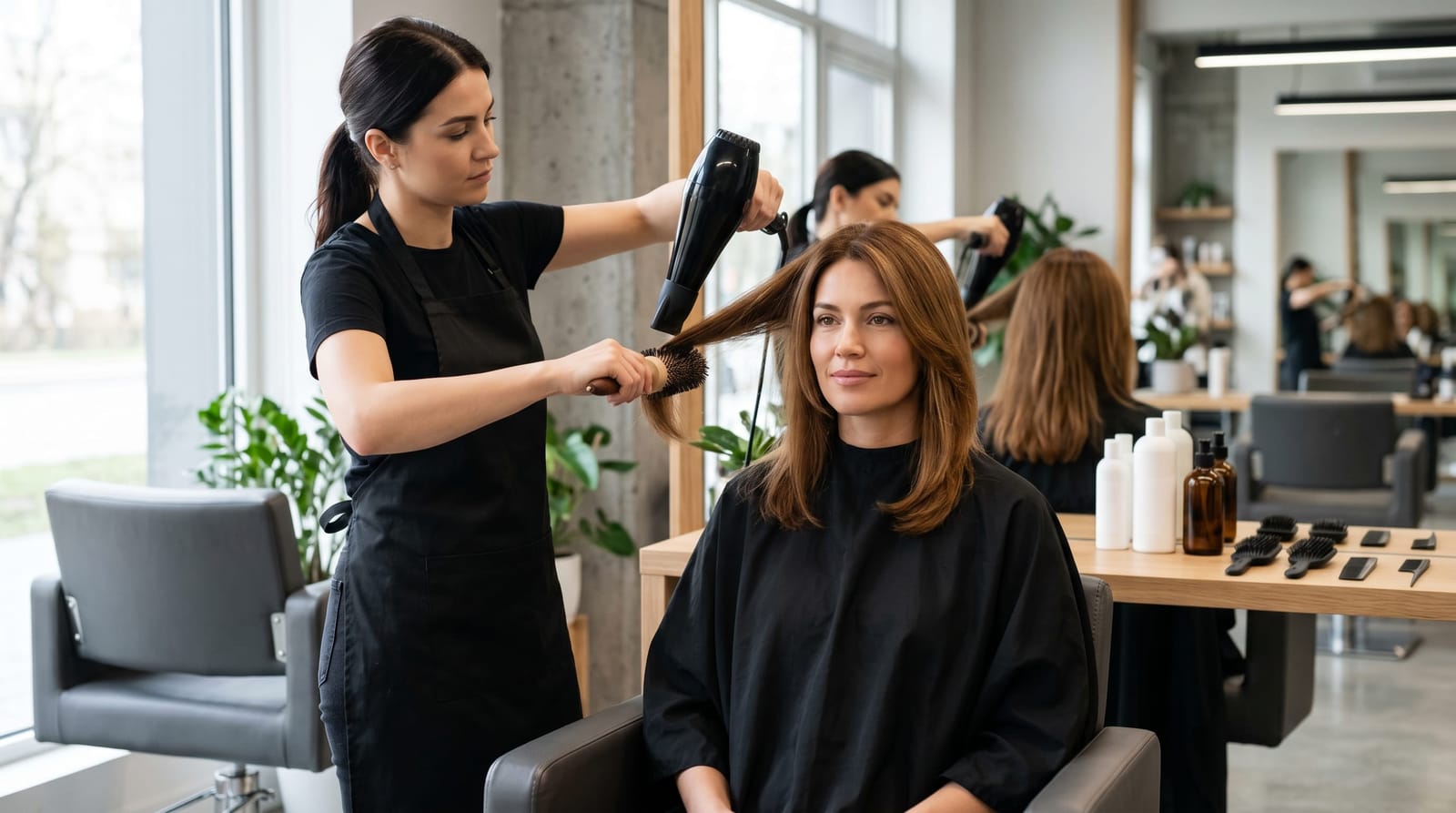
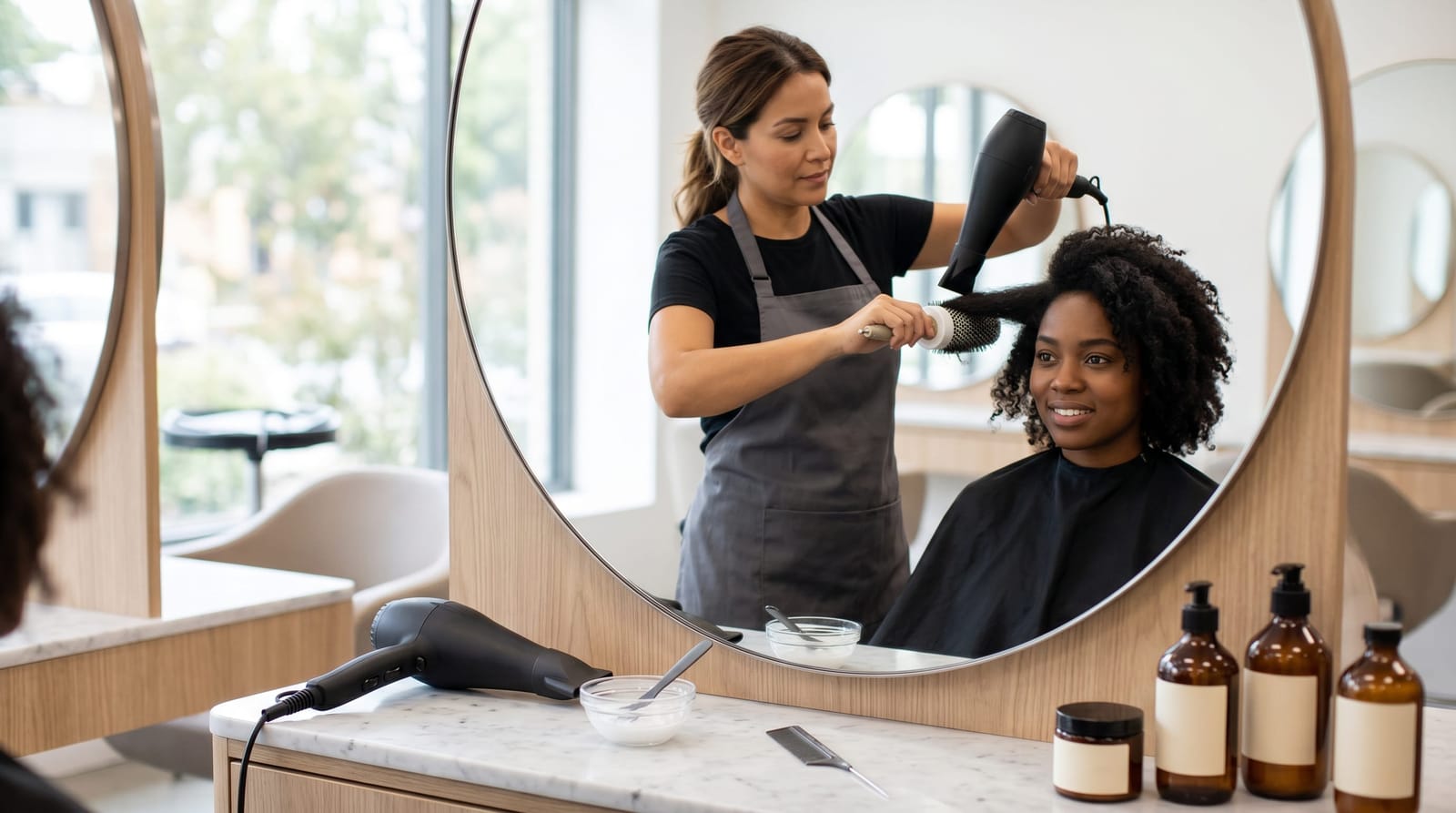
A curly hair blowout involves using a blow dryer, most often with a comb attachment or a diffuser, to stretch and smooth the curl pattern while adding volume. The result is a style that lands somewhere between fully straight and fully curly: think big, textured, semi-straight hair with movement rather than tight coils. This is different from a traditional blowout on straight hair because the goal is usually to elongate and soften curls rather than completely flatten them.
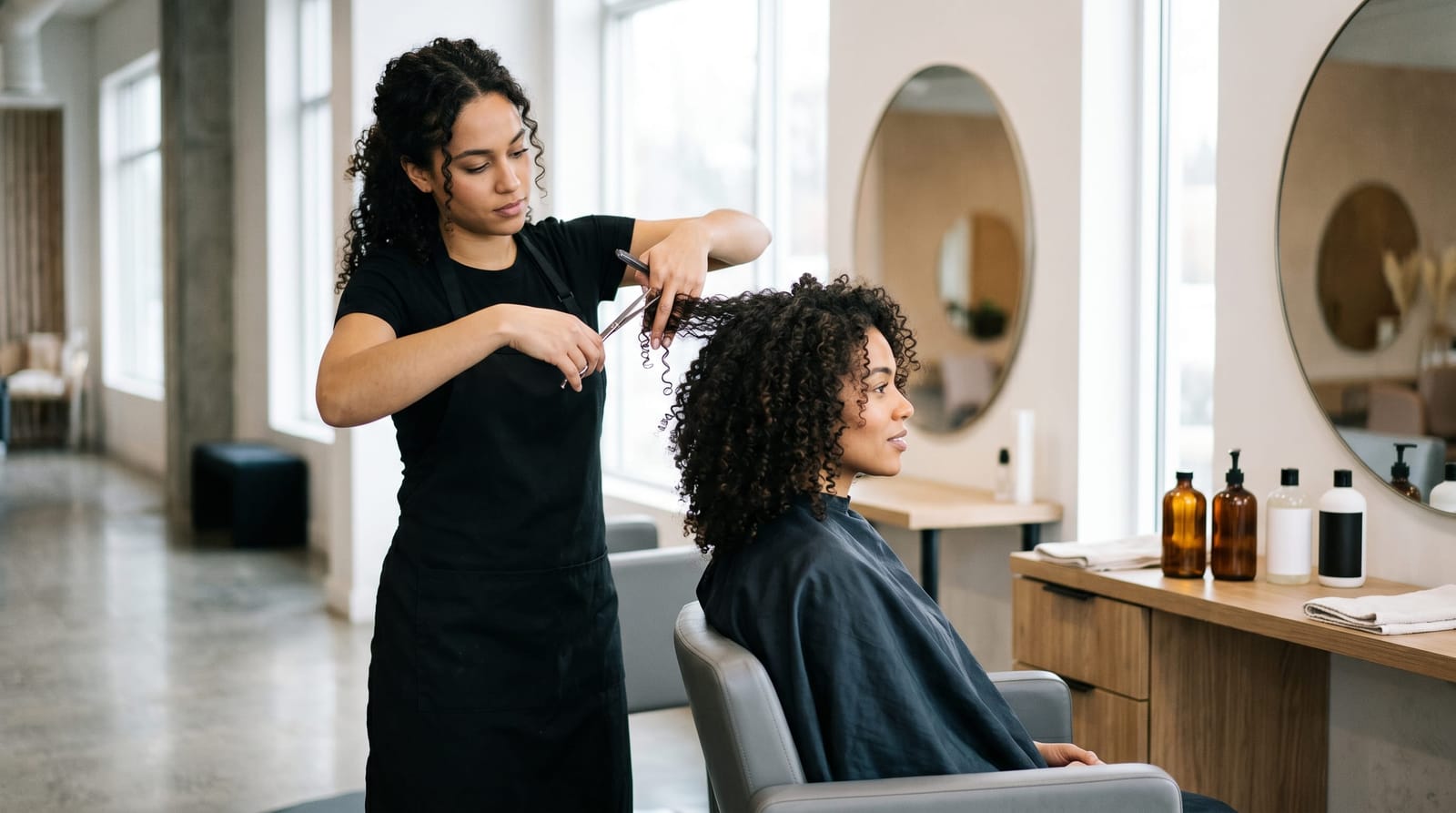
Natural styling, by contrast, means working with your curl pattern as it forms on its own: typically through air drying after applying curl-enhancing products like creams, gels, or leave-in conditioners. The curl pattern is preserved rather than altered, and no direct heat is applied during the drying process (though some people use a diffuser on low heat, which sits closer to the natural-styling end of the spectrum).
Understanding this distinction matters because the choice between curly hair blowout vs natural styling is not just aesthetic: it directly affects your hair's long-term health, your morning routine, and how much product and maintenance you need to maintain either look.
The Case for a Curly Hair Blowout: When Heat Styling Makes Sense
There are real, practical reasons why curly-haired people choose blowouts regularly. Here are the biggest advantages:
- Versatility and longevity: A well-done blowout can last three to five days with the right protective sleeping routine (a satin bonnet or pillowcase makes a measurable difference). Natural curl styles can sometimes feel weather-dependent and harder to revive on day two or three.
- Volume and frizz control: When curls are stretched with controlled heat and the right technique, the result is significant volume and reduced frizz: particularly appealing for high-porosity curls that tend to puff in humidity.
- Professional polish: For work presentations, events, or occasions where a sleeker look feels more appropriate, a blowout offers that polished finish without requiring a full chemical straightening treatment.
- Faster styling on subsequent days: After the initial blowout (which typically takes 45 to 90 minutes for curly hair, depending on thickness), styling on days two through four is significantly faster.
The key caveat: heat must be managed carefully. Studies on hair fiber damage consistently show that repeated exposure to temperatures above 365°F (185°C) causes measurable cuticle damage, including protein loss and increased porosity. A professional blowout with a heat protectant and proper technique keeps temperatures in a safer range: typically between 300°F and 350°F for most curl types.
The Case for Natural Curl Styling: Why Skipping the Heat Pays Off
Natural styling, particularly air drying, is the gentler option for curly hair, and the benefits compound over time. Here is what you gain by letting your curls dry without heat:
- Preserved curl integrity: Air drying allows the curl pattern to form without disruption, which means coils and waves spring back consistently. Over time, curls that are regularly air-dried tend to retain more elasticity.
- Reduced frizz from within: Counterintuitively, air drying can reduce long-term frizz because the cuticle is not repeatedly forced open by high heat. The cuticle closes naturally as the hair dries.
- Lower maintenance cost: Natural styling typically requires less product layering than blowout maintenance and no heat protectant, reducing both cost and product buildup over time.
- Healthier hair with consistent practice: Research from trichology literature consistently identifies heat as one of the top three contributors to mechanical and thermal damage in textured hair, alongside chemical processing and aggressive detangling.
The challenge with natural styling is that results can be inconsistent: humidity, water quality, and product choice all influence the outcome. It also requires more patience upfront, since air drying thick or dense curls can take two to four hours depending on hair volume.
For women who want curl-enhancing cuts that maximize their natural texture, exploring best haircuts for curly hair women is a great starting point: the right shape makes natural drying results significantly more predictable.
Damage Considerations: What the Curly Hair Blowout vs Natural Styling Debate Looks Like Long-Term
This is where the curly hair blowout vs natural styling comparison gets most important. Curly hair, especially type 3 and type 4 patterns, is structurally more fragile than straight hair because the bends in the curl shaft create points of mechanical weakness. This means damage accumulates faster and shows up sooner than it might on straight hair.
Blowouts, done correctly and infrequently (once every one to two weeks), are unlikely to cause significant cumulative damage, especially when heat protectant is applied to dry or damp hair before any heat contact. The problem arises with daily or near-daily heat exposure without adequate protection, which can reduce curl elasticity by approximately 30% over several months according to hair science research cited in cosmetic dermatology literature.
Natural styling, on the other hand, is not automatically damage-free. Aggressive detangling on wet hair, improper product application that causes tangling and matting, and skipping deep conditioning can all compromise curl health even without heat. The sweet spot for most people is a hybrid approach: air dry or diffuse on a low setting for most of the week, and opt for a professional curly hair blowout for special occasions or when a different look is needed.
Choosing the Right Option for Your Lifestyle
The curly hair blowout vs natural styling decision ultimately comes down to three practical factors: your available time, your hair's current health, and your style goals for the week ahead.
Consider a blowout when:
- You have a busy schedule and need a style that holds for four to five days with minimal daily effort
- You are attending an event, interview, or professional setting where a polished look is a priority
- You are working with a skilled stylist who understands curl-specific blowout techniques
Choose natural styling when:
- Your hair is feeling dry, brittle, or showing signs of heat fatigue (reduced curl spring, increased breakage)
- You are in a recovery phase after chemical services
- You have the time to properly air dry and want to maintain curl definition and long-term health
- Humidity in your area makes blowout longevity difficult to achieve
Hair porosity also plays a major role. High-porosity curls absorb moisture quickly but lose it just as fast, making them more vulnerable to heat damage: these hair types often benefit most from limiting blowouts to twice per month. Low-porosity curls resist moisture absorption and may handle occasional heat better, though they require thorough heat protectant application regardless.
Frequently Asked Questions
How often can I get a curly hair blowout without damaging my curls?
Most curl specialists recommend limiting blowouts to once every one to two weeks to minimize cumulative heat damage. If you blowout more frequently, using a quality heat protectant every single time and incorporating a weekly deep conditioning treatment is essential to offset the thermal stress on your curl pattern.
Will getting regular blowouts permanently loosen my curl pattern?
Regular heat styling can temporarily relax curl pattern, and in cases of sustained high-heat use without protection, some permanent loosening is possible over months or years. However, occasional professional blowouts performed at appropriate temperatures (under 365°F) and followed by proper curl care are very unlikely to cause permanent pattern change for most curl types.
Is a diffuser considered a blowout or natural styling?
Diffusing sits in the middle of the curly hair blowout vs natural styling spectrum. When used on a low heat and low airflow setting, a diffuser is much gentler than a traditional blowout and preserves curl pattern significantly better. Many curl experts classify low-heat diffusing as an extension of natural styling rather than a true blowout, making it a practical middle ground for busy days.
What products should I use before a curly hair blowout?
Always apply a heat protectant to damp hair before blow drying: look for products specifically formulated for curly or textured hair, as these tend to include ingredients like hydrolyzed keratin or panthenol that protect the cuticle. A lightweight leave-in conditioner applied beforehand also adds a protective moisture layer. Avoid heavy butters or oils before blow drying, as these can cause uneven heat distribution and buildup on the barrel.
The Bottom Line on Curly Hair Blowout vs Natural Styling
Neither the curly hair blowout nor natural styling is the wrong answer: they serve different purposes at different moments in your routine. For long-term curl health, natural and low-heat styling should make up the majority of your week. For versatility, polish, and those weeks when you need your style to last, a professional blowout done with curl-conscious technique is a smart tool to have available. The best curly hair care strategy is a flexible one that puts your hair's health first and adapts to your actual life. Talk to your stylist about which approach fits your curl type, porosity, and schedule: they can customize a plan that gives you the best of both worlds.