Curly Hair Cutting & Styling: Expert Techniques for Beautiful Natural Curls
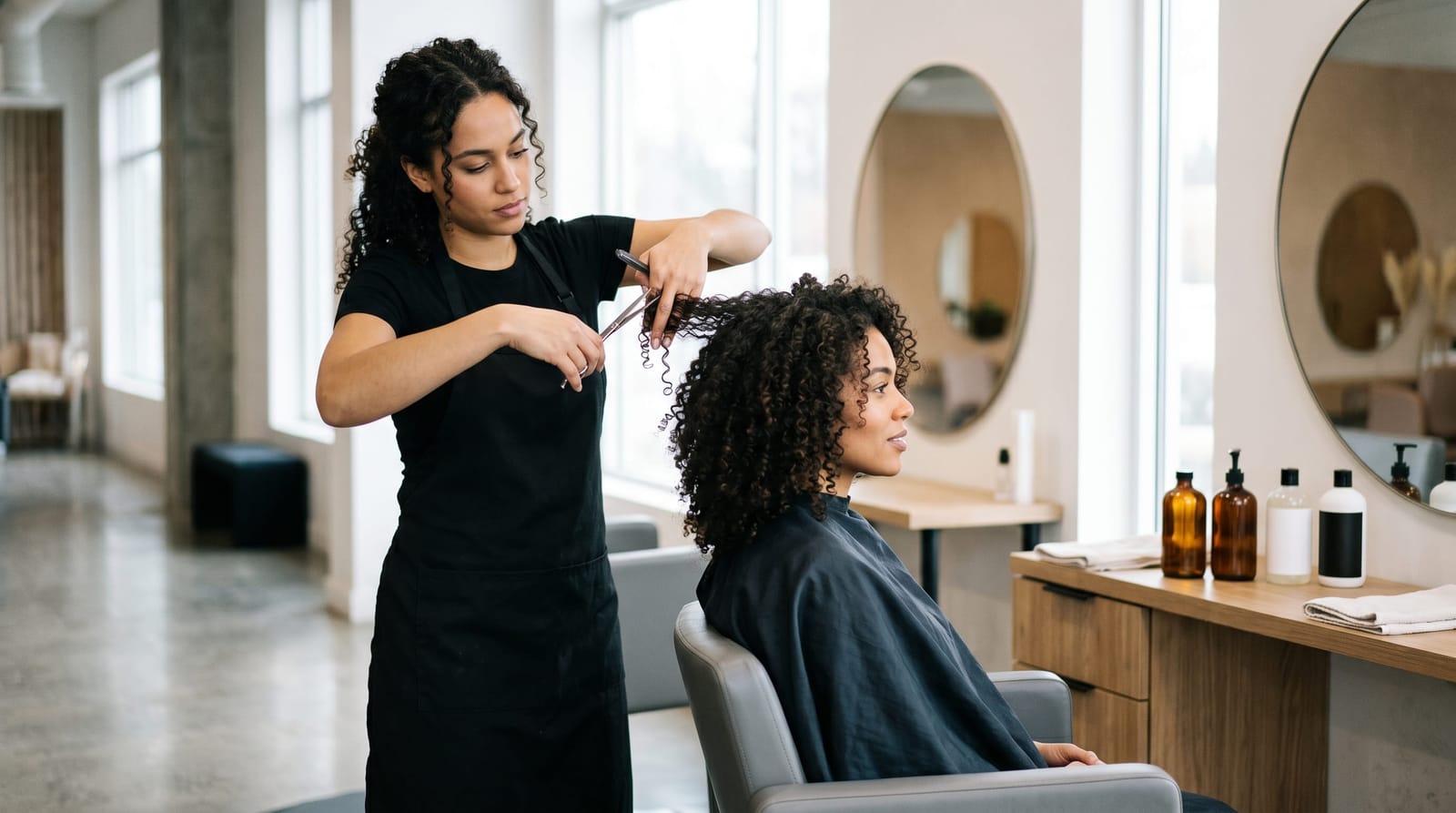
Finding the right curly hair cut salon in NJ can feel like searching for a needle in a haystack. When it comes to the full spectrum of women's haircut and styling services in Northern New Jersey, curly hair deserves its own conversation entirely. Curly hair behaves differently, shrinks differently, and responds to scissors in ways that straight hair simply does not. According to industry surveys, over 65% of curly-haired clients report leaving salons dissatisfied with their cut at least once, because most stylists are trained primarily on straight hair techniques. This guide breaks down everything you need to know: the right cutting methods, styling approaches, product choices, and maintenance routines that actually work for natural curls. Whether your hair is loosely wavy or tightly coiled, understanding these fundamentals will transform your results.
Why Curly Hair Requires a Completely Different Cutting Approach
Curly hair is not simply straight hair that happens to bend. Its unique structure: an oval or asymmetrical follicle shape: means each strand grows in a spiral, creating natural shrinkage, uneven weight distribution, and unpredictable movement. A stylist at a dedicated curly hair cut salon in NJ understands that cutting curly hair dry, or using the Deva cut method, produces entirely different results than cutting it wet.
The Shrinkage Factor
Shrinkage is one of the most misunderstood aspects of curly hair care. Type 3B curls can shrink up to 40% of their stretched length. Type 4C coils can shrink up to 75%. This means a stylist who cuts wet hair straight across the bottom will create an uneven, bushy shape once the hair dries and contracts. Experienced curl specialists account for shrinkage before making a single cut.
Dry Cutting vs. Wet Cutting
Dry cutting allows stylists to see exactly how each curl falls, where weight accumulates, and which areas need thinning or shaping. Wet cutting stretches the curl, removing the visual feedback a stylist needs to make precise decisions. Most curl specialists in Northern NJ recommend dry cutting for Type 2C through Type 4 textures. Some stylists use a hybrid approach, a wet detangle followed by a dry cut, to combine manageability with accuracy.
Point Cutting and Slide Cutting
Blunt cuts create bulk in curly hair. Point cutting, angling the scissors into the hair at a 45-degree angle, removes weight while preserving curl integrity. Slide cutting removes interior bulk without disrupting the curl's coil pattern. These two techniques, used together, give curly hair movement, bounce, and shape that a standard blunt cut cannot achieve.
Understanding Your Curl Type Before You Book
The curl typing system, popularized by stylist Andre Walker and later expanded by the natural hair community, gives both clients and stylists a common language. Knowing your curl type before visiting a curly hair cut salon in NJ helps you communicate your goals clearly and ensures your stylist selects the right techniques.
Type 2: Wavy Hair
Type 2 hair ranges from loose, barely-there waves (2A) to defined S-shaped waves with some frizz (2C). This texture is prone to going flat at the roots and frizzy at the ends. The ideal cut for Type 2 hair typically involves layers that remove bulk and encourage the wave pattern to form. Lightweight products work best: heavy creams weigh down the wave.
Type 3: Curly Hair
Type 3 curls range from loose, springy loops (3A) to tight, well-defined corkscrews (3C). This is arguably the most varied category. Type 3A hair benefits from long layers and minimal product. Type 3C hair, which sits closer to coily territory, needs more moisture and often responds well to the Curly Girl Method. Shrinkage in Type 3 hair typically ranges from 30% to 50%.
Type 4: Coily Hair
Type 4 hair is densely packed, fragile, and highly susceptible to dryness. Type 4A coils have a defined S-pattern when stretched. Type 4B and 4C hair has a Z-pattern or no defined pattern at all. This texture requires the most moisture, the gentlest handling, and a stylist who specifically understands coily hair cutting techniques. In Northern NJ, finding a salon with true Type 4 expertise takes research, but those salons exist and are worth seeking out.
Curl-Specific Styling Methods That Actually Work
A great cut from a skilled curly hair cut salon in NJ sets the foundation, but your at-home styling technique determines the day-to-day result. Three methods dominate the curly hair world, each with its own advantages depending on curl type and desired finish.
The Rake and Shake Method
Apply your leave-in conditioner or curl cream to soaking wet hair. Using your fingers like a wide-tooth comb, rake the product through each section from root to tip. Once coated, shake each section downward to encourage the curl to clump naturally. This method works well for Type 2C through 3B hair and creates soft, separated curls with minimal frizz.
Squish to Condish
This technique, developed within the Curly Girl Method community, involves squishing conditioner into the hair while it is still soaking wet in the shower. The squishing motion encourages curl clumping at the root level. Many curl specialists recommend this as a foundational technique for Type 3 and 4 hair. Studies within the curly hair community consistently show that 80% of curl frizz originates from disrupting the hair's hydrogen bonds while wet: the squish technique minimizes this disruption.
Finger Coiling
For tighter curl types, finger coiling defines each curl individually by wrapping small sections around a finger while applying product. It is time-intensive but produces extremely defined, uniform curls. This method is especially effective for Type 3C and 4A hair. The result typically lasts 3 to 5 days with proper night care.
Product Recommendations by Curl Type
Product selection is where many curly-haired people go wrong, not because they choose bad products, but because they choose products designed for a different curl type. Visiting a knowledgeable curly hair cut salon in NJ often includes a product consultation, which is one of the most valuable parts of the appointment.
The LOC and LCO Methods
LOC stands for Liquid, Oil, Cream: a layering sequence that locks moisture into curly and coily hair. You apply a water-based leave-in conditioner first, seal it with a light oil, then add a styling cream on top. LCO reverses the oil and cream layers and works better for finer curl types that get weighed down easily. Type 4 hair almost universally benefits from LOC. Type 2 and lighter Type 3 hair typically performs better with LCO or just a lightweight gel.
Gels and Mousses for Hold
A good curl-defining gel creates a cast around the curl as it dries, locking out humidity and frizz. Once the hair is fully dry, you "scrunch out the crunch": breaking the gel cast with your hands to reveal soft, defined curls underneath. This technique alone solves one of the most common complaints curly-haired women have about gel: the stiffness. Alcohol-free gels work best for all curl types, particularly types 3 and 4.
Protein vs. Moisture Balance
Curly hair constantly walks a line between needing protein (which strengthens the curl structure) and moisture (which keeps it flexible and soft). Hair that is over-moisturized goes limp and loses definition. Hair that is over-proteinated becomes brittle and snaps. A simple test: stretch a single wet strand. If it snaps immediately with no elasticity, add moisture. If it stretches far without snapping back, add protein. Most curly-haired women need a protein treatment once every 4 to 6 weeks.
Maintenance Routines That Extend Your Curl Health Between Salon Visits
Even the best cut from a curly hair cut salon in NJ fades without the right at-home maintenance routine. Curl health is cumulative: what you do between appointments matters as much as the appointment itself.
The Pineapple Method for Overnight Protection
Loosely gathering curls at the very top of the head before sleep, called "pineappling", prevents curl compression and friction damage overnight. Pairing this with a satin or silk pillowcase reduces frizz by approximately 40% compared to cotton pillowcases, according to data from hair health researchers. A satin bonnet provides even more protection for Type 4 textures.
Refresh Routines for Day 2 and Beyond
Most curly styles last 3 to 7 days with proper refreshing. A spray bottle filled with water and a few drops of leave-in conditioner reactivates curl memory without restarting the entire styling process. Applying a small amount of your original styling product on top of the refresh spray, then scrunching, revives definition in flattened areas. Avoiding touching your hair while it dries on day one is the single biggest factor in how well it refreshes on day two.
Trim Schedule for Curl Health
Curly hair needs trims every 10 to 12 weeks on average: less frequently than straight hair, which typically needs cuts every 6 to 8 weeks. Because curly hair's ends are often hidden within the curl pattern, split ends cause internal tangling and breakage long before they become visible. Regular trims from a curl-specialist prevent this type of invisible damage.
What to Look for When Choosing a Curly Hair Salon in NJ
Not every salon that claims to "do curly hair" has invested in proper curl education. When searching for the right curly hair cut salon in NJ, knowing what to ask and what to look for narrows your options quickly.
Questions to Ask Before Booking
- Does the stylist specialize in curly hair, or is it one of many services offered?
- What cutting method do they use: dry cutting, wet cutting, or Deva cut?
- Can you see photos of their work on curl types similar to yours?
- Do they offer a consultation before the cut?
- Are they trained in a recognized curl education program such as DevaCurl, Ouidad, or TexturePro?
Red Flags to Watch For
- A stylist who immediately reaches for a flat iron without discussing your curl goals
- No curl-specific products available in the salon
- A portfolio that shows primarily straight or blown-out hair
- No mention of shrinkage during the consultation
- Rushing through the consultation in under 5 minutes
For women weighing different finish options, understanding the differences between a curly hair blowout vs natural styling is an important part of the conversation: both approaches have real advantages depending on your lifestyle and hair goals.
Related Topics Worth Exploring
Cutting technique is the foundation of great curly hair, but the shape and style you choose matters just as much. Exploring the best haircuts for curly hair women gives you a clearer picture of which silhouettes, layered cuts, long bobs, or shape-focused trims, work best for your specific curl pattern and face shape.
If you are also considering your options for polished, straightened looks, the professional wash and blowdry services we offer provide salon-quality results that work beautifully even on naturally curly hair. For women who need versatility between natural and smooth styles, that service connects directly to your curl care routine. And for those moments when a refined, finished look matters, weddings, galas, professional events, our formal hairstyling for special occasions covers elegant updos and event hair that honors your curl pattern rather than fighting it.
Women managing full schedules who need styles that require minimal daily effort will also find useful guidance in our coverage of haircut styles for professional women, which addresses modern cuts designed to work with natural texture rather than against it.
Conclusion
Beautiful natural curls start with the right cut, and the right cut starts with a stylist who genuinely understands how curly hair grows, moves, and responds to technique. From dry cutting methods that account for shrinkage to product layering strategies that lock in definition for days, every element of curly hair care builds on a foundation of expertise. If you have spent years frustrated with results that do not reflect your hair's actual potential, the issue is almost certainly technique, not your hair. Finding a skilled curly hair cut salon in NJ that treats curly hair as a specialty rather than an afterthought makes all the difference. Book a curl consultation with our team today and experience what your natural texture can actually do.