How Often Should Women Get Haircuts for Healthy Hair
One of the most common questions women ask their stylists is deceptively simple: how often should women get haircuts to actually keep their hair healthy? The answer depends on more than just how fast your hair grows. Your hair length, texture, chemical treatments, and styling habits all play a role. Whether you're managing a pixie cut or growing out long layers, this guide breaks down the exact trim frequency your hair needs, plus practical advice for busy professional women who can't afford bad hair days.
Why Haircut Frequency Matters More Than You Think
Skipping trims isn't just a style issue: it's a hair health issue. Split ends don't stay at the tip of the strand. Left untreated, they travel up the hair shaft, causing breakage that can set back your length goals by months. According to hair care professionals, split ends can travel up to an inch or more up the strand before you even notice visible damage.
Regular haircuts remove that compromised section before it spreads. They also restore shape to a style that has grown out unevenly, which is especially important for precision cuts like bobs or layered styles. Studies from professional styling associations consistently show that women who maintain a regular trim schedule report better shine, less frizz, and more manageable hair overall compared to those who wait until damage is visible.
Beyond damage control, there's a confidence factor. Research shows that 72% of women report feeling more put-together and professionally confident on days when their hair looks polished. A well-maintained cut is one of the most reliable ways to achieve that consistently, especially for women in client-facing roles.
Recommended Haircut Frequency by Hair Length
The single biggest factor in determining how often should women get haircuts is length. Here's what professional stylists recommend:
Short Hair (Pixie Cuts, Bobs, and Crops)
Short styles require the most frequent maintenance: typically every 4 to 6 weeks. At this length, even half an inch of new growth can dramatically change the shape of the cut. A pixie that hasn't been trimmed in 8 weeks may look completely different from the original style. For women who depend on a sharp, polished look for work, this frequency keeps the cut looking intentional rather than grown-out.
Mid-Length Hair (Lobs, Shoulder-Length Styles)
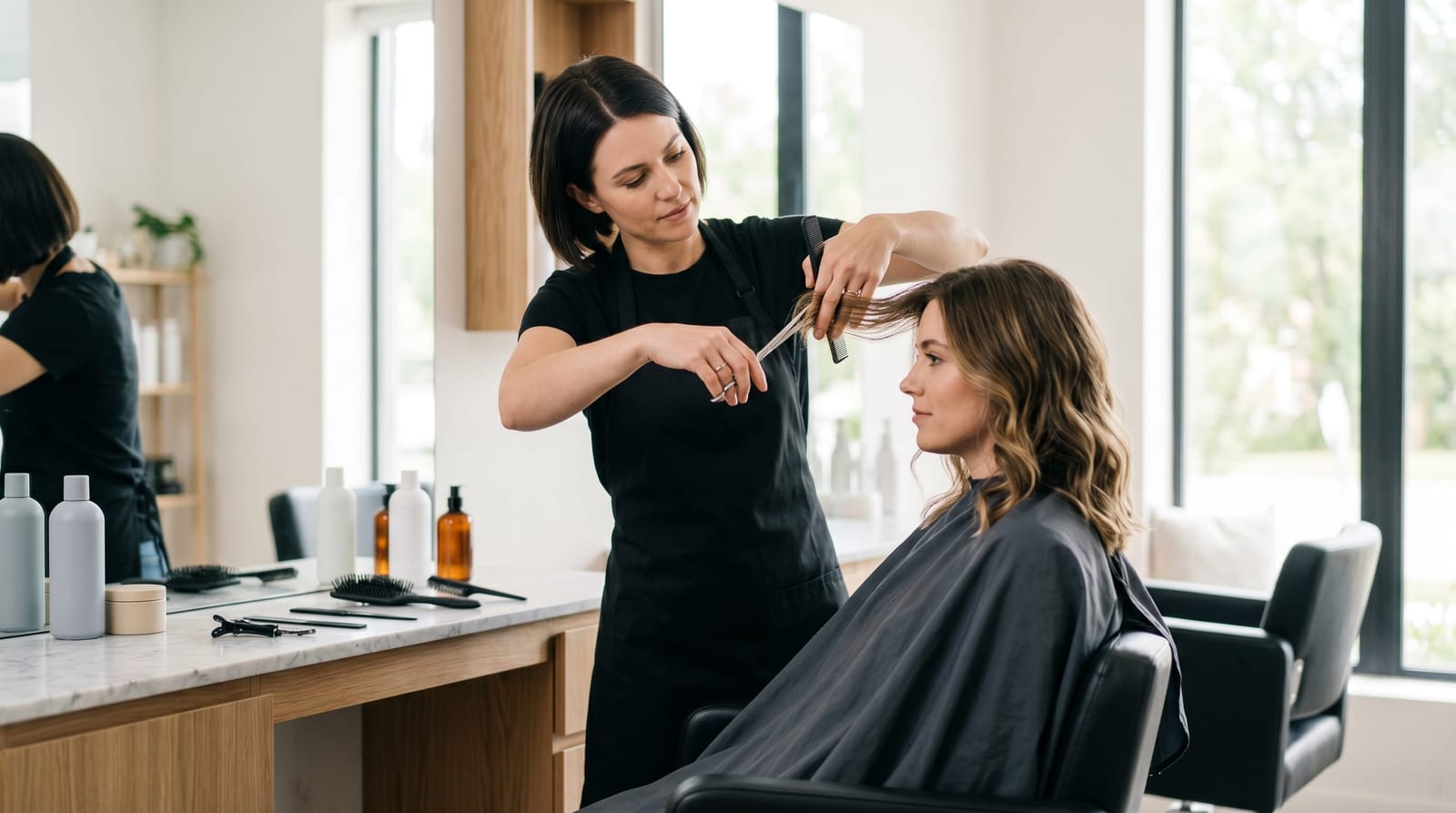
Mid-length styles fall in the sweet spot. Most stylists recommend a trim every 8 to 12 weeks, or roughly every 2 to 3 months. This length benefits from regular shaping to prevent the dreaded "shapeless" middle stage where the hair is too long for a short style but doesn't yet read as intentionally long. Layers in this length range can collapse and lose definition within 10 to 12 weeks without a refresh.
Long Hair
Long hair needs trimming every 8 to 12 weeks as well, with some women stretching to every 6 months if their ends are in excellent condition. The key difference from mid-length hair is that the focus shifts almost entirely to end health rather than shape maintenance. Women growing their hair out often make the mistake of avoiding all trims, but removing just ¼ inch every 10 to 12 weeks prevents the breakage that can stall length retention for months.
How Hair Type and Chemical Treatments Change the Equation
Length is just the starting point. Hair type and treatment history significantly affect how often should women get haircuts to maintain optimal health.
Curly and Textured Hair
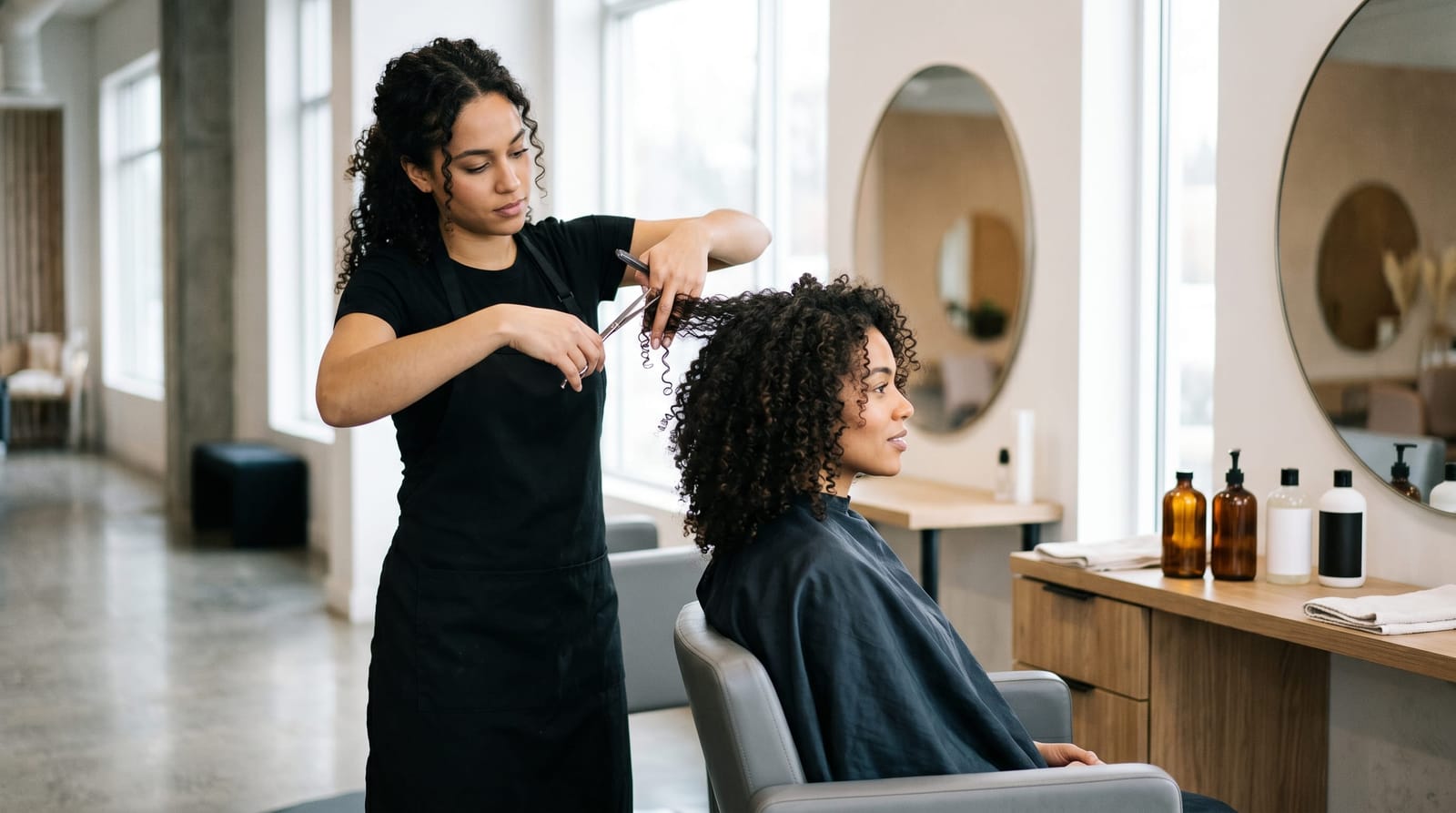
Curly hair is structurally more prone to dryness because the natural oils from the scalp have difficulty traveling down a curved hair shaft. This makes curly hair more susceptible to split ends and breakage. Women with curly or coily textures generally benefit from trims every 8 to 10 weeks, even for longer lengths. The good news is that a dry cut, performed on styled, dry curls, shows the natural curl pattern more accurately and helps the stylist preserve length while removing only what's truly damaged.
Color-Treated and Chemically Processed Hair
Chemical processes, including bleaching, relaxing, and perming, weaken the hair's protein structure. Color-treated hair breaks down roughly 15 to 20% faster than virgin hair under the same conditions. If you color your hair regularly, plan for trims every 6 to 8 weeks rather than waiting the full 12. This is especially true for highlighted hair, where the lightened sections are more porous and vulnerable to snapping under tension.
Fine and Thin Hair
Fine hair shows damage and loss of shape more quickly than thicker strands. Women with fine hair often benefit from more frequent trims: every 6 to 8 weeks, because split ends make fine strands appear even thinner and more limp at the ends. A fresh trim gives fine hair a fuller, blunter appearance at the bottom, which creates the illusion of more density.
A Practical Schedule for Busy Professional Women
Knowing the recommended frequency and actually keeping appointments are two different challenges. If you're a busy professional, the secret is to book your next appointment before you leave your current one. Most salons will hold a standing appointment, which means you're not scrambling to find an opening when your ends are already overdue.
Here's a simple framework to anchor your schedule:
- Short styles: Schedule every 5 weeks as a default: this lands between the 4-to-6-week window and creates a consistent monthly-ish rhythm.
- Mid-length styles: Book every 10 weeks, roughly 5 times per year.
- Long hair with color: Coordinate trim appointments with your color touch-up schedule every 6 to 8 weeks.
- Long hair, no chemical treatments: Aim for 4 appointments per year: roughly once per season.
If you're exploring styles that require less upkeep between appointments, a look at low maintenance haircuts for busy moms covers options designed to stay polished longer with minimal daily effort.
And if you're unsure which length or style is the right fit for your hair type and lifestyle, professional haircut consultation resources can help you walk into your appointment with a clear vision: saving time and ensuring better results.
Signs Your Hair Is Overdue for a Trim
Even with the best intentions, it's easy to let appointments slip. Watch for these signs that your hair needs attention regardless of where you are in your scheduled timeline:
- Visible split ends or white tips on the strands
- Hair that tangles more easily, especially at the ends
- Loss of shape: layers that have merged or a once-sharp bob that now looks rounded and heavy
- Increased frizz or dullness that conditioning treatments aren't resolving
- Breakage visible on your pillow, clothing, or shower drain that exceeds normal shedding (normal shedding is approximately 50 to 100 strands per day)
Any of these signals means it's time, even if your last trim was only 6 weeks ago.
Frequently Asked Questions
How often should women get haircuts if they're trying to grow their hair out?
Counterintuitively, growing out your hair still requires trims, just less aggressive ones. Plan for micro-trims of ¼ inch every 10 to 12 weeks. This removes damaged ends that would otherwise break off, keeping the hair you grow. Women who skip trims entirely while growing often find their hair stalls at a certain length because breakage is outpacing growth.
Does hair texture affect how often you should get a haircut?
Yes, significantly. Curly and coily textures tend to be drier and more fragile at the ends, so they benefit from trims every 8 to 10 weeks. Fine hair loses shape and shows damage faster, requiring trims every 6 to 8 weeks. Thick, straight hair in good condition can often stretch to 12 weeks between appointments without visible deterioration.
Can I trim my own hair between salon appointments?
Minor dusting, removing just the very tip of the ends, can be done at home with sharp hair scissors if you know what you're doing. However, at-home trims are not a substitute for professional cuts. Without training, it's easy to cut unevenly, blunt a style meant to have texture, or remove more length than intended. Home trims work best as maintenance between appointments, not as replacements for them.
How often should women with color-treated hair get haircuts?
Color-treated hair should be trimmed every 6 to 8 weeks. Chemical processing weakens the hair structure and makes ends more prone to splitting and breakage. Many women find it convenient to schedule a trim at every other color appointment, which naturally creates a 6-to-8-week rhythm depending on their color maintenance schedule.
The Bottom Line on Haircut Frequency
How often should women get haircuts ultimately comes down to four variables: length, hair type, chemical treatments, and your personal style goals. Short styles need attention every 4 to 6 weeks, mid-length and long hair every 8 to 12 weeks, and chemically treated hair every 6 to 8 weeks. Consistent trims aren't just about looking good: they're the foundation of genuinely healthy hair. For women in Montclair NJ and the surrounding Northern NJ area looking for expert guidance on the right cut and schedule for their specific hair, a consultation with an experienced women's haircut salon is the best first step.