Hair Extension Color Matching: Getting the Perfect Blend
One of the most common concerns women have before committing to extensions is whether they'll look natural. Color matching is the single most important factor separating a stunning transformation from an obvious mismatch. Whether you're enhancing volume, adding length, or blending highlights, the hair extension color matching salon experience you choose will determine everything. This guide walks you through exactly how professional colorists achieve a seamless, undetectable blend, and what you should expect during the process.
Why Color Matching Is More Complicated Than It Looks
Most people assume hair color is straightforward: you pick the closest shade and you're done. In reality, professional colorists evaluate at least four distinct dimensions of color before selecting extensions: base tone, undertone, level (lightness or darkness on a scale of 1-10), and dimension. Natural hair almost never exists as a single flat color. Even women who have never colored their hair typically have 2-3 tonal variations throughout their strands.
According to extension industry data, approximately 70% of extension clients have some form of highlighted, balayaged, or otherwise multi-tonal hair: making single-shade extension matching insufficient for the majority of appointments. This is why a skilled hair extension color matching salon will rarely pull just one bundle off the shelf.
The complexity multiplies when you factor in lighting. Digital photos and phone screens notoriously distort color rendering, which is why professional colorists rely on physical color rings held directly against the client's hair under natural or consistent salon lighting. A match that looks perfect on a screen can appear brassy, ashy, or mismatched in daylight.
The Professional Color Matching Process: Step by Step
Understanding what happens during a professional color consultation helps you arrive prepared and ask the right questions. Here's how a thorough hair extension color matching appointment typically unfolds:
- Consultation and hair history review: Your stylist will ask about your color history, box dye, bleach, previous extensions, heat damage, because these factors affect how extensions will integrate with your natural texture and porosity.
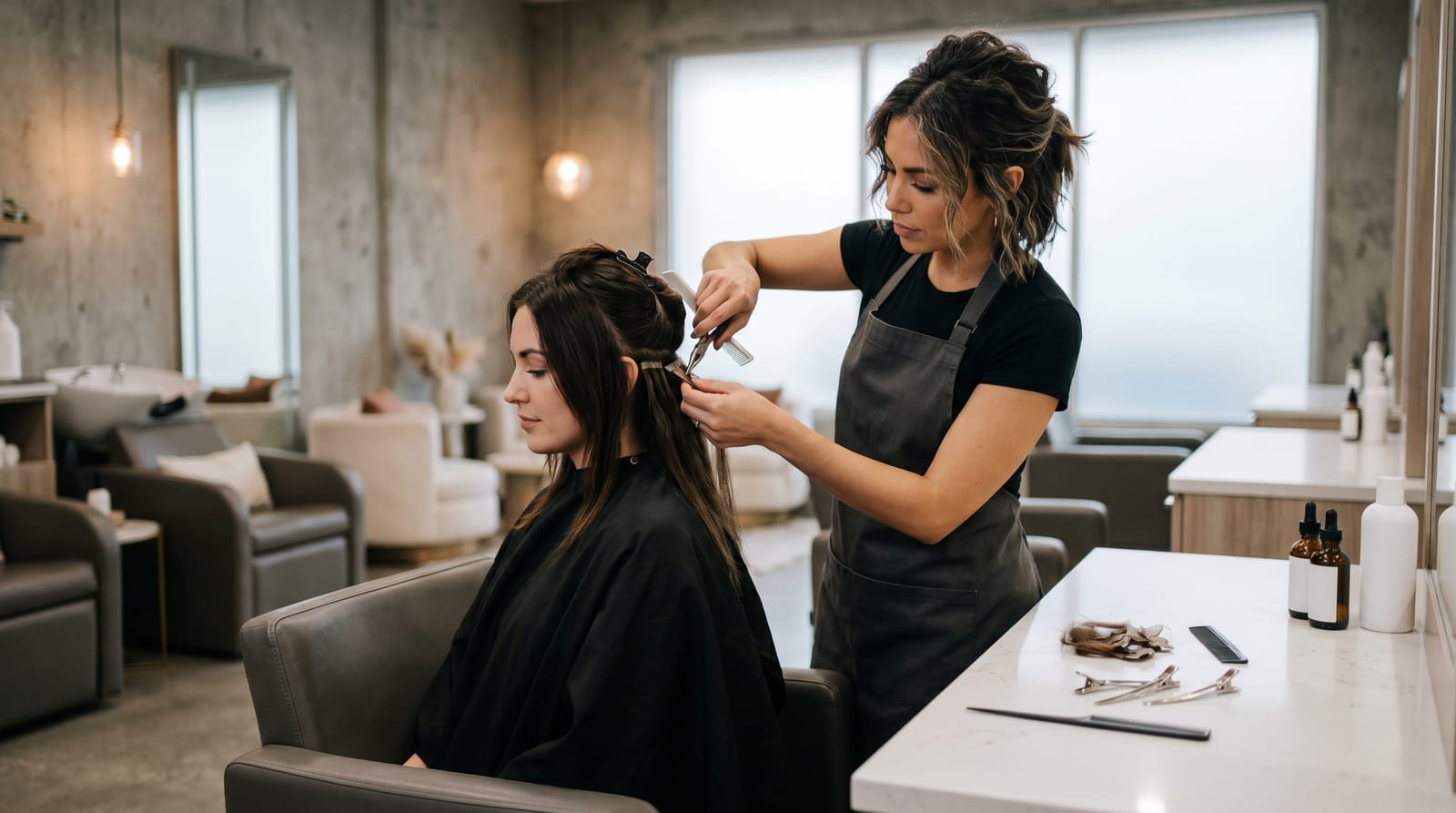
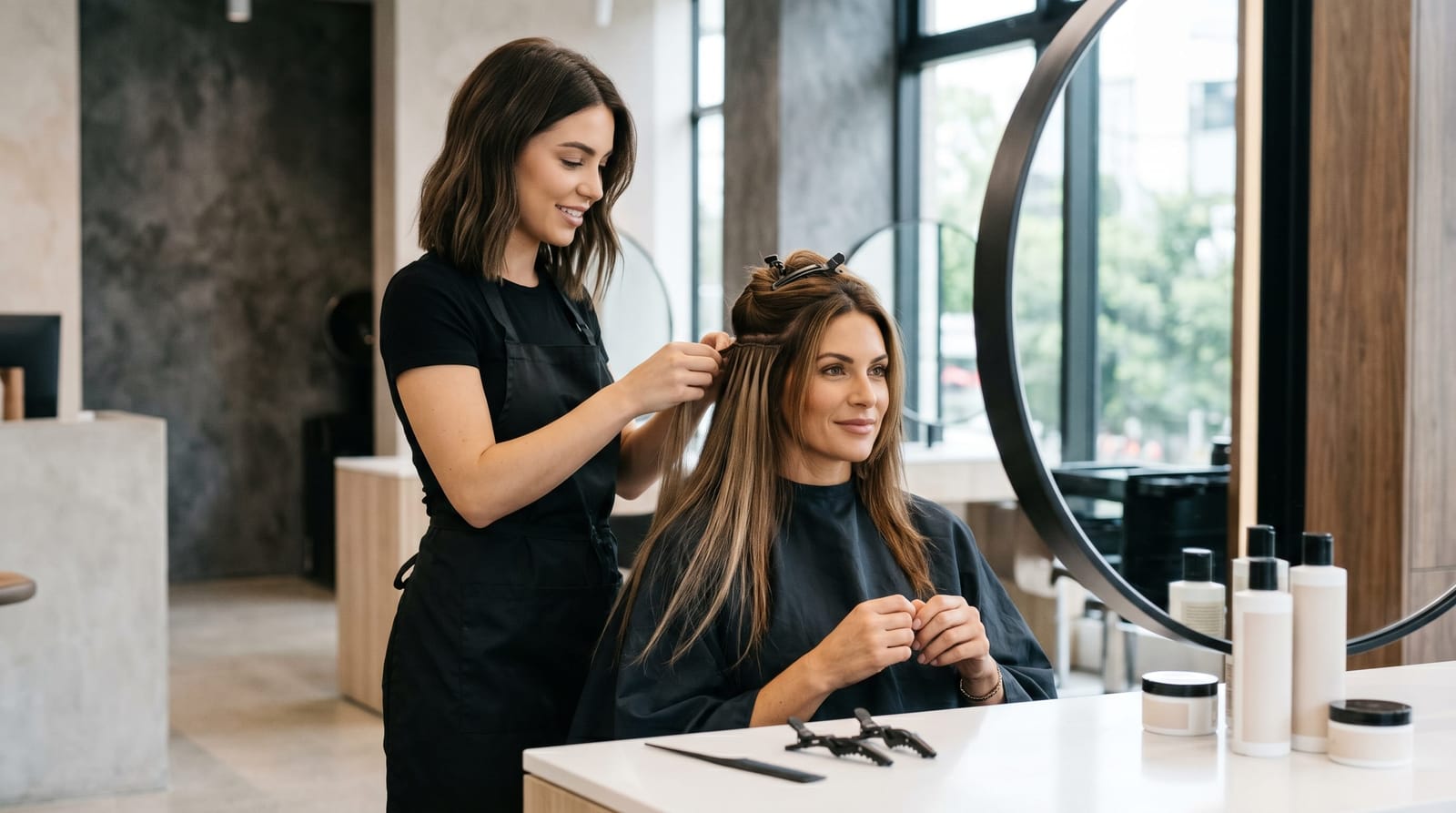
- Physical color ring comparison: The stylist holds wefts or individual extension samples directly against your hair at multiple points, roots, mid-lengths, and ends, in natural lighting. This step is non-negotiable for accuracy.
- Level and tone assessment: Your colorist identifies your dominant level (most salons use a 1-10 scale, where 1 is black and 10 is lightest blonde) and evaluates whether your undertones are warm, cool, or neutral.
- Selecting for blend, not an exact match: Here's where many DIY attempts go wrong. Extensions are often selected to match the mid-shaft of your hair, not the roots or the ends, because that zone represents your hair's dominant visual impression when styled.
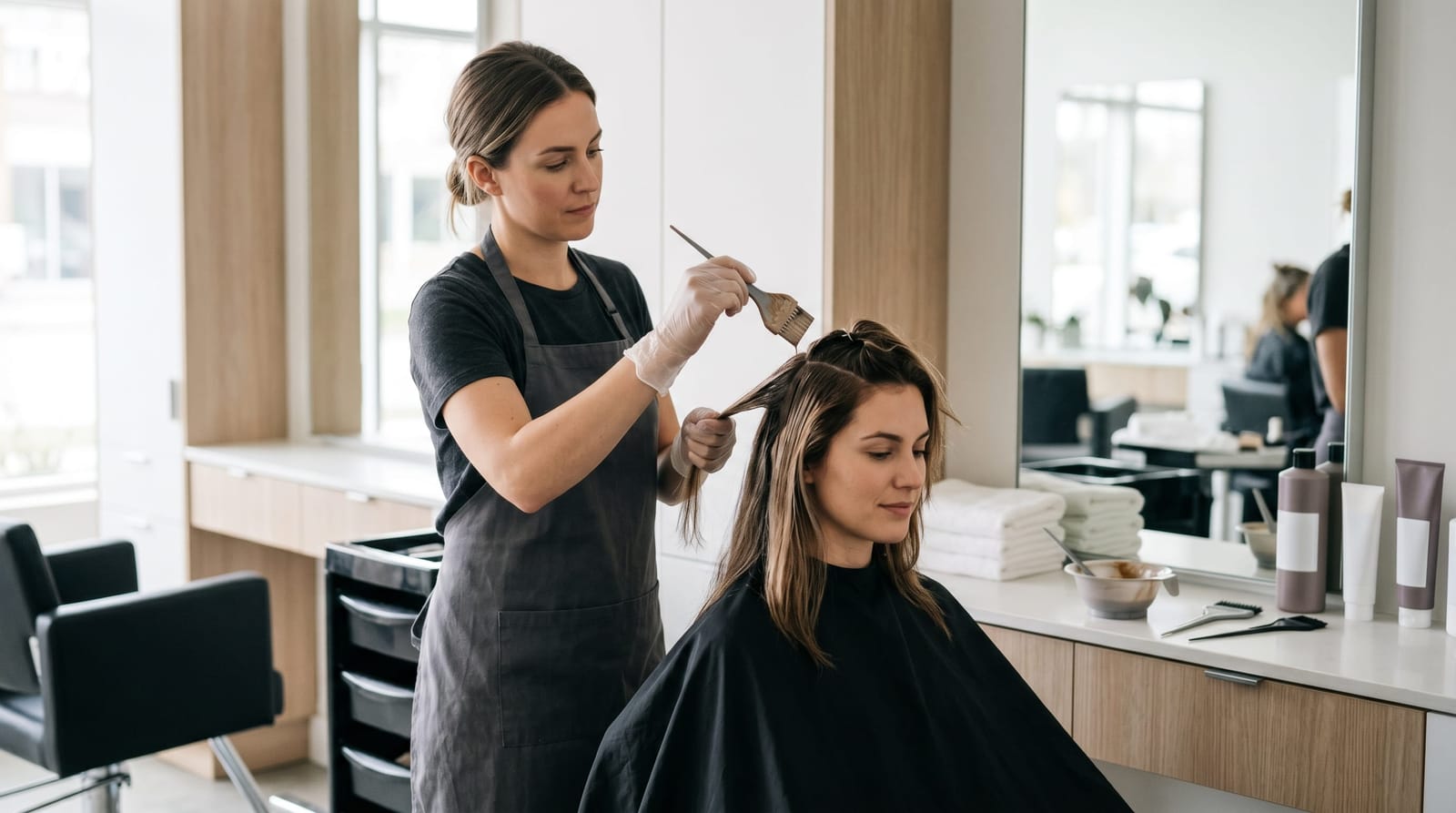
- Custom coloring or blending if needed: Many professional salons will tone, balayage, or gloss extensions before application to achieve a personalized match that off-the-shelf shades simply can't provide.
Expect a thorough consultation to take 20-30 minutes before a single extension is applied. Rushing this step is where salons cut corners, and where clients end up disappointed.
Blending Extensions With Highlighted and Balayaged Hair
If you have balayage, highlights, or ombre, matching extensions becomes a more nuanced art form. A single-shade extension weft placed into dimensional hair will look flat and artificial: the dimensional quality of your natural hair is part of what makes it look real and alive.
There are three primary professional approaches to blending extensions into highlighted hair:
- Hand-painted balayage on extensions: A colorist applies balayage directly to extension wefts before they're installed, mimicking the lived-in gradient of your natural color. This technique adds 1-3 hours to your appointment but produces the most natural results for balayaged clients.
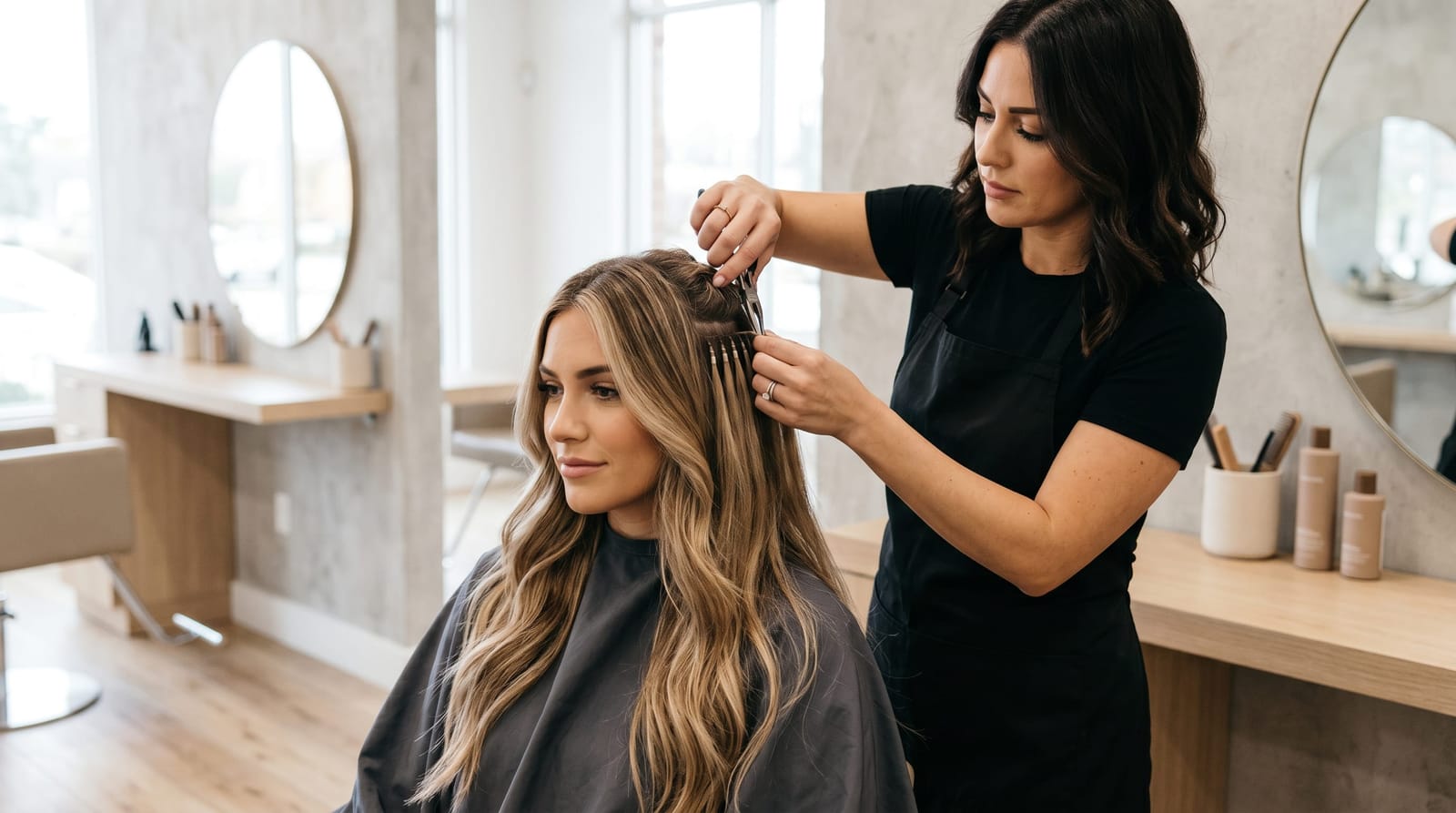
- Strategic placement: Extensions are installed beneath the highlighted sections so that your natural lightened hair falls on top, camouflaging the extensions underneath. This works especially well for tape-in and sew-in methods.
- Multi-bundle color mixing: Two or three different extension shades are layered together to replicate dimensional color. For example, a client with honey blonde highlights over a light brown base might wear a mix of #8 (light brown) and #22 (light blonde) wefts layered together.
Women with significant highlights should budget additional time and cost for custom blending. When researching how long do clip-in extensions last, keep in mind that extensions that have been custom colored may require more careful maintenance to preserve the painted tones.
Common Color Matching Mistakes (And How Professionals Avoid Them)
Even experienced stylists can fall into color matching traps when working too quickly or relying on inaccurate tools. Here's what separates elite results from average ones:
Matching to Roots Instead of Mid-Shaft
Roots are always darker due to new growth and shadow. Extensions installed at the mid-section of hair need to match the mid-shaft zone, not the root. A stylist who matches to the root will install extensions that appear too dark when the hair is worn down.
Ignoring Porosity and Sheen
High-quality Remy human hair extensions have a natural sheen. If your natural hair is matte from heat damage or chemical processing, even a perfect color match can look off because the light reflection differs. In these cases, a gloss treatment on your natural hair before installation creates visual cohesion.
Relying on Online Swatches
Studies on color perception show that screen calibration can shift perceived color by as much as 15-20 tonal units depending on device settings. Always request a physical swatch comparison at your salon appointment: never commit to a color based on a website photo alone.
Skipping the Test Placement
A reputable salon will do a test placement before full installation: clipping or taping in a small section and asking you to stand in natural light. This 5-minute step prevents 3-hour regrets.
What to Tell Your Stylist Before Your Appointment
Arriving prepared dramatically improves your color matching outcome. Before your hair extension color matching salon appointment, document and share the following:
- Your last color service date and what was done (highlight, full color, toner, gloss)
- Whether you use box dye or professional color exclusively
- Photos of your hair in natural daylight: both root area and ends clearly visible
- Any previous extension experiences, including what worked or didn't
- Your styling habits: do you typically wear your hair straight, wavy, or curly? Texture affects how color reads visually
If you're curious about the full investment involved, understanding how much professional extensions cost will help you plan for both the installation and any custom coloring work that perfecting your blend may require.
Frequently Asked Questions
Can extensions be colored after they're installed?
Yes, but with significant caution. Human Remy extensions can be toned or darkened after installation, but lightening extensions with bleach post-installation is strongly discouraged because the chemical process is difficult to control once they're attached to your hair. Any color work on installed extensions should be performed by a professional, not attempted at home.
How many color bundles will I need for a good blend if I have highlights?
Most clients with balayaged or highlighted hair achieve the best results with 2-3 different extension shades layered strategically. Your stylist will determine the ratio based on how much lighter your highlights are compared to your base: a subtle highlight lift might need only 2 shades, while a dramatic contrast may require 3 or a custom paint job.
What if my color changes between appointments: do I need new extensions?
Not necessarily. Toning your extensions to match your updated color is often possible if the shade shift is minor. However, if you significantly lighten or darken your natural hair, re-matching your extensions is advisable. Extensions typically last 6-12 weeks per application cycle, so plan color updates with this timeline in mind.
Is there a difference between color matching for tape-ins versus keratin bonds?
The color selection process is identical regardless of method. The primary difference is placement strategy: tape-in extensions are installed in flat panels that benefit from being positioned beneath your highlighted sections, while keratin bonds can be more precisely distributed throughout the hair for a truly integrated look.
Conclusion
Achieving a seamless, natural-looking result with extensions starts long before the first weft is applied. The hair extension color matching salon process is a multi-step consultation that considers your hair's full tonal history, texture, porosity, and dimensional complexity. By working with a colorist who takes the time to evaluate all of these factors, using physical color rings, strategic multi-shade selection, and custom blending techniques when needed, you can achieve results that are genuinely undetectable. For women in Montclair and Northern NJ seeking that perfect blend, investing in expert color matching is what elevates good extensions to extraordinary ones.