Is a Smoothening Treatment Worth It for Fine Hair?
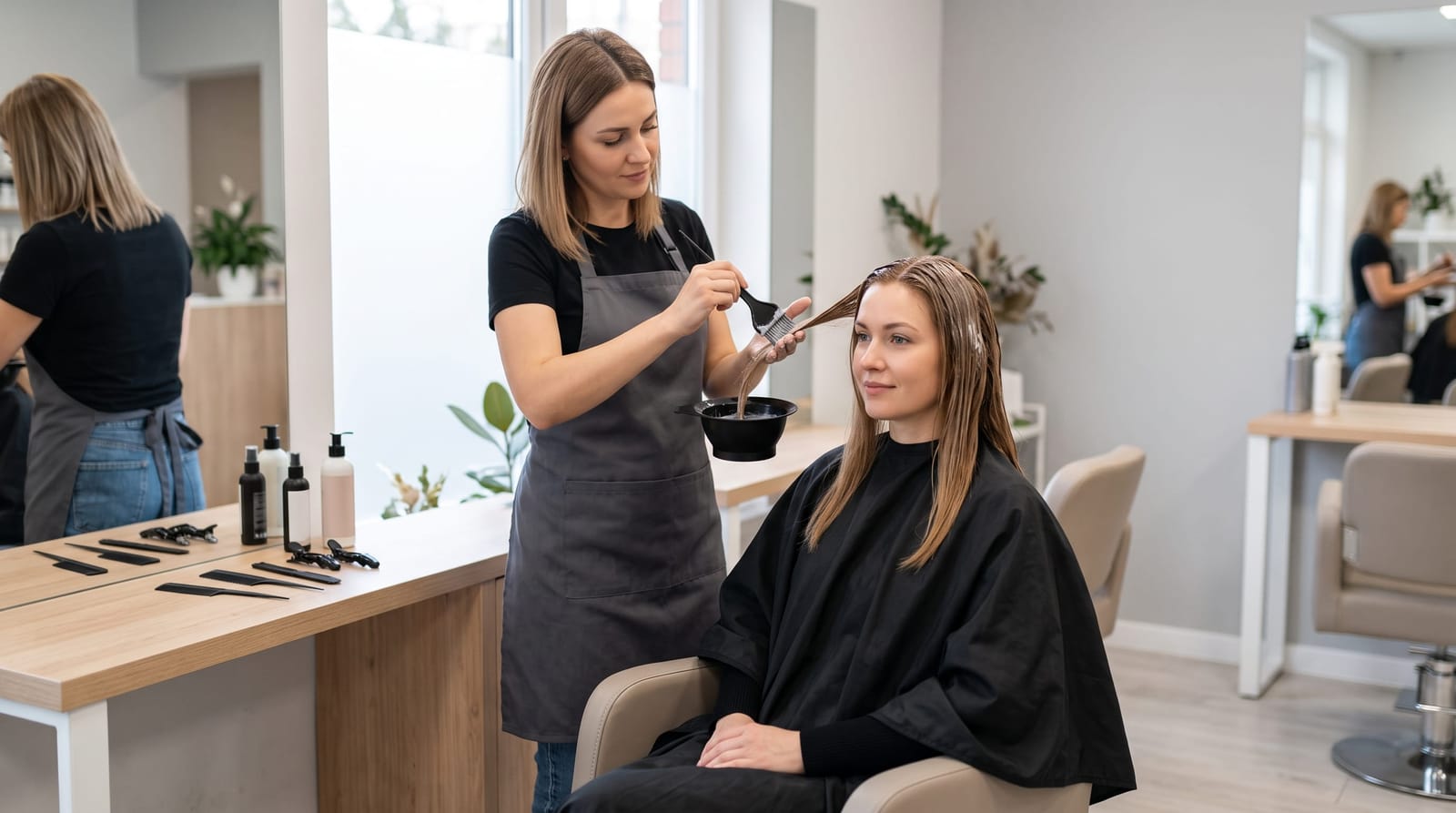
If you have fine hair, you've probably hesitated before booking a smoothening treatment. The questions are valid: Will it flatten my hair completely? Will I lose what little volume I have? Is hair smoothening for damaged hair even a good idea when your strands already feel delicate? These are exactly the right things to ask. At Substance Salon, our stylists work with fine and damaged hair every day, and the answer is nuanced: smoothening treatments aren't one-size-fits-all. Fine hair requires a thoughtful approach, but that doesn't mean the results can't be genuinely transformative when the treatment is chosen and applied correctly.
What Is Hair Smoothening for Damaged Hair: And How Does It Work?
Before diving into whether it's right for you, it helps to understand exactly what hair smoothening for damaged hair actually does at a structural level. Damaged, fine, or frizzy hair has a raised or disrupted cuticle layer: the outermost protective coating of each strand. When the cuticle is uneven, light scatters instead of reflecting, making hair look dull. Humidity sneaks in and causes puffiness. Styling becomes a daily battle.
Smoothening treatments work by temporarily sealing the cuticle flat using protein-based formulas, most commonly keratin, combined with heat. The result is a smoother surface that reflects light, resists humidity, and responds better to styling. For clients dealing with hair smoothening for damaged hair concerns specifically, this cuticle-sealing effect can also reduce breakage from daily friction and tangling, making the treatment a functional repair tool, not just a cosmetic one.
According to a 2021 study published in the International Journal of Trichology, keratin-based smoothening treatments demonstrated a measurable improvement in hair fiber strength and elasticity, particularly in chemically processed or heat-damaged hair. That kind of data matters when you're weighing whether the investment is worth it for delicate strands.
Understanding Why Fine Hair Reacts Differently to Smoothening
Fine hair has a smaller diameter per strand than medium or coarse hair. That might sound like a minor difference, but it has a real impact on how hair responds to hair smoothening for damaged hair services. Fine strands absorb product more quickly and are more susceptible to being weighed down by heavy formulas. Hair science research consistently shows that fine hair typically has fewer cuticle layers, which means product penetrates faster: a factor that skilled stylists at Substance Salon account for when adjusting processing time and product quantity.
This doesn't mean fine hair can't benefit from smoothening. In fact, studies on hair texture and frizz suggest that roughly 65% of people with fine hair also experience significant frizz, meaning hair smoothening for damaged hair can genuinely improve day-to-day manageability. The key is understanding that the treatment approach for fine hair looks different than it does for thick or coarse hair, and that difference is what separates a great result from a flat, lifeless one.
Fine hair clients often come in with two main concerns: frizz that makes hair look disheveled, and a lack of body that makes hair look sparse. The good news is that a well-executed hair smoothening treatment for damaged hair addresses the first concern without sacrificing the second, when the right product and technique are used.
The Science Behind Fine Hair Porosity and Smoothening
Porosity is one of the most important factors in how hair smoothening for damaged hair performs on fine strands. High-porosity hair, common in color-treated, heat-styled, or chemically processed fine hair, absorbs product rapidly but also loses moisture quickly. This is why fine, damaged hair can feel dry and brittle even after conditioning. A smoothening treatment can actually help regulate porosity temporarily by laying the cuticle flat, creating a more uniform surface that retains moisture better between washes.
Low-porosity fine hair, on the other hand, resists product absorption. Stylists at Substance Salon use gentle heat during application to open the cuticle just enough to allow the smoothening formula to bond effectively, without over-processing the strand. Understanding your hair's porosity before booking a hair smoothening for damaged hair service is one of the best steps you can take, and a good stylist will assess this during your consultation.
Which Smoothening Treatments Are Best Suited for Fine, Damaged Hair?
Not every smoothening treatment belongs on fine or damaged hair. The broader category of hair smoothening for damaged hair options includes everything from intensive keratin treatments to lighter Brazilian blowout formulas. For fine hair specifically, the distinction matters a great deal, and choosing the wrong treatment can do more harm than good.
Brazilian blowouts are generally the better starting point for fine or damaged hair. They smooth the cuticle and reduce frizz without fully altering the hair's natural texture or relaxing it completely straight. Because the formula sits primarily on the outside of the strand rather than penetrating deeply, the result tends to feel lighter and more flexible. Most fine-haired clients at Substance Salon retain noticeable movement and even some natural wave after a Brazilian blowout, just without the frizz and puffiness that makes fine hair so difficult to manage.
Keratin treatments can work beautifully for fine, damaged hair, but require more careful product selection and technique. A full-strength keratin treatment designed for thick, resistant hair may over-soften fine strands and lead to that heavy, flat feeling clients are trying to avoid. Opting for a lighter-hold keratin formula, and working with a stylist who customizes the application for your hair's specific weight and density, is essential. Many salons, including Substance Salon, now offer graduated or partial keratin applications that deliver 60-70% of the smoothing effect with significantly less product load. This is often the sweet spot for fine, damaged hair.
Nano-keratin or express smoothening treatments are a newer category worth considering. These shorter-process treatments deposit a lighter concentration of protein over the cuticle and typically last 4-6 weeks. For clients new to hair smoothening for damaged hair, or those with very fine or fragile strands, an express treatment is a low-commitment way to test how your hair responds before committing to a full service.
Always look for formaldehyde-free formulas when exploring hair smoothening for damaged hair options. Beyond the safety consideration, these tend to have a softer, more flexible finish that suits fine hair better than harsher straightening systems, and they're gentler on already-compromised strands.
Comparing Treatment Options at a Glance
- Brazilian Blowout: Best for fine, frizzy hair. Cuticle-coating formula. Preserves natural wave and movement. Lasts 8-12 weeks. Ideal first treatment for fine or damaged hair.
- Keratin Treatment (standard): Deeper penetration for more lasting results. Requires careful product selection for fine hair. Lasts 3-5 months. Best for fine hair with moderate to significant frizz or damage.
- Nano or Express Keratin: Lighter protein deposit. Shorter processing time. Lasts 4-6 weeks. Ideal for very fine, fragile, or highly damaged hair as an introductory service.
- Japanese Straightening / Thermal Reconditioning: Permanent texture change. Not recommended for fine or damaged hair due to intensity of chemical process.
- Cysteine Treatments: Amino acid-based smoothening that's gentler than keratin. A good option for sensitive or highly porous fine hair. Lasts 2-3 months.
How a Skilled Stylist Adjusts Technique for Hair Smoothening on Damaged Hair
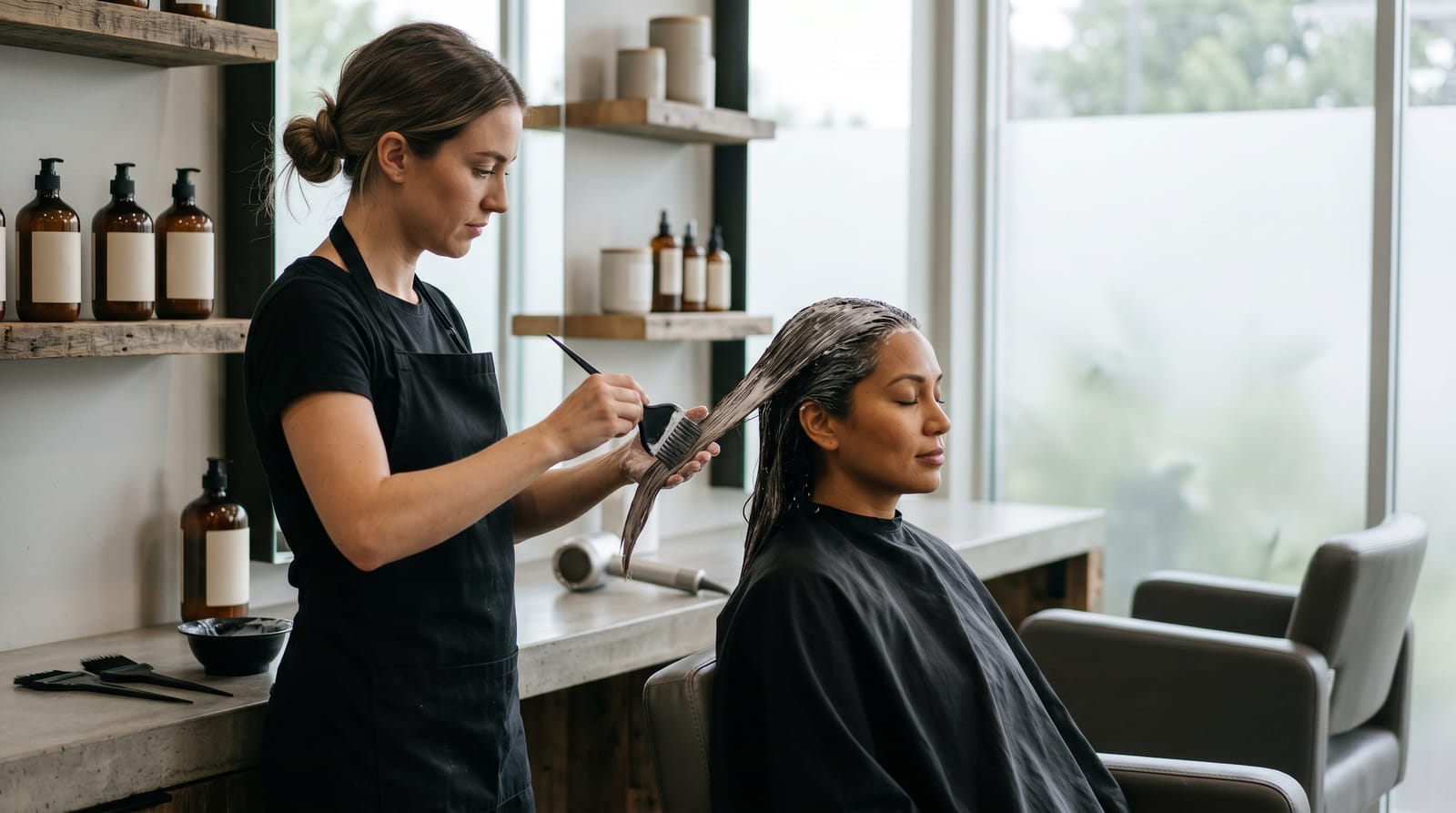
Technique is where the real difference is made. Hair smoothening for damaged hair is not just about the product in the bottle: it's about how that product is applied, distributed, and processed. An experienced stylist working with fine or damaged hair will make several key adjustments that a less specialized approach might overlook. The team at Substance Salon considers these customizations non-negotiable for fine hair clients.
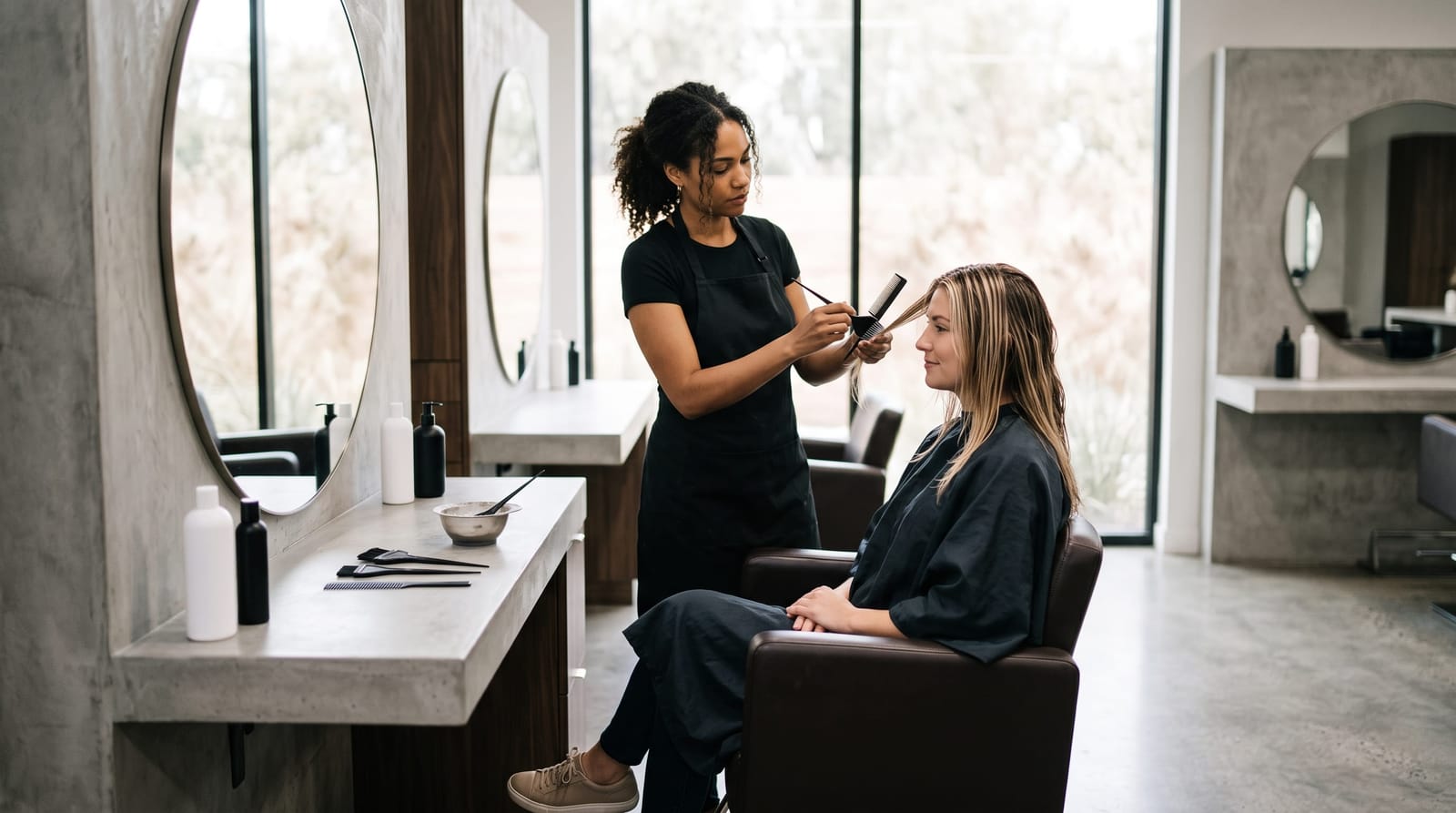
- Smaller sections: Fine hair is worked in smaller sections to ensure even, light distribution without over-saturation in any one area, which prevents product buildup and maintains natural body.
- Reduced product quantity: Stylists typically use 30-50% less product on fine or damaged hair compared to medium or thick hair to prevent weighting the strands down.
- Shorter processing time: Because fine hair absorbs formula more quickly, processing time is reduced to prevent over-softening and potential structural weakening.
- Strategic blow-dry tension: Using lighter tension during the blow-dry step helps preserve natural body and movement rather than stretching the hair completely flat against the scalp.
- Root lift consideration: Many stylists avoid applying product directly to the roots on fine hair, keeping the treatment mid-shaft to ends. This preserves volume at the crown where fine hair needs it most.
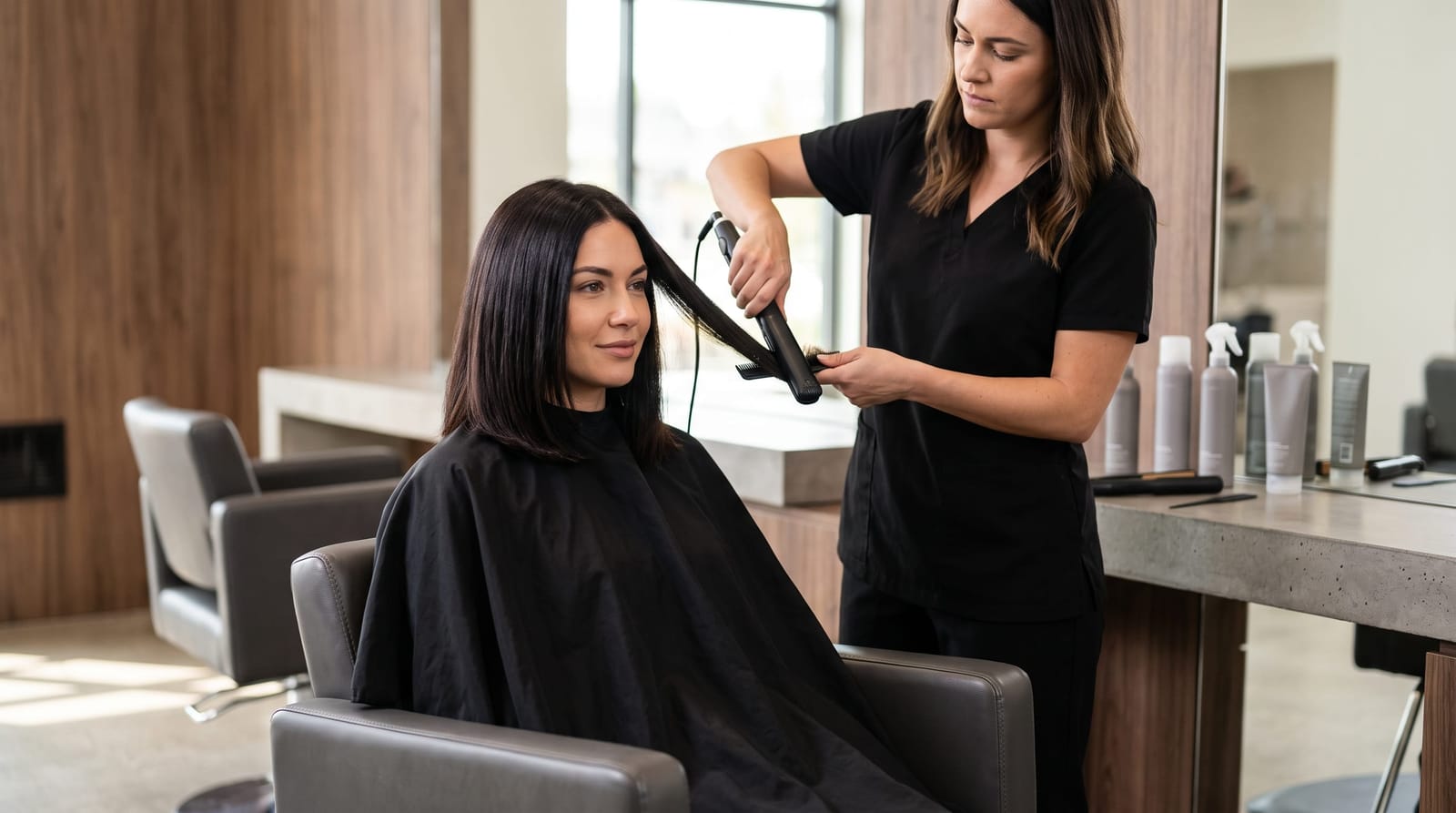
- Temperature calibration: Fine or damaged hair requires lower flat iron temperatures during the sealing step, typically between 370°F and 400°F rather than the 450°F used for coarse hair, to prevent heat-related breakage on top of the chemical service.
- Pre-treatment protein assessment: Before applying any hair smoothening for damaged hair service, a skilled stylist evaluates whether the hair needs a protein-balancing treatment first. Over-processed or elasticity-compromised hair may need a strengthening treatment before smoothening to avoid further weakening the strand.
These aren't small tweaks: they are the difference between a treatment that enhances fine, damaged hair and one that works against it. This is exactly why choosing a stylist with hands-on experience in hair smoothening for damaged hair matters as much as choosing the right treatment formula.
Realistic Results: What to Expect from Hair Smoothening for Damaged Hair
Setting honest expectations is part of what makes the investment feel worthwhile. When clients at Substance Salon sit down for a fine hair consultation, our stylists are transparent about what hair smoothening for damaged hair will and won't deliver, because a realistic picture leads to happier, longer-term clients.
What You Can Realistically Expect
Most clients with fine, frizzy, or damaged hair see an 80-90% reduction in humidity-related puffiness following a properly applied smoothening treatment. Styling time is cut significantly: many clients report spending 50% less time on their morning routine. Hair looks shinier and healthier because the flattened cuticle reflects light evenly rather than scattering it. Perhaps most importantly for damaged hair specifically, reduced tangling means less mechanical stress during detangling and styling, which translates to less breakage over time.
Better blow-dry results with significantly less heat required is another key benefit, and for fine, damaged strands that are already vulnerable to heat, that reduction in daily thermal stress is genuinely protective. Clients who previously relied on high-heat styling to tame their hair often find they can style at lower temperatures or even air-dry successfully after a hair smoothening for damaged hair service.
What to Keep Realistic
A smoothening treatment won't add density or make fine hair look thicker on its own. It won't create volume where none exists, but applied correctly, it won't steal the volume you have either. If your goal includes both frizz control and added body, a smoothening treatment paired with a good volumizing styling routine is the most effective combination. Substance Salon stylists often recommend root-lifting sprays or volumizing mousses applied before air-drying to complement the smoothening result.
It's also worth planning around your color services. If you're considering both hair smoothening for damaged hair and a color refresh, understanding the ideal order of services is critical. Color applied after a fresh smoothening treatment may not take evenly, and pre-lightened hair may be more sensitive to the smoothening formula. Talk to your stylist about timing before booking both services on the same visit.
Is Hair Smoothening for Damaged Hair Safe? Understanding the Risks
Safety is a legitimate concern, especially when hair is already compromised by damage, color processing, or heat. The honest answer is: hair smoothening for damaged hair is safe when the right formula is chosen and applied by an experienced professional. The risks rise when treatments are mismatched to the hair's current condition.
The primary risks for fine or damaged hair include over-processing (applying a formula too strong for the hair's current integrity), heat damage during the sealing step if temperatures aren't calibrated for fine strands, and protein overload if the hair already has too much protein from previous treatments. An experienced stylist performs a strand test and elasticity check before any hair smoothening for damaged hair service to screen for these risks.
Formaldehyde content in some older or cheaper keratin formulas is a real safety concern, not just for the client's hair health but for their overall health during and after application. At Substance Salon, we exclusively use formaldehyde-free smoothening formulas. This is a non-negotiable standard for our team, and we encourage any client researching hair smoothening for damaged hair to confirm the formaldehyde status of any formula before allowing it to be applied.
Caring for Fine, Damaged Hair After a Smoothening Treatment
Aftercare plays a significant role in how long your results last and how your hair feels throughout the treatment's lifespan. Fine or damaged hair is particularly responsive to the products used post-treatment, so a few targeted adjustments make a meaningful difference in protecting your investment in hair smoothening for damaged hair.
- Use a sulfate-free shampoo formulated for color-treated or chemically processed hair. Sulfates strip the smoothening treatment more quickly and can leave fine, damaged hair feeling dry and brittle.
- Keep conditioning lightweight. Heavy masks or oil treatments weigh fine hair down and reduce the body you worked to preserve. A lightweight leave-in conditioner or a fine mist of conditioning spray is usually sufficient.
- Wait the full recommended time, typically 48 to 72 hours, before washing your hair after the treatment. This allows the formula to fully bond and ensures lasting results from your hair smoothening for damaged hair service.
- Avoid heavy styling products at the roots. Serums, oils, and thick creams concentrated at the crown flatten fine hair quickly, working against the natural body you want to maintain.
- Reduce heat styling frequency. One of the greatest benefits of hair smoothening for damaged hair is that treated hair air-dries smoother: use that to your advantage and give your hair a break from daily heat.
- Schedule a follow-up gloss or conditioning treatment at the 6-8 week mark. This helps refresh shine and keeps fine, damaged hair looking its best as the smoothening treatment gradually fades.
- Sleep on a silk or satin pillowcase. Cotton pillowcases create friction that can roughen the cuticle over time, shortening the life of your smoothening results, especially on fine strands.
With proper aftercare, most fine-haired clients at Substance Salon see their results last between 8 and 12 weeks for a Brazilian blowout, and up to 4 to 5 months for a keratin treatment. Clients who follow sulfate-free aftercare protocols consistently report results lasting 2-3 weeks longer than those who don't.
What Substance Salon Clients Say About Hair Smoothening for Damaged Hair
Real client experiences provide context that no clinical description can fully capture. At Substance Salon, we've performed hundreds of hair smoothening for damaged hair services on fine and delicate hair types, and the feedback reflects a consistent pattern: the right treatment, done by the right hands, changes how clients feel about their hair entirely.
One long-term client with fine, color-treated hair described her experience: "I was terrified the keratin treatment would make my hair look like it was plastered to my head. The team at Substance Salon did a lighter application and avoided my roots: I walked out with the frizz completely gone but still had body. It was the first time a smoothening service didn't disappoint me."
Another client who came in specifically for hair smoothening for damaged hair after years of bleaching noted: "My hair was so broken and porous before the treatment. After the Brazilian blowout, detangling went from a 20-minute struggle to less than five. The breakage I was seeing at the ends almost completely stopped."
These results aren't accidental: they're the product of stylists who understand the specific demands of hair smoothening for damaged hair on fine, delicate strands and customize every step of the process accordingly.
Frequently Asked Questions About Hair Smoothening for Damaged Hair
Will a smoothening treatment make my fine, damaged hair look flat?
Not if it's applied correctly by a stylist experienced in hair smoothening for damaged hair on fine strands. When product quantity is reduced, roots are kept clean, and blow-dry tension is lightened, you retain natural body and movement. The goal is targeted frizz reduction, not compression. Always discuss volume preservation explicitly during your pre-treatment consultation.
Is hair smoothening safe for fine, delicate, or chemically processed hair?
Yes, when the right formula is selected and a professional assesses your hair's current integrity first. Formaldehyde-free Brazilian blowouts and lighter keratin formulas are well-suited to fine or damaged hair. The main risks come from mismatched product strength or applying a hair smoothening for damaged hair service on top of already over-processed strands, which is why a thorough consultation matters.
How long does hair smoothening for damaged hair last on fine strands?
Results from a Brazilian blowout typically last 8-12 weeks on fine hair. A keratin treatment generally lasts 4-5 months. Using sulfate-free shampoo, avoiding heavy styling products, and sleeping on a silk pillowcase all help extend the life of your hair smoothening for damaged hair results.
Can I get a smoothening treatment if my fine hair is also color-treated?
Yes, but timing and sequencing are critical. Fine hair that's been lightened or color-treated is more porous and more vulnerable to over-processing. A skilled stylist will assess your hair's elasticity and condition before scheduling your hair smoothening for damaged hair service and will advise on whether to perform color before or after smoothening to achieve the best result without compounding damage.
The Bottom Line: Is Hair Smoothening for Damaged Hair Worth It?
Hair smoothening for damaged hair is absolutely worth considering, with the right treatment, the right stylist, and honest expectations going in. Fine hair clients can enjoy the same frizz-free, polished results as anyone else, without sacrificing the body and movement that make their hair look its best. The investment pays off most when it's treated as a personalized service rather than a one-size-fits-all procedure.
At Substance Salon, hair smoothening for damaged hair is approached with the same customization as any other precision service, from the initial porosity assessment through the final blow-dry technique. When your stylist truly understands fine and damaged hair, the results speak for themselves: smoother, shinier, healthier-feeling hair that's dramatically easier to manage without losing what makes it uniquely yours.
If you're ready to explore whether hair smoothening for damaged hair is the right next step for your fine or delicate strands, the best starting point is an honest consultation with a stylist who specializes in exactly that. Book a consultation with the Substance Salon team and let us assess your hair's specific needs before recommending the treatment that will genuinely serve you best.