Managing Difficult Kids During Haircuts: Professional Tips
If your child melts down the moment they see a pair of scissors, you are far from alone. Research suggests that up to 40% of young children experience some level of anxiety around haircuts, making salon visits a genuine challenge for parents. Whether your little one cries, squirms, or outright refuses to sit still, there are proven strategies that can transform a stressful experience into a smooth one. As part of our broader guide to family hair services in Northern NJ, these professional difficult child haircut tips come directly from experienced stylists who work with kids every single day.
Understanding Why Kids Struggle With Haircuts
Before you can solve the problem, it helps to understand where the resistance is coming from. For most children, haircut anxiety is rooted in a combination of sensory sensitivity, fear of the unfamiliar, and a loss of control. Studies in child development indicate that sensory processing sensitivities affect approximately 1 in 6 children, meaning the sound of clippers, the feel of a cape, or even the smell of salon products can feel genuinely overwhelming.
Children between the ages of 18 months and 4 years are statistically the most likely to struggle, largely because they lack the language and emotional regulation skills to express discomfort calmly. Knowing this helps parents approach the situation with empathy rather than frustration.
Common triggers include:
- The buzzing sound of electric clippers near their ears
- Hair falling onto their face, neck, or hands
- Feeling restrained or unable to move freely
- Strangers touching their head and face
- Previous negative salon experiences that created a lasting association
Once you identify your child's specific trigger, you can address it directly rather than trying a one-size-fits-all approach.
Preparation at Home: The Work You Do Before You Arrive
Professional stylists consistently report that the children who sit the most calmly are the ones whose parents did groundwork at home beforehand. Preparation is arguably more important than anything that happens in the salon chair itself.
Normalize the Experience Through Storytelling and Play
Read books about haircuts together at least 3 to 5 days before the appointment. Titles like Snip Snap! or Clip-Clop frame salon visits as fun milestones rather than scary events. You can also play pretend salon at home: let your child "cut" a doll's hair or practice wrapping a towel around their shoulders like a cape. This kind of play rehearsal reduces novelty, and it is novelty that triggers fear.
Let Your Child Choose Something
Children who feel some ownership over the process are significantly more cooperative. Show them 3 or 4 age-appropriate haircut options the night before and let them pick the one they want. Even a small choice, like which color comb the stylist uses, gives a child a sense of agency that can prevent a power struggle before it starts.
Schedule Strategically
Book appointments during your child's best time of day. A child who is tired, hungry, or overstimulated is 3 times more likely to be uncooperative than one who is rested and fed. Mid-morning appointments on weekdays tend to work best for toddlers and preschoolers.
In-Chair Distraction Techniques That Actually Work
Distraction is one of the most evidence-supported techniques for managing pediatric anxiety during medical and grooming procedures. The key is matching the distraction to your child's age and interest level, and having it ready before the scissors come out.
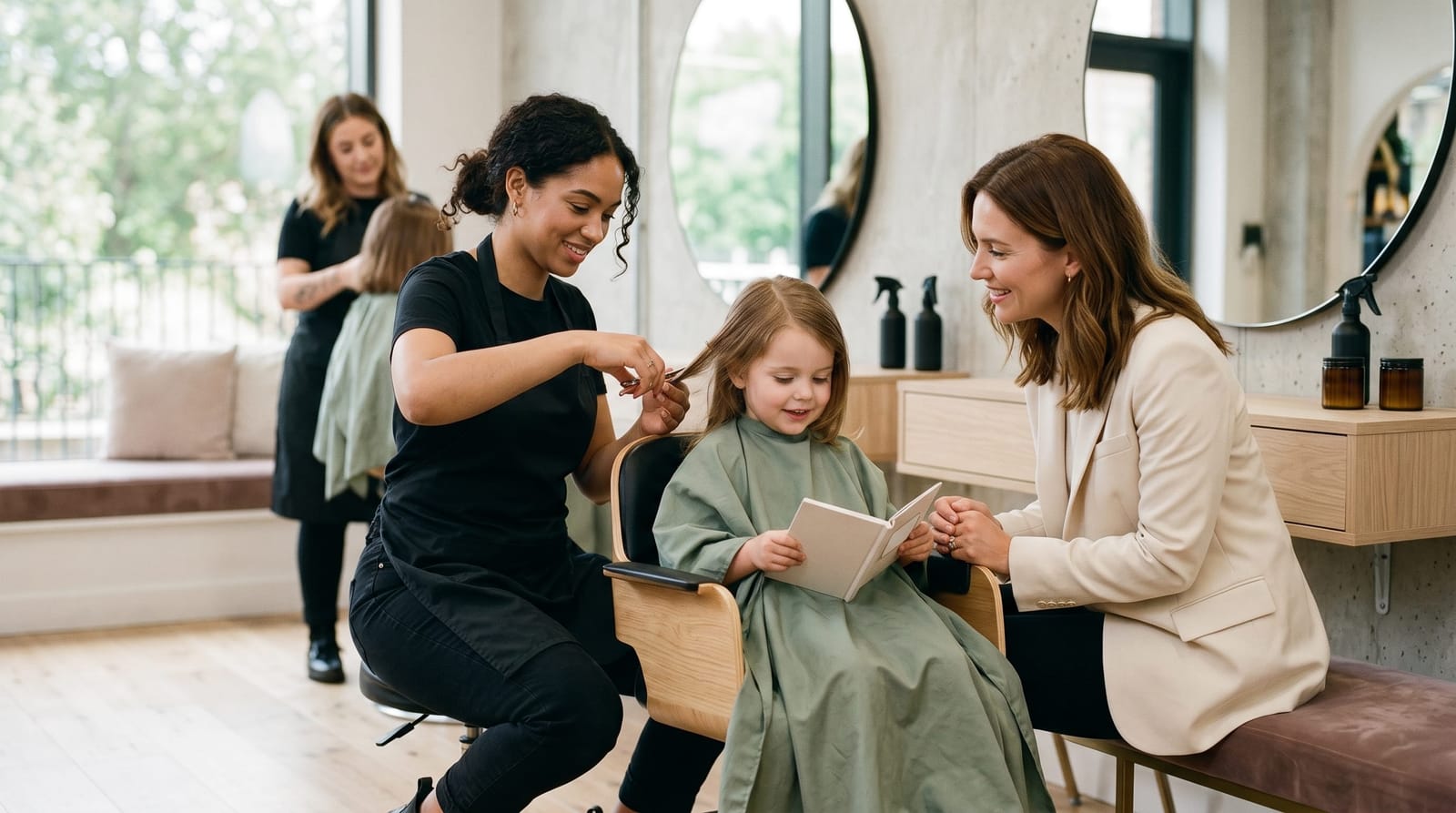
- Tablets and phones (ages 2+): Download a favorite show or interactive app before you arrive so you are not fumbling with Wi-Fi. Hold the screen at eye level so the stylist can still access the back of the head without your child constantly turning around.
- A special object (ages 1-3): Bring one beloved toy or comfort item that only comes out during haircuts. The novelty of this "haircut toy" creates positive anticipation.
- Call-and-response games (ages 3+): Ask your child rapid-fire questions, favorite animals, colors, foods, to keep their attention engaged and their head still. Stylists love this technique because it works and keeps the child facing forward.
- Sensory substitution: If the clippers are the main fear, ask your stylist to begin with scissors only and introduce clipper sounds from a distance gradually over 2 or 3 visits before using them on the child's hair.
Many kids haircut salon Montclair NJ parents find that combining two techniques, a screen plus a physical comfort item, is more effective than relying on either one alone.
How Professional Stylists Approach Difficult Children
Experienced children's stylists have a fundamentally different approach than general stylists, and it is worth understanding what that looks like so you can support their process.
A skilled children's stylist will typically spend the first 2 to 3 minutes simply talking with your child at their level, not rushing to drape the cape or pick up tools. This social warm-up period lowers cortisol levels and establishes trust. They will narrate each step before doing it: "I'm going to spray a little water on your hair now, it might feel cool." This removes the element of surprise, which is one of the primary triggers for sudden movements and crying.
Stylists who specialize in children also use extremely specific praise rather than generic encouragement. Instead of "good job," they say "You held so still while I trimmed the left side: that was really helpful." Specific praise activates the reward centers of a child's brain more effectively and reinforces the exact behavior you want repeated.
When a child becomes inconsolably upset, most professional stylists are trained to pause, allow a 60-second reset, and then resume: rather than rushing through and reinforcing the idea that crying ends the experience faster.
Building Positive Long-Term Associations With the Salon
The goal is not just to survive today's haircut: it is to make every future visit a little easier. This requires intentional effort over multiple visits.
Use a Reward System Consistently
Set up a simple sticker chart where your child earns one sticker per successful salon visit. After 5 stickers, they choose a small reward. This structure gives children something to work toward and reframes the salon as a place where good things happen. Studies on behavioral reinforcement show that children who receive consistent, predictable rewards for cooperative behavior reduce resistance by approximately 50% over 4 to 6 repetitions.
Visit Without Getting a Haircut
Pop into a kid-friendly salon two or three times just to say hello, let your child sit in the chair for a minute, and leave: no scissors, no pressure. These low-stakes visits rewire your child's nervous system to associate the salon with safety. This technique, borrowed from graduated exposure therapy, is recommended by pediatric occupational therapists for sensory-sensitive children.
If you are also navigating questions around timing, our guide on when should toddlers first haircut covers developmental milestones that can help you decide the right moment to start this process.
Frequently Asked Questions
What age do kids usually stop being afraid of haircuts?
Most children become noticeably more cooperative between ages 4 and 5, as their language skills and emotional regulation improve. However, children with sensory sensitivities may need additional support beyond this age. Consistent positive experiences are the most reliable way to accelerate this timeline, regardless of age.
Is it okay to bribe my child to sit through a haircut?
Yes: offering a reward for cooperative behavior is a well-established parenting strategy and not harmful when used consistently. The key is to offer the reward before the haircut begins so your child understands the exchange, and to follow through every single time. Rewards work best when they are small, immediate, and specific to the behavior you are reinforcing.
Should I hold my child down if they won't sit still?
Most child development specialists and professional stylists strongly advise against physical restraint. It escalates distress, damages trust, and creates stronger negative associations with haircuts. If your child is truly inconsolable, it is better to reschedule and focus on preparation techniques before the next visit. A partial haircut completed calmly is more valuable than a complete haircut done under duress.
How do I find a stylist who is good with difficult kids?
Ask specifically whether stylists have experience with anxious or sensory-sensitive children, not just whether they "do kids' cuts." Request the same stylist for every visit so your child builds familiarity. Read reviews that mention specific behaviors like patience and communication, not just results. Choosing a dedicated kids haircut salon in Montclair NJ or similar family-focused salons in your area ensures you are working with stylists who are trained for exactly this situation.
Conclusion
Managing a difficult child during haircuts is genuinely challenging, but it is a solvable problem with the right combination of preparation, in-chair techniques, and professional support. Start with understanding your child's specific trigger, do the groundwork at home before the appointment, and lean on stylists who are trained to work with children's unique needs. Over time and with consistent positive experiences, most children become significantly easier to work with in the salon. For families in the Montclair area, finding the right kid-friendly environment is the single most impactful first step you can take.