Men's Haircuts for Thinning Hair: Which Styles Work Best?
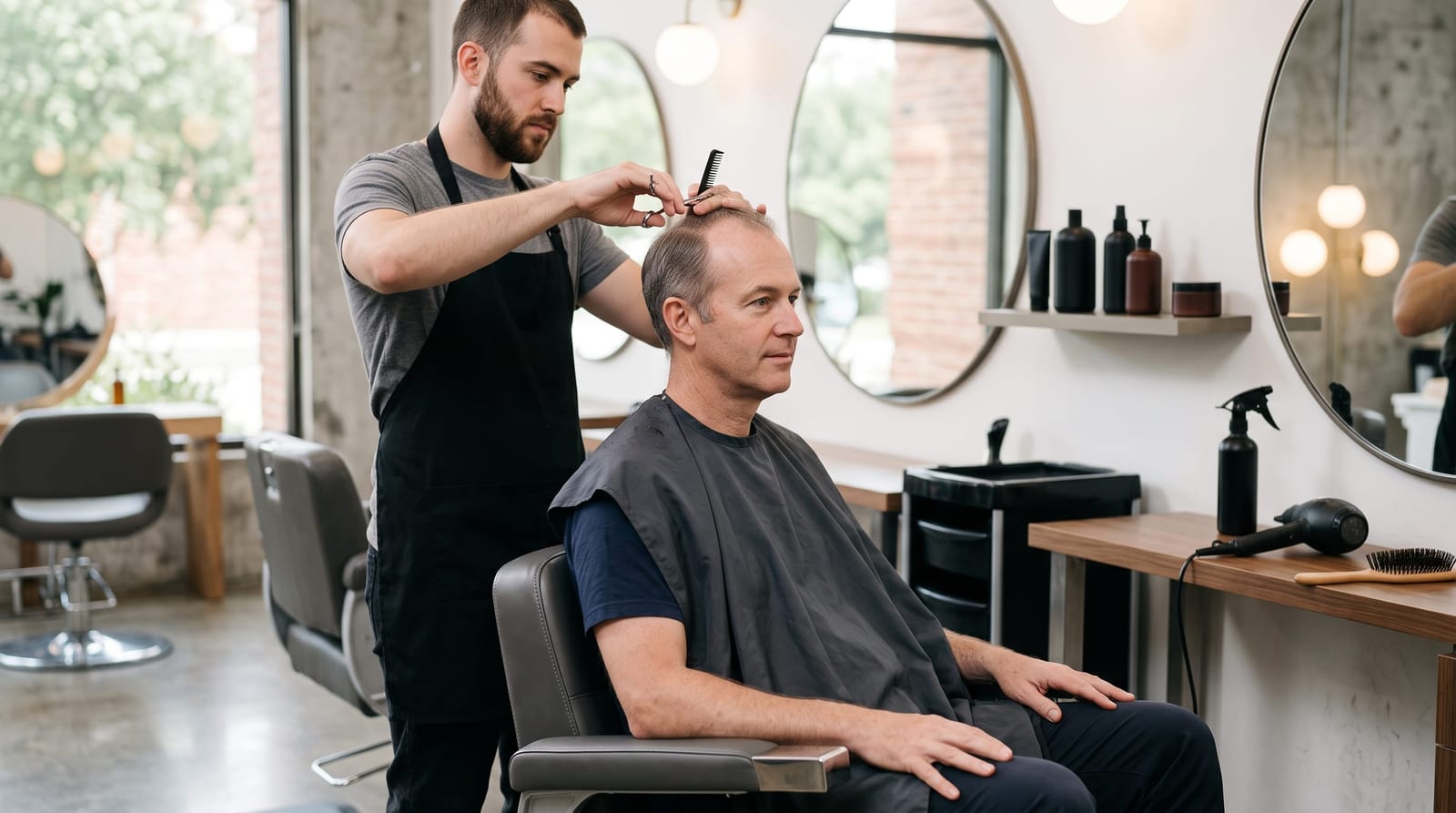
When it comes to men's hair, thinning strands are one of the most common concerns we hear about at the salon, and one of the most misunderstood. The right haircut doesn't just make thinning hair look better; it fundamentally changes how your hair reads in terms of density, shape, and confidence. Whether you're navigating this for yourself or researching options for someone you love, this guide breaks down the best men's haircuts for thinning hair: the styles that genuinely work, the ones to reconsider, and why where you go for your cut matters more than most people realize. We'll also touch on how this conversation connects to the broader world of men's hair services at a salon versus a barbershop, because the expertise behind your cut is just as important as the style itself.
Understanding What Thinning Hair Actually Needs
Before diving into specific styles, it helps to understand what's actually happening with thinning or fine hair, and what a great haircut can do about it. Thinning hair typically lacks volume at the root, lies flat against the scalp, and can make the head appear wider or flatter than desired. According to the American Hair Loss Association, approximately 85% of men will experience some degree of hair thinning by age 50, with many noticing changes as early as their mid-twenties. That's an enormous segment of men whose haircut choices genuinely affect how they feel walking out the door every day.
The goal with thinning hair is contrast and structure. A well-executed cut creates the visual impression of density where there isn't as much, draws the eye upward or inward depending on what the head shape needs, and works with the natural movement of the hair rather than fighting it. This isn't about tricks or illusions: it's about precision in cut technique, which is exactly where an experienced stylist's eye becomes invaluable.
Fine Hair vs. Thinning Hair: A Quick Distinction
These two terms are often used interchangeably, but they're slightly different. Fine hair refers to the diameter of each individual strand: thin strands that tend to lack body on their own. Thinning hair refers to overall density: fewer strands per square inch of scalp. Many men experience both simultaneously, but the distinction matters when choosing a cut and styling approach. Fine-haired men may have plenty of strands but struggle with volume; men experiencing thinning may have coarser individual strands but noticeably less coverage in certain areas. A skilled stylist will assess both before recommending a direction.
The Best Men's Haircuts for Thinning Hair
Not every popular men's style is created equal when hair density is a factor. These are the cuts that consistently deliver strong results for men with thinning or fine hair, and why each one works.
The Textured Crop
The textured crop is arguably the best men's haircut for thinning hair available right now, and it's been dominating style conversations for good reason. This cut keeps length short on the sides while leaving enough length on top: typically 1.5 to 2.5 inches, to allow for texture work. The key is the technique: point cutting, razor work, or texturizing shears remove bulk from the ends while keeping density at the root, creating the appearance of fuller, more intentional volume. The result looks deliberately styled rather than sparse. This is a cut that genuinely benefits from a stylist's precision technique rather than a standard clipper pass.
The Buzz Cut
When in doubt, the buzz cut remains one of the most powerful moves for men with thinning hair: particularly when thinning is widespread rather than concentrated in one area. Using clippers at a consistent guard length (a number two blade all over is a classic approach) eliminates the contrast between thicker and thinner areas, creating an even, intentional look. Studies in men's grooming behavior suggest that men who opt for very short, uniform cuts report higher satisfaction with their appearance when managing thinning: largely because they've taken control of the narrative rather than trying to compensate for it. A buzz cut that's clean, well-shaped at the neckline and temples, looks intentional and sharp.
The Crew Cut
The crew cut offers slightly more length than a buzz cut, particularly on top, while keeping sides and back short and tapered. For men with thinning that's primarily at the crown or temples, the crew cut provides enough coverage to work with while still keeping proportions clean. The graduated taper on the sides draws the eye inward, making the top appear fuller by comparison. This is a style that works across face shapes and ages: a genuinely versatile option that doesn't feel like a compromise.
The Tapered Fade with Texture on Top
A tapered fade, where hair gradually shortens from the top down to the skin or near-skin at the neck and temples, is a strong framework for thinning hair because it concentrates visual weight exactly where you want it: the top. When paired with texture on top, this combination creates strong contrast that reads as intentional density. Men with thinning at the temples particularly benefit from a fade that blends that area seamlessly rather than leaving an abrupt line. The fade also makes the overall silhouette feel cleaner and more modern.
The Faux Hawk (Soft Version)
A softened faux hawk, think a gentle peak of height at the center top rather than anything dramatic, uses a tapered fade to frame the face while directing the eye upward. This is a good option for men who want to bring some personality and style into their cut without going too minimalist. The key word is "soft": an exaggerated faux hawk can draw attention to thinning areas by contrast, but a well-proportioned version with a clean fade is genuinely flattering for fine or thinning hair.
Styles That Can Emphasize Thinning (and What to Do Instead)
Just as important as knowing what works is understanding what doesn't, not to make anyone feel limited, but to help you make confident, informed choices.
Long, Unshaped Styles
Hair that's grown out without a clear cut strategy often lies flat and accentuates the appearance of reduced density. Without structure, fine or thinning hair loses shape quickly and can look limp rather than intentional. If you prefer longer length, the answer isn't to avoid it entirely: it's to ensure the cut has internal structure (layers, texture, graduation) that gives the hair somewhere to move and lift.
Hard Part with Comb-Over Styling
A heavily emphasized hard part or dramatic comb-over styling can draw the eye directly to areas of thinning rather than away from them. A softer natural part, or no part at all with a pushed-back or textured top, tends to photograph and read much more naturally. This is a nuanced call that depends on your specific pattern and head shape: another reason a consultation with an experienced stylist pays off.
Uniform, Heavy Weight Lines
Blunt, heavy perimeter cuts, where all the hair is cut to exactly the same length with no graduation, can make fine hair look thinner along the edges. Softening those lines with point cutting or a slight graduation almost always produces a more flattering result.
How Length, Texture, and Products Affect Perceived Volume
The right cut creates the foundation, but how you style and care for your hair day-to-day extends the results. For fine or thinning hair, a few principles make a consistent difference.
Length and Its Relationship to Volume
Counterintuitively, very long hair often looks thinner because it hangs down under its own weight. Shorter cuts, generally under three inches on top, allow fine hair to stand slightly rather than collapse. A skilled stylist will calibrate the top length precisely to where your hair holds its shape naturally, rather than applying a one-size approach.
Texture as a Volume Strategy
Texture is your best friend with thinning hair. Texturizing the ends of the hair breaks up the light, making individual strands less visible and the overall mass appear fuller. This is done through cut technique, point cutting, slide cutting, or razor work, not through product alone. Products can enhance texture, but they can't create structure that the cut hasn't already established.
Product Recommendations for Fine and Thinning Hair
For fine or thinning hair, lightweight products that add texture without weight are the standard recommendation from most professional stylists. Matte clay, lightweight pomade, or a sea salt spray applied to damp hair before blow drying can add significant body. Avoid heavy waxes or oils that coat the hair and make it lie flat. A volumizing mousse or root-lifting spray applied at the roots before blow drying upward can also create meaningful lift. Your stylist can point you toward professional products sized for your specific hair texture and density, which is a very different recommendation than a generic drugstore suggestion.
Why Salon Expertise Makes a Difference for Thinning Hair
When you're researching the difference between a salon and a barbershop experience, this is exactly the kind of scenario where that distinction becomes meaningful. A standard trim, even a precise one, focuses primarily on length reduction and outline shape. For thinning hair, the more valuable work happens inside the cut: the graduation, the texture technique, the weight distribution decisions that collectively create the look of density where density is limited.
Salon stylists are trained extensively in cut architecture: understanding how weight sits, how hair moves, and how to build structure into a cut that serves the client's specific hair type and growth pattern. That said, a skilled barber with experience in thinning hair can also deliver excellent results, particularly for shorter styles. The key is finding a professional who takes the time to assess your hair before picking up their tools. A consultation isn't a luxury, for thinning hair, it's the most important part of the appointment.
If you're exploring other texture-driven services for men, it's also worth knowing that options like men's perm cost maintenance have become a genuinely practical way to build lasting wave and texture into fine hair, which can be a longer-term approach to the volume question.
Related Topics Worth Exploring
This guide is part of a broader conversation about men's hair and the decisions that shape a great experience. If you're exploring your options further, these related areas offer additional depth:
- Salon vs. Barbershop for Men: Understanding the full range of what each environment offers helps you choose the right setting for your specific hair goals, not just for thinning hair, but for any service.
- Men's Texture and Wave Services: For men interested in building more body and movement into fine hair over time, understanding what texture services can offer is a natural next step.
- Maintenance Scheduling: Men with thinning hair often benefit from more frequent trim appointments, every four to five weeks rather than six to eight, because the precision of the cut degrades faster when hair is fine and lacks the structure to hold shape longer.
Bringing It All Together
The best men's haircuts for thinning hair share a common thread: they work with your hair's natural behavior rather than against it, and they're built on cut technique rather than styling product alone. Whether you choose a textured crop, a clean buzz cut, a crew cut, or a tapered fade, the outcome depends significantly on the expertise of the person cutting your hair. This is a moment where a genuine consultation, and a stylist who listens before they cut, makes all the difference.
At Substance Salon, we take the time to understand your hair before we make a single decision about how to cut it. If you're ready to explore what the right cut can do for your hair, book a consultation with one of our stylists and let's build something that works specifically for you.