Professional Haircut Consultation: Choosing the Right Style
If you've ever walked out of a salon with a haircut that looked nothing like what you had in mind, there's a good chance the consultation, or lack of one, was the culprit. Knowing what to expect during a haircut consultation can completely change your salon experience. Whether you're visiting a women's haircut salon for the first time or switching stylists, understanding what happens before the scissors come out helps you communicate better, stress less, and leave looking exactly how you imagined. Here's exactly what a professional consultation involves and how to make the most of yours.
What Actually Happens During a Haircut Consultation?
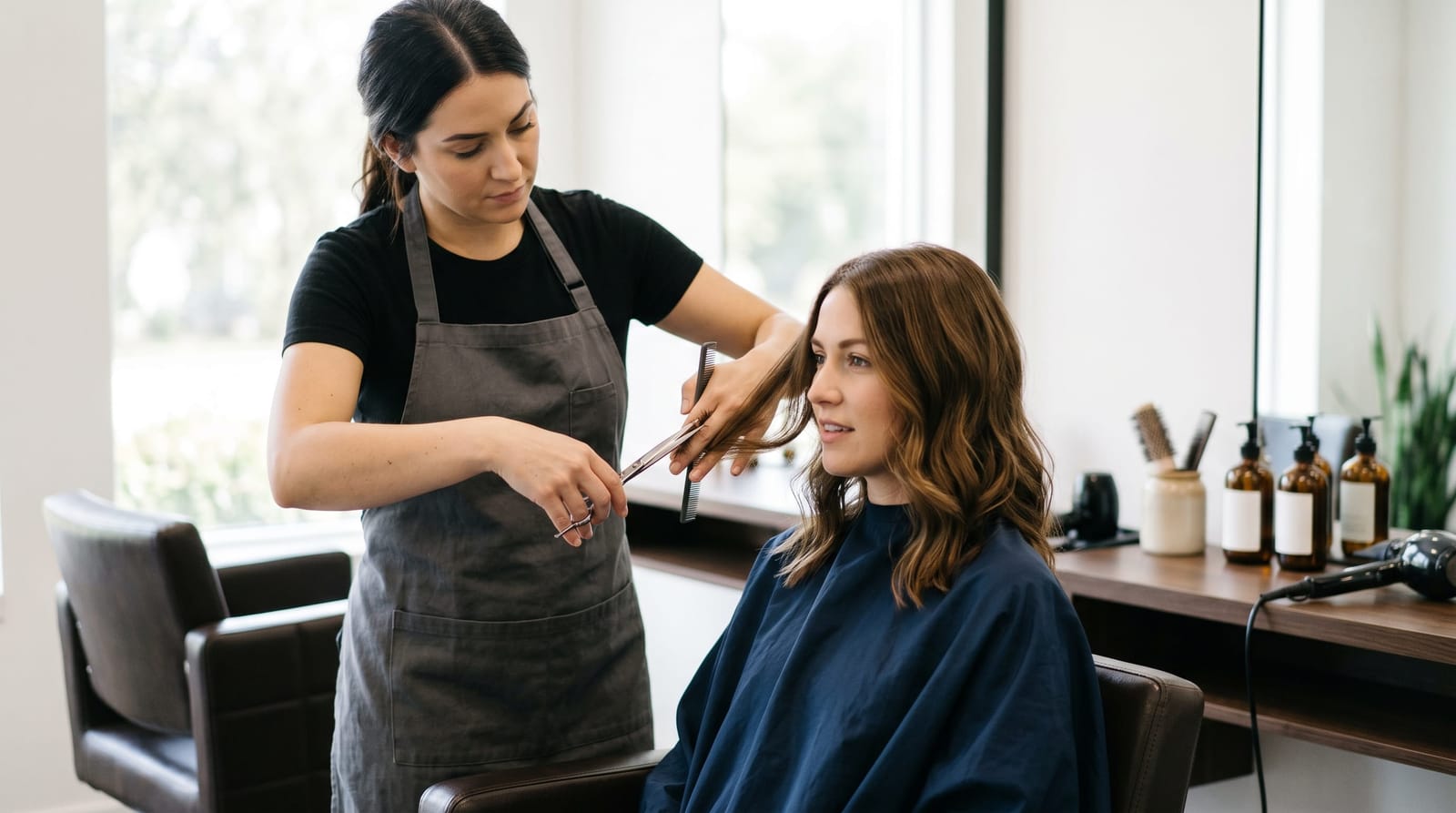
A professional haircut consultation is far more than a quick chat before the cut begins. At a skilled women's haircut salon in Montclair, NJ and throughout Northern New Jersey, stylists treat the consultation as a dedicated discovery process, typically lasting 10 to 20 minutes, designed to gather everything needed to make the right recommendation for your specific hair.
Here's what the process generally looks like:
- Welcome and history gathering: Your stylist will ask about your current cut, how long you've had it, and what's working or not working. This "hair story" gives context that photos alone can't provide.
- Physical hair assessment: The stylist will examine your hair's texture, density, elasticity, and porosity, often by running strands through their fingers or gently stretching a few hairs. According to professional stylist training standards, assessing elasticity alone can reveal whether hair is at risk of breakage during certain cutting or chemical services.
- Lifestyle discussion: How much time do you spend on your hair each morning? Do you exercise regularly? Do you color at home? These answers matter enormously. A study from the Professional Beauty Association found that 68% of women say their biggest frustration with haircuts is that the style doesn't work with their daily routine: a problem a proper consultation directly solves.
- Goal alignment: You'll discuss what you want to achieve, whether that's more volume, less frizz, a dramatic change, or simply a refreshed version of what you already have.
This structured conversation ensures both you and your stylist are working toward the same outcome before a single snip is made.
How Stylists Assess Face Shape, Hair Type, and Lifestyle
One of the most valuable things a professional stylist brings to a consultation is trained observation. While you might see a photo on Pinterest and think "I want that," a skilled stylist sees your actual face structure, your natural growth patterns, and your hair's real behavior, and knows how to bridge the gap between inspiration and reality.
Face Shape Analysis
Stylists are trained to identify six primary face shapes: oval, round, square, heart, oblong, and diamond. Each responds differently to length, layers, and fringe. For example, a long, layered cut that elongates the face beautifully on an oval face can make a round face appear wider. Your stylist will observe your jawline, forehead width, and cheekbone placement to recommend cuts that naturally flatter your proportions: no measuring tape required.
Hair Type and Texture Evaluation
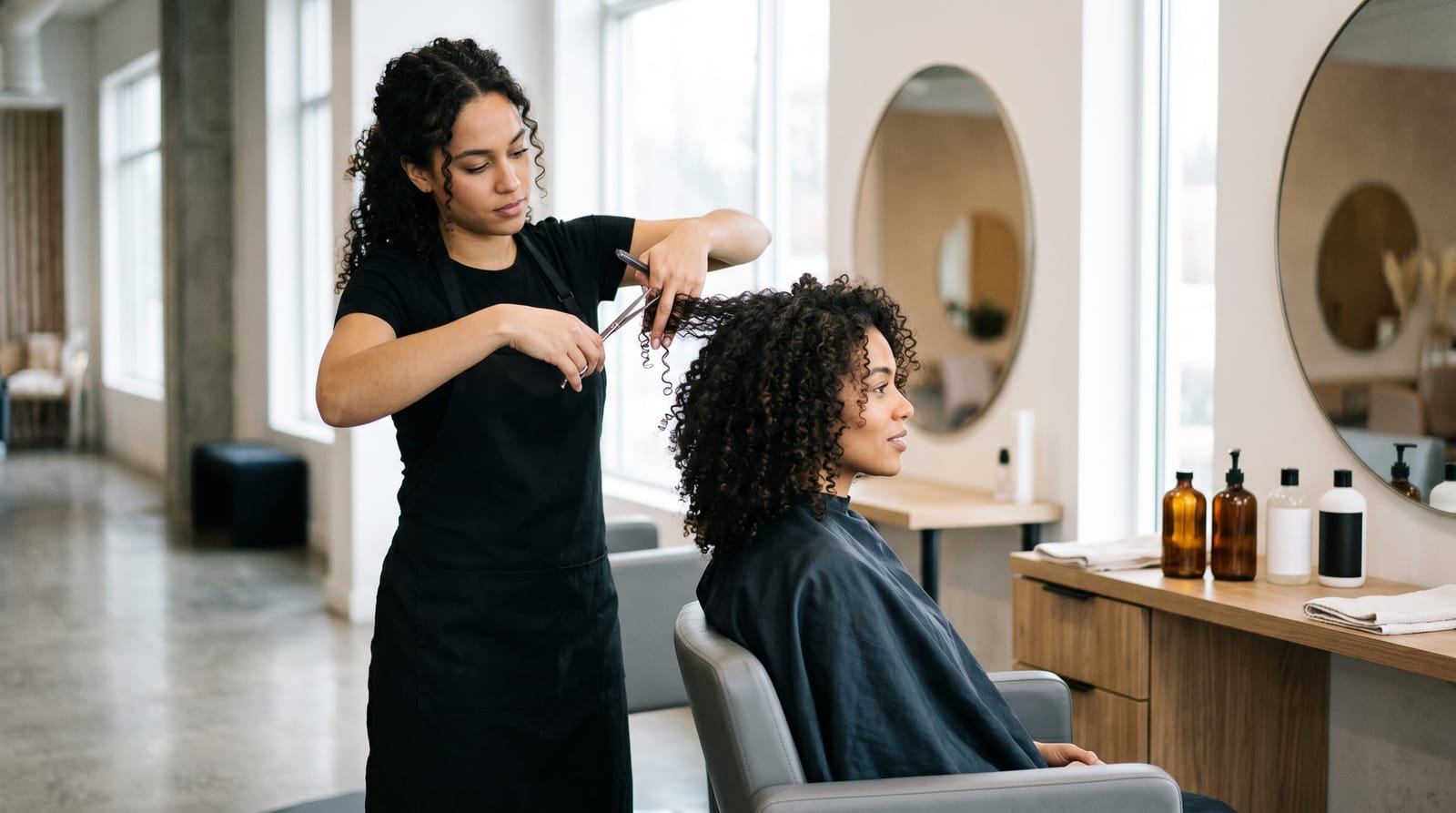
Hair texture (fine, medium, or coarse) and density (how many strands per square inch) dramatically affect how a style behaves. A blunt bob that falls perfectly on thick, straight hair will behave completely differently on fine, wavy hair. Stylists at salons specializing in curly hair go even deeper: assessing curl pattern, shrinkage percentage, and moisture levels to determine which cutting technique (dry cutting vs. wet cutting, for example) will produce the best result.
Lifestyle and Maintenance Honest Talk
This is where many consultations separate good stylists from great ones. A great stylist will ask you directly: "How many minutes do you spend styling in the morning?" If your answer is five minutes, a cut that requires 30 minutes of blowdrying to look its best isn't right for you: no matter how gorgeous it looks in a photo. If you're looking for low maintenance haircuts busy moms can realistically manage, the consultation is exactly where that conversation happens.
How to Communicate Your Style Preferences Effectively
Even the most skilled stylist can't read minds. Coming prepared to your consultation makes an enormous difference in the outcome. Here are specific strategies that work:
- Bring 3 to 5 reference photos, not just one: Multiple images help your stylist identify patterns in what you're drawn to (length, texture, movement) rather than trying to replicate one specific look that may not suit your hair type.
- Be specific about what you don't want: "I don't want anything above my collarbone" or "I hate when my hair gets poofy at the roots" gives your stylist clear guardrails.
- Use descriptive words, not just style names: Terms like "beachy," "polished," "effortless," or "structured" communicate a feeling and a lifestyle, which is often more useful than saying "I want a lob."
- Be honest about your styling ability: There's no judgment here. If you've never successfully used a round brush, say so. Your stylist will factor that in.
- Ask questions: "Will this work with my natural texture?" and "What will this look like when it grows out in six weeks?" are completely fair, and smart, questions to ask.
Research shows that clients who actively participate in the consultation process report 40% higher satisfaction with their final haircut results. Your voice matters in this conversation.
Red Flags and Green Flags in a Haircut Consultation
Not all consultations are created equal. Knowing what good looks like helps you evaluate whether a salon is the right fit.
Green flags to look for:
- The stylist touches and examines your hair before making any recommendations
- They ask about your lifestyle before suggesting a style
- They show you examples or describe what they're envisioning in detail
- They're honest if a particular look won't work with your hair type
- They discuss the maintenance commitment upfront, including how often should women get haircuts to maintain the specific style they're recommending
Red flags to watch for:
- A stylist who jumps straight to cutting without any conversation
- Vague agreements like "yeah, sure, I can do that" without any specific discussion
- No mention of your hair's current condition or texture
- A stylist who seems dismissive of your reference photos or ideas
A consultation that feels rushed or one-sided is a signal to pause before committing to a service.
Frequently Asked Questions About Haircut Consultations
Is a haircut consultation free?
Most salons include a consultation as part of the service appointment at no additional cost. Some higher-end salons offer standalone consultations for clients considering significant changes like major cuts or color transformations. It's worth calling ahead to ask, especially if you're visiting a new salon for a major style change.
What should I bring to a haircut consultation?
Bring 3 to 5 reference photos saved on your phone, a list of any products you currently use, and be ready to describe your daily styling routine honestly. If you have specific concerns, like thinning at the crown or a cowlick, mention those upfront. The more information you bring, the better your stylist can tailor their recommendation.
How long does a haircut consultation take?
A thorough haircut consultation typically takes between 10 and 20 minutes when conducted as part of a service appointment. Standalone consultations for complex transformations, such as going from long to very short, or addressing significant damage, may run 30 minutes or longer. Don't rush this part; the time invested upfront saves disappointment later.
What if I disagree with my stylist's recommendation during the consultation?
Speak up: it's your hair and your appointment. A good stylist welcomes the discussion. If your stylist recommends against something you want, ask them to explain their reasoning. Often they're flagging a genuine technical issue, like hair that's too fragile for a certain cut. But if you understand the concern and still want to proceed, a skilled stylist will work with you to find the best possible approach within your wishes.
Walk Into Your Next Appointment Prepared
A professional haircut consultation isn't a formality: it's the single most important part of getting a haircut you'll actually love. When both you and your stylist clearly understand your face shape, hair type, lifestyle, and goals before the cut begins, the results are consistently better. Come prepared with photos and honest answers, ask questions freely, and trust the process. The best haircuts start with the best conversations, and now you know exactly how to have one.