What Is a Modern Perm vs a Traditional Perm for Men?
If the word "perm" conjures images of tight, helmet-shaped curls from a 1980s yearbook photo, you're not alone, and you're also working with outdated information. The modern men's perm vs traditional perm conversation is one worth having, because today's techniques, formulas, and results look nothing like what your dad might have sat through. Whether you're exploring texture options for the first time or reconsidering something you dismissed years ago, here's a clear breakdown of what's actually changed, and why it matters for how you'll look and feel leaving the salon chair.
What Made Traditional Perms Look the Way They Did
Traditional perms, the kind popularized from the 1970s through the early 1990s, were built around one goal: maximum curl definition. The chemical process used alkaline solutions with a high pH level (typically between 9 and 10) that aggressively broke down the hair's natural bonds before reshaping them around small rods. The result was tight, uniform curls with significant volume and a very structured appearance.
Those small rod sizes were partly responsible for the "poodle perm" look that became a cultural shorthand for over-processed hair. The tighter the rod, the tighter the curl, and stylists of that era were working with a limited toolkit. Processing times were long, the chemical smell was strong, and the formulas were harsh enough that hair often came out dry, frizzy, or prone to breakage.
Traditional alkaline perms also required a strict timeline between chemical services. If you'd had color or highlights, getting a traditional perm on top of that significantly increased the risk of damage: a limitation that ruled out a large portion of potential candidates. The results could last 4 to 6 months, but the tradeoff in hair health wasn't always worth it.
How the Modern Men's Perm Changed Everything
Modern perm chemistry has evolved considerably. Today's formulas, including acid perms and digital (hot) perms, work at lower pH levels and use gentler restructuring agents that are far less disruptive to the hair's internal structure. The result is a process that achieves real, lasting texture without the same aggressive chemical load.
Here's what separates the modern men's perm from its predecessor in concrete terms:
- Lower pH formulas: Acid perms typically operate at a pH of 4.5 to 7, compared to 9-10 for traditional alkaline perms, which means significantly less chemical stress on each strand.
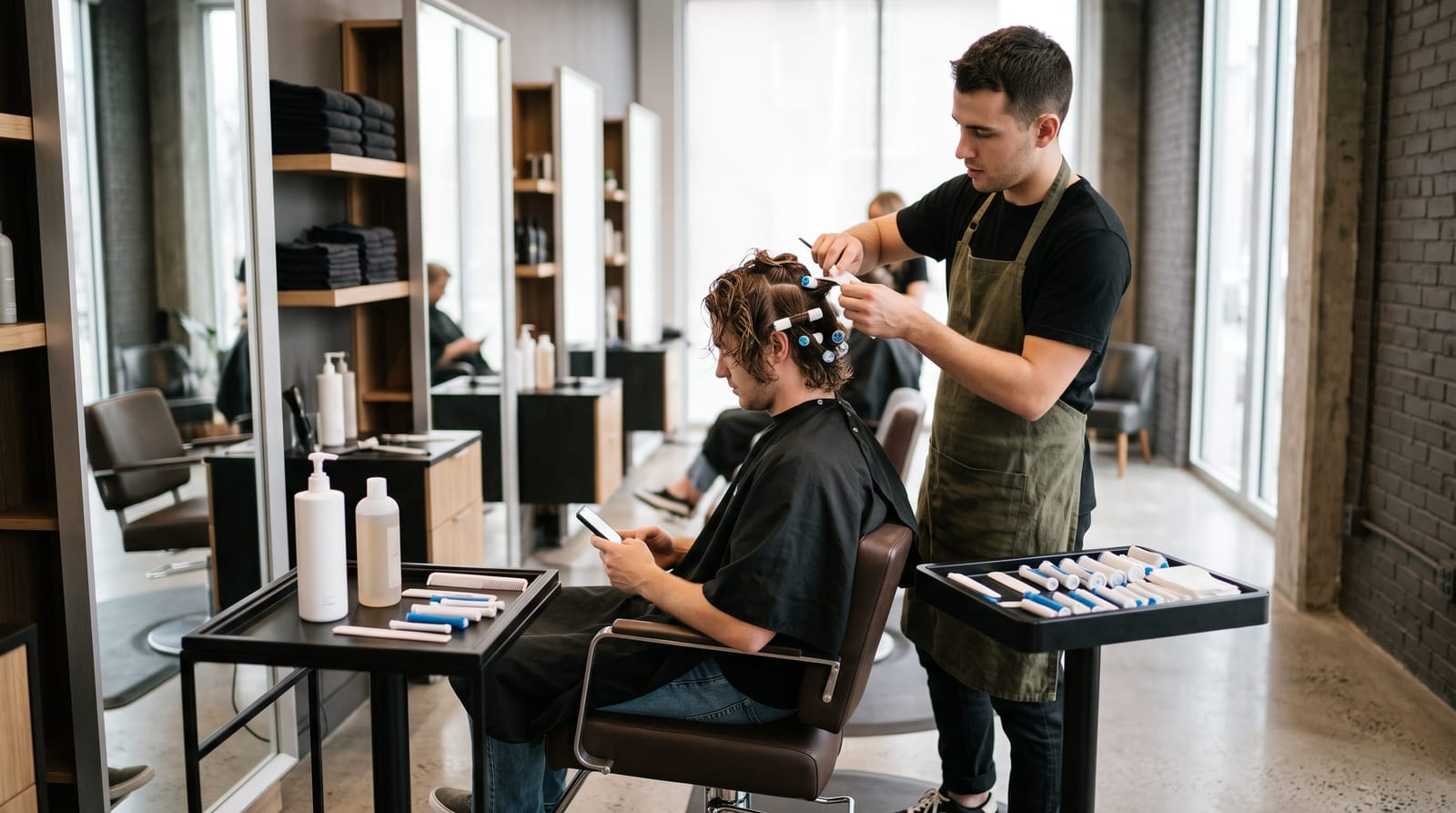
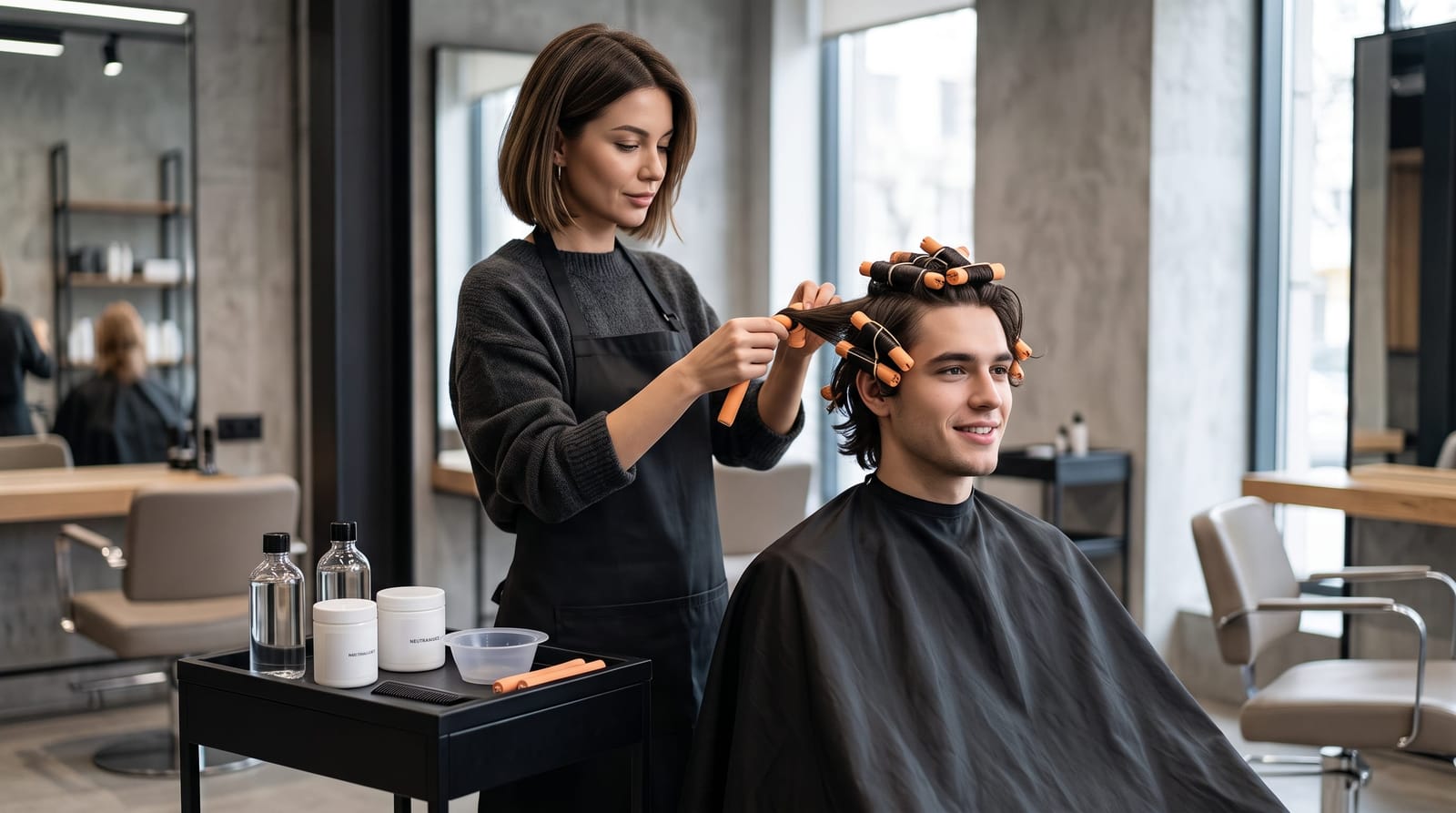
- Larger rod sizes: Modern perms use a wider range of rod sizes, including much larger tools that produce waves rather than tight curls, giving results that look naturally textured rather than processed.
- Selective application: Partial perms allow stylists to target specific sections of the hair (typically the top or crown) without treating the entire head.
- Digital perm technology: Heat-activated digital perms restructure hair in a way that's closer to how your hair actually behaves when it dries naturally: producing softer, more relaxed wave patterns.
- Less overall processing time: While a full modern perm service still runs approximately 2 to 3 hours, the gentler formulas mean less waiting for the chemical reaction to complete.
The modern men's perm is designed to look like your hair just grew that way: intentional without being obvious, styled without looking overdone.
Tight Curl vs Loose Wave: Understanding the Result Difference
One of the biggest misconceptions about modern perms is that "perm" still means tight, uniform curls. It doesn't. The range of results available today spans from subtle texture and body all the way to defined waves and spiral curls, and the end result depends almost entirely on the rod size and placement technique your stylist chooses.
Tight Curl Results
Smaller rods still exist and still produce defined curl patterns. For men with shorter hair who want more volume and curl definition, think a coiled, textured look, smaller rod sizes can create that result with modern chemistry doing less damage than traditional methods. This approach works well for men with naturally straight or slightly wavy hair who want a more dramatic texture change.
Loose Wave Results
This is where the majority of modern men's perm requests fall. Using larger rods or a digital perm technique, stylists can create soft, beachy waves that move naturally and dry with minimal effort. These results integrate seamlessly with longer men's cuts, mid-length styles, curtain bangs, or shaggy layers, giving the hair a lived-in, effortless feel that looks stylish rather than styled.
According to industry data, loose wave and "beach wave" perms have grown significantly in popularity among men over the past 3 to 5 years, driven largely by the resurgence of longer men's hairstyles and the growing interest in low-maintenance texture.
Full Perm vs Partial Perm: Which Approach Is Right
Another dimension of the modern men's perm that didn't exist in traditional applications is the concept of a partial perm. Rather than treating the entire head of hair, a partial perm focuses the chemical service on a specific zone, most commonly the top section, while leaving the sides and back untouched.
Here's how the two approaches compare:
- Full perm: Treats all sections of the hair uniformly; best for men who want consistent texture throughout; ideal for shorter or medium-length cuts where the entire style benefits from added volume and wave.
- Partial perm: Targets the top or crown section only; allows for contrast between the textured top and smoother sides; works well with fades and tapered cuts where only the longer top section needs texture.
- Root perm: A more specialized approach that adds volume and lift at the scalp without affecting the length; less common but useful for men with fine or flat hair who want body without visible curl.
A skilled stylist will assess your current cut, hair density, and lifestyle before recommending which approach fits your goals. The partial perm, in particular, has become a preferred option because it limits chemical exposure while delivering the texture exactly where it's most visible.
Why Modern Men's Perms Look Intentional, Not Dated
The cultural shift here is just as important as the technical one. Traditional perms looked processed because they were: the uniformity, the stiffness, and the exaggerated volume all read as "chemically treated." Modern perms are designed with the opposite philosophy: the goal is texture that looks like it belongs to your hair.
Stylists today approach perms as a texture foundation rather than a finished style. The perm creates the wave or curl pattern; regular styling and the right haircut do the rest. This means the results integrate with how you already wear your hair rather than requiring a completely different routine.
Modern men's perms also work in harmony with haircuts rather than against them. A well-placed wave pattern on a medium-length cut, a shag, or a longer textured style looks cohesive and intentional: the kind of result that reads as great hair, not a chemical service.
Frequently Asked Questions
How long does a modern men's perm last compared to a traditional one?
Both traditional and modern perms typically last between 4 and 6 months, with the curl pattern gradually relaxing as new hair grows in and the bonds naturally loosen over time. Modern perms don't necessarily last longer, but many men find the result looks better as it grows out: the looser wave softens naturally rather than leaving a visible line of demarcation between permed and new growth.
Is a modern perm less damaging than a traditional perm?
Yes, meaningfully so. Modern perm formulas, particularly acid-based and digital perms, use lower pH chemistry that places less stress on the hair's internal structure. That said, any chemical service has the potential to affect hair health, which is why a professional consultation is essential before booking. Your stylist will evaluate your hair's current condition, color history, and texture before recommending the right formula.
Can men with highlighted or colored hair get a modern perm?
This depends on the degree of chemical history in the hair and its current integrity. Traditional alkaline perms were strongly discouraged for color-treated hair. Modern formulas are gentler, and in some cases a perm may be possible with appropriate timing and preparation, but this is a decision made on a case-by-case basis during a consultation. A stylist will assess whether the hair can handle the additional service safely.
What's the difference between a digital perm and a regular perm for men?
A digital perm uses heated rods connected to a temperature-controlled machine to process the hair with a combination of chemistry and gentle heat. The result tends to be a softer, more natural wave pattern that sits closer to how the hair behaves when it air-dries. A standard (cold) perm relies on chemistry alone without heat. Digital perms are generally better suited for achieving loose, relaxed waves, while cold perms can produce a wider range of results including tighter curl patterns.
The Takeaway on Modern vs Traditional Men's Perms
The modern men's perm vs traditional debate isn't really a close comparison: the two share a name and a general concept, but almost everything else has changed. Today's perm services offer gentler chemistry, a wider range of results, and a finished look that reads as personal style rather than a dated hair trend. Whether you're curious about subtle wave texture, beachy movement, or defined curls, the conversation starts with a stylist who understands how to tailor the service to your hair and your lifestyle. Understanding the difference between what perms were and what they are today is the first step toward making a confident, informed decision.