Best Hair Extensions for Fine Hair
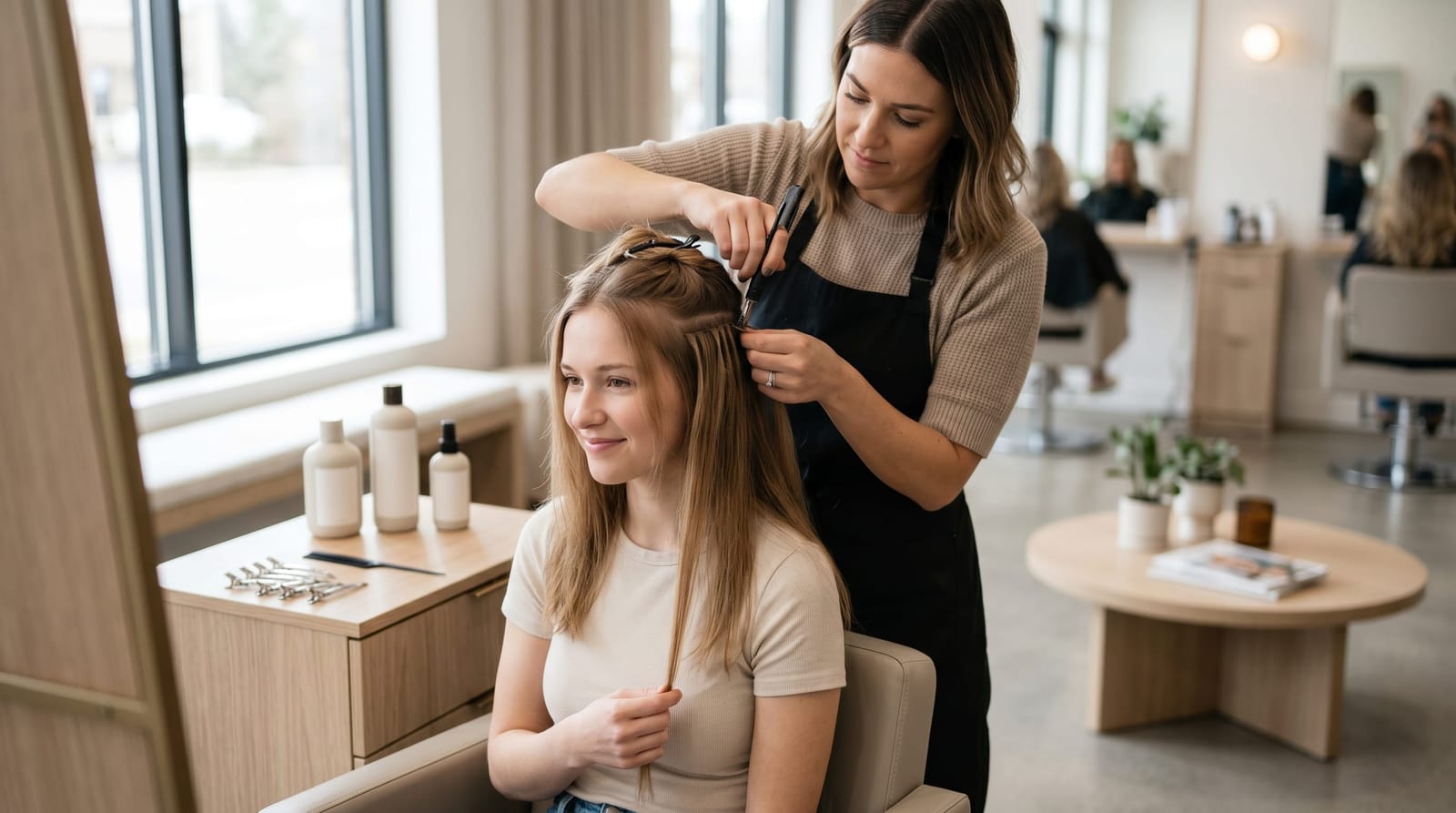
Fine hair and hair extensions have a complicated relationship. The wrong method can leave your hair looking stringy, damaged, or worse: cause breakage that sets you back months of growth. But the best hair extensions for fine hair genuinely exist, and when chosen correctly, they can double your volume and add 8 to 12 inches of length without anyone suspecting a thing. This post breaks down the specific extension types, weights, and techniques that work beautifully on fine or thin hair, so you can walk into a salon consultation already knowing what to ask for.
Why Fine Hair Requires a Different Approach to Extensions
Fine hair has a smaller diameter per strand than average hair: typically under 0.05mm, which means each individual strand carries less structural strength. When you add extensions, you're attaching additional weight and tension to those strands. Do it wrong, and you accelerate breakage or, in more serious cases, traction alopecia along the hairline or part.
The good news is that roughly 40% of women describe their hair as fine or thinning, which means the professional extension industry has spent significant resources developing techniques designed around exactly this hair type. The key variables to evaluate are attachment weight, bond size, and the number of grams applied per row or per section. A full head of tape-in extensions, for example, typically uses between 50 and 100 grams of hair, while a full set of fusion bonds can run 150 to 200 grams: a meaningful difference when your natural hair weighs very little on its own.
For fine-haired clients, the goal isn't maximum volume at any cost. It's the right volume applied in a way your hair can actually support long-term. As part of our broader guide on professional hair extensions services in NJ, we consistently emphasize this matching process as the single most important step before any application begins.
The Best Hair Extension Methods for Fine Hair
Tape-In Extensions
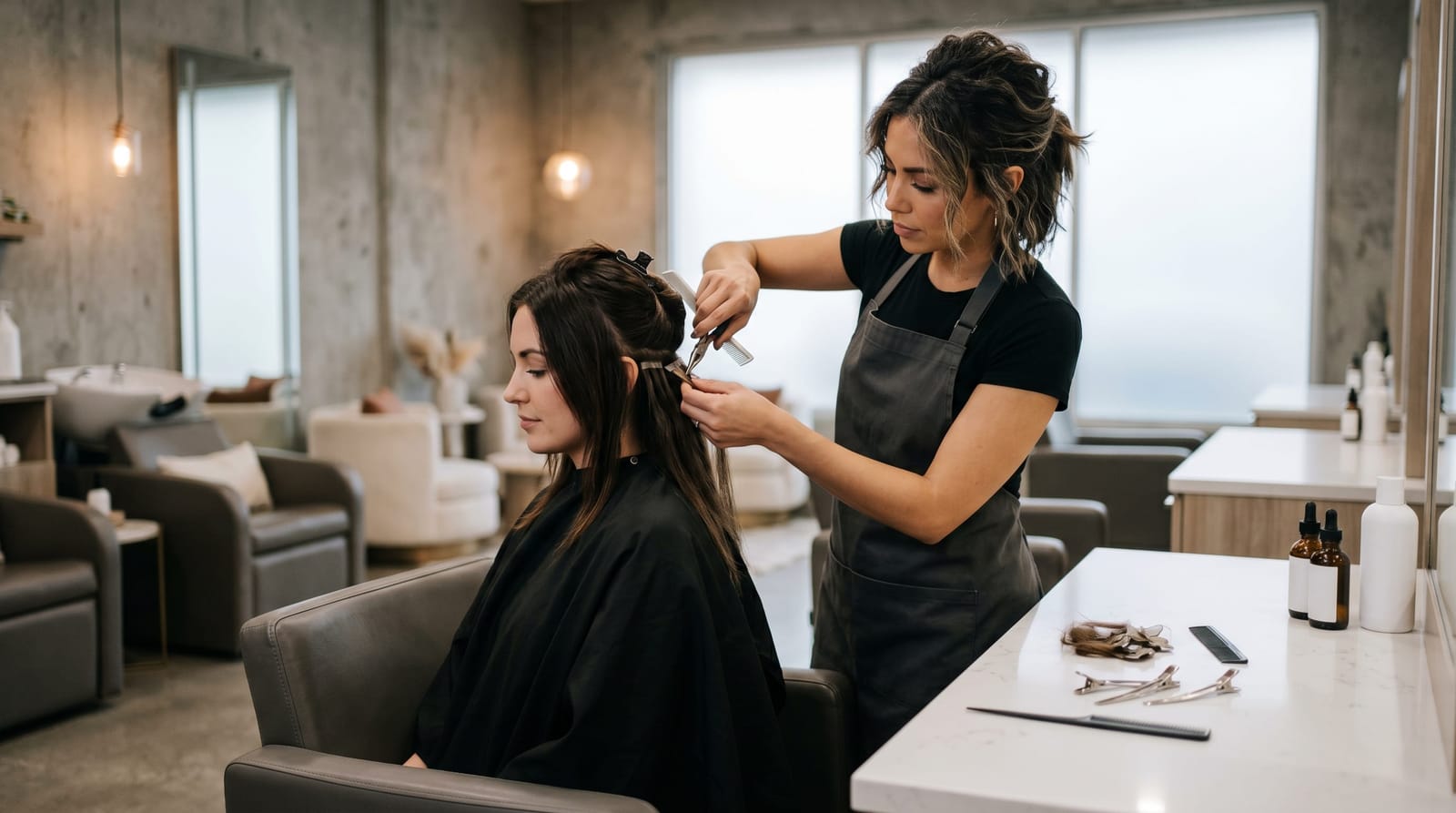
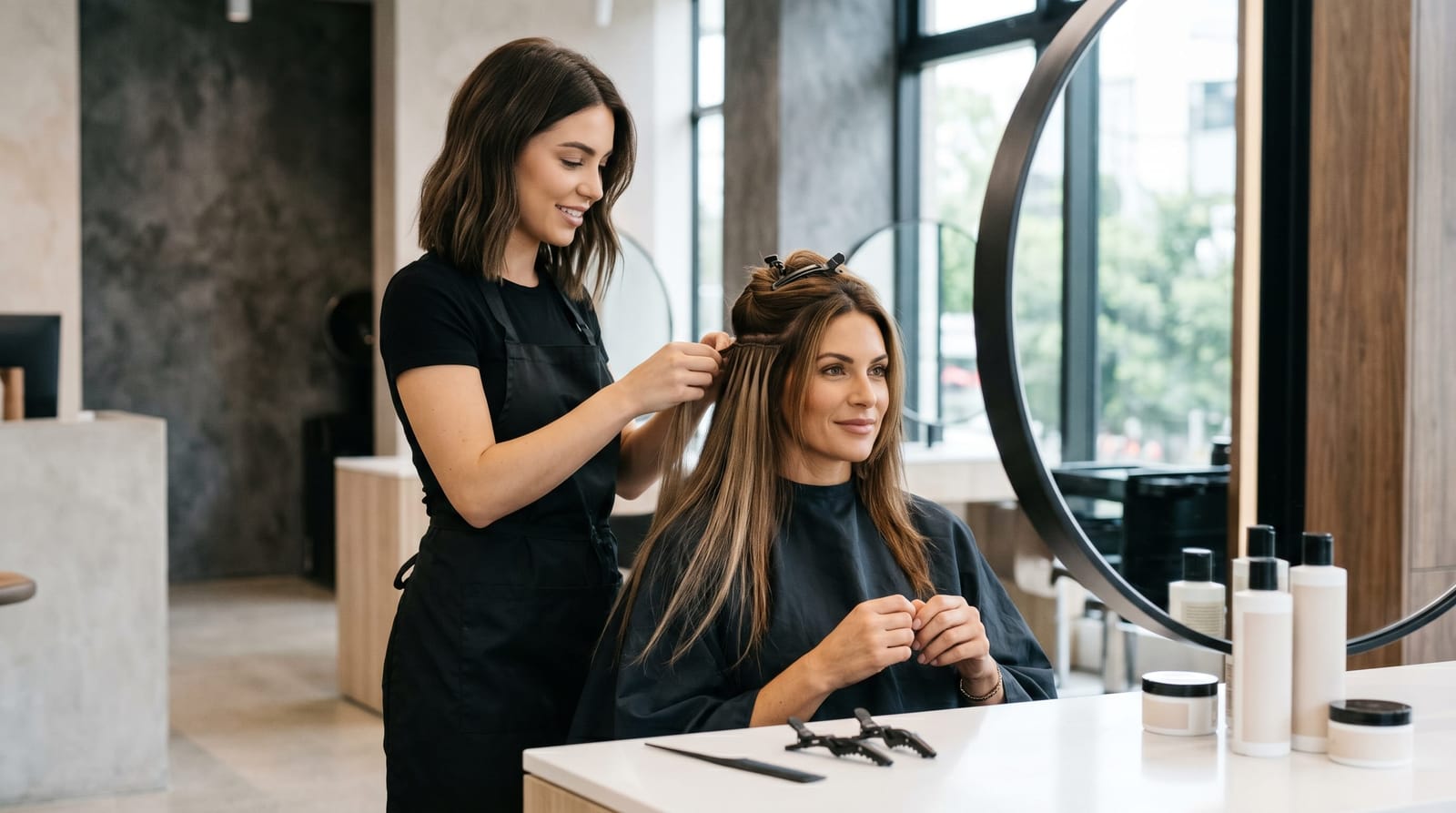
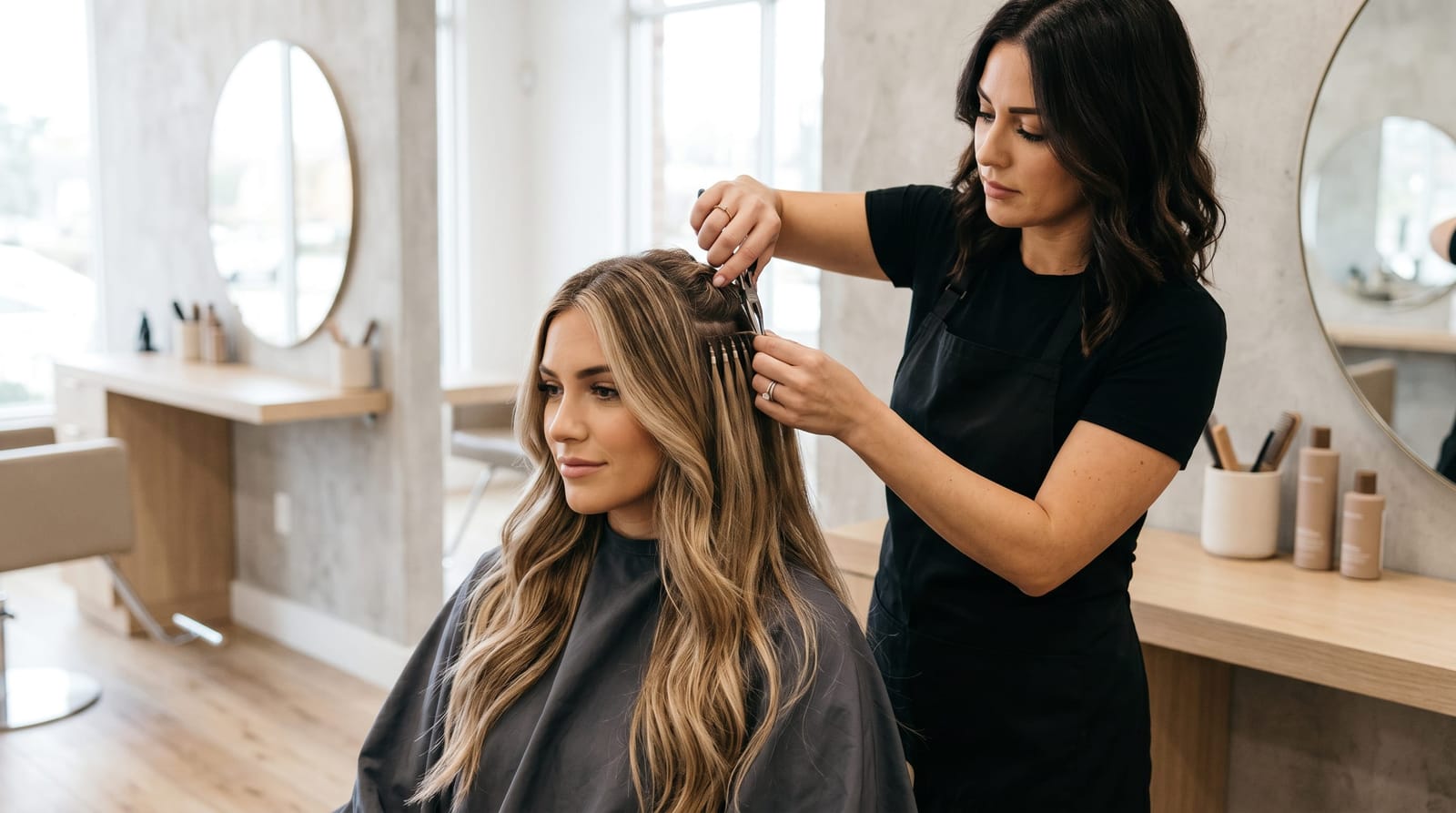
Tape-in extensions are consistently the top recommendation for fine hair, and the data backs this up. Application takes approximately 45 to 90 minutes for a full head, and a single set of tape-ins can be reused up to 3 times with proper maintenance: making them one of the most cost-efficient options over time. The adhesive weft lies flat against the scalp and distributes weight across a wide surface area rather than concentrating tension on a single point, which is exactly what fine hair needs.
For fine hair specifically, look for seamless or ultra-thin tape wefts. Brands like Great Lengths offer specific products engineered for fine hair with tapered, feathered edges that blend invisibly into thin strands. When installed correctly, with 1.5 to 2 inches of natural hair sandwiched between each tape panel, there's virtually no visible line, even when your hair is pulled back.
I-Tip (Micro-Link) Extensions
I-tip extensions use a small copper or silicone micro-ring to attach individual strands of extension hair: no heat, no glue, no adhesive at all. This makes them one of the gentlest methods available for fine hair. Each micro-ring holds approximately 0.5 to 1 gram of extension hair, allowing a stylist to customize the placement and density with remarkable precision.
Because there's no chemical bond involved, i-tip extensions cause minimal disruption to the hair's cuticle layer. They're also easy to adjust as your hair grows, with most clients returning every 6 to 8 weeks for a move-up appointment. The main requirement is that your stylist uses small-sized rings, standard rings can be too heavy and bulky for fine strands, and applies no more than 80 to 100 strands for a full head on fine hair.
Halo Extensions
For fine-haired clients who want a zero-commitment option with absolutely no attachment, halo extensions are a standout choice. A halo sits on a nearly invisible wire that rests on the crown of your head, with your natural hair pulled over the top to conceal it. There are no bonds, no tape, no rings, just your hair and the halo.
Because halo extensions place no tension whatsoever on individual strands, they're ideal for clients with very fragile or previously damaged fine hair. They typically add 120 to 200 grams of volume in under 2 minutes of application. The trade-off is that halo extensions work best for adding volume to mid-lengths and ends, and they're not ideal for hairline coverage.
Seamless Clip-In Extensions
Traditional clip-in extensions can be too heavy for fine hair when worn daily, but seamless clip-ins, which use a thin, flexible weft with silicone-lined clips, are a genuinely viable option for occasional wear. They typically weigh 25 to 40% less than standard clip-ins for the same coverage area. To understand how long clip-in extensions last with proper care, most high-quality seamless sets hold up for 12 to 18 months with gentle handling and appropriate washing frequency.
For fine hair, always opt for sets labeled 100-120 grams rather than full 160-220 gram sets. Fewer, lighter wefts placed strategically in the mid-section of the head, rather than at the nape or temples, will give the most natural result without weighing down your root area.
What to Avoid If You Have Fine Hair
Certain extension methods carry a meaningfully higher risk of damage for fine hair and are worth approaching with caution:
- Hot fusion (keratin bond) extensions: While beautiful when done well, the heat required to attach and remove these bonds can weaken fine strands over time. The bonds themselves also concentrate weight on small attachment points, which increases the risk of breakage.
- Sew-in or weave extensions: These require braiding your natural hair as a base, which creates sustained tension: a significant concern for fine or low-density hair.
- Overloading strand count: More is not better with fine hair. A professional should never attach extensions to hair sections less than 2mm wide. Too many bonds on too little natural hair is the most common reason extensions cause damage.
- Heavy wefts with thick backing: Thick weft bases sit visibly on fine hair and create a ridge that's nearly impossible to conceal at the scalp.
Weight Guidelines: How Much Is Too Much for Fine Hair?
One of the most practical ways to protect fine hair during the extension selection process is understanding gram weights relative to your natural hair density. Here's a practical framework:
- Very fine, low-density hair: Cap total extension weight at 60-80 grams. Focus on volume over length.
- Fine hair with medium density: 80-120 grams is typically safe with tape-ins or i-tips properly distributed across multiple rows.
- Fine texture, higher density: Up to 150 grams may be appropriate depending on the application method and stylist assessment.
These numbers should always be verified through an in-person consultation. A skilled extension stylist will assess your hair's tensile strength, not just its visual density. If you're budgeting for your appointment, it helps to research how much professional hair extensions cost at a salon before your consultation, so you can plan for the method that's actually right for your hair rather than defaulting to the lowest-price option.
Frequently Asked Questions
Can I get hair extensions if my hair is thinning due to breakage or postpartum shedding?
Yes, but with careful method selection. Halo extensions or lightweight clip-ins are the safest choice during active shedding phases because they attach nothing permanently to fragile strands. Once your hair stabilizes, typically 6 to 12 months postpartum, tape-ins or i-tips become viable with a thorough stylist consultation first.
How do I prevent extensions from showing through fine hair?
The key is layered placement and color matching. Extensions should be installed in rows that sit at least 1 to 1.5 inches from your scalp hairline and parting areas. Choosing extension hair that's slightly more layered than your natural hair also helps blend seamlessly rather than sitting as a blunt block of volume.
How often do I need maintenance appointments for extensions on fine hair?
Most extension methods on fine hair require a move-up or re-application visit every 6 to 8 weeks. Because fine hair often grows slightly slower and experiences more tension at attachment points, staying on schedule with maintenance is especially important: letting extensions grow out too far increases the risk of matting and stress on your natural strands.
Will extensions make my fine hair look fuller at the roots?
Extensions add volume and length from the mid-shaft and ends rather than the root. They won't create fullness directly at the scalp, but the added body underneath lifts fine hair and creates the appearance of more overall density. If root volume is your primary concern, volumizing styling techniques combined with extensions typically deliver the best results.
Finding the Right Extensions for Your Fine Hair
The best hair extensions for fine hair aren't necessarily the most expensive or the most dramatic: they're the ones matched precisely to your hair's weight tolerance, density, and lifestyle. Tape-ins and i-tips lead the field for semi-permanent results, while halo and seamless clip-ins offer flexible options with zero attachment risk. What matters most is working with a stylist who evaluates your specific hair structure before recommending a method. If you're exploring professional extension services in the New Jersey area, understanding your full range of options, including application, maintenance, and removal, puts you in the best position to make a decision you'll love long-term.