Hair Smoothening for Curly Hair: Pros and Cons
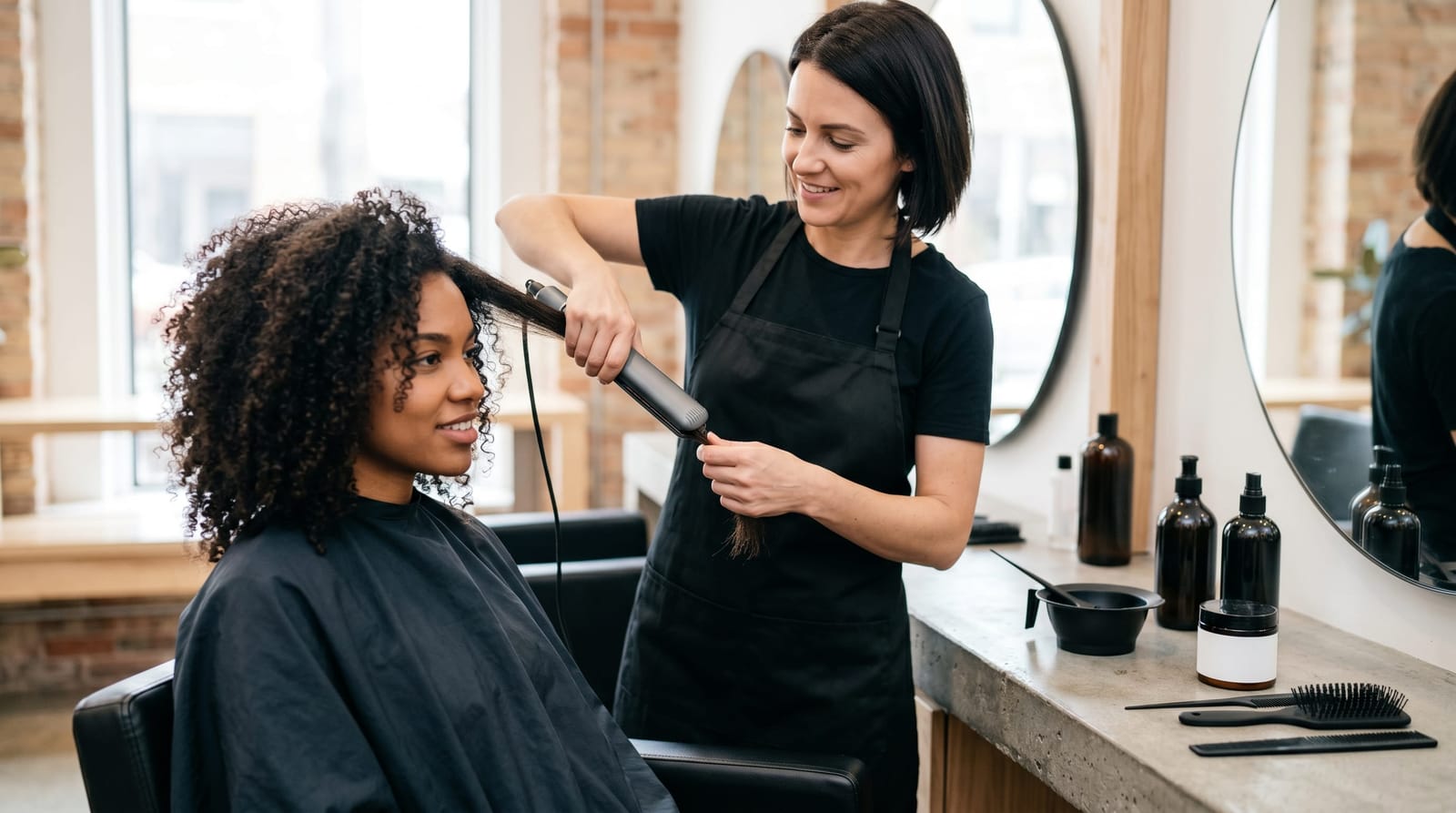
If you have naturally curly hair, you've probably wondered whether hair smoothening for curly hair is worth it, or whether it could damage the curls you've spent years learning to love. Smoothening treatments promise frizz-free, manageable hair for weeks or even months, but curly hair comes with its own unique structure, needs, and risks. Before booking an appointment, it's important to weigh exactly what these treatments do to your curl pattern, how reversible the results really are, and what alternatives exist. This guide breaks it all down so you can make the most informed decision for your hair.
What Happens to Curly Hair During a Smoothening Treatment?
Curly hair gets its shape from the oval or asymmetrical cross-section of the hair shaft, combined with disulfide bonds that create the curl pattern. Hair smoothening treatments, whether keratin-based, Brazilian Blowout, or Japanese straightening, work by temporarily or permanently altering these structural bonds.
Keratin treatments coat the hair shaft with a protein layer that reduces frizz and softens the curl pattern. They don't break disulfide bonds; instead, they fill gaps in the cuticle to create a smoother surface. Results typically last 3 to 5 months, and most stylists report that curly clients can retain anywhere from 20% to 50% of their natural texture depending on the formula used.
Brazilian Blowout is another popular option that forms a protective protein layer around each strand. It's especially popular for curly hair smoothening because it's adjustable: stylists can calibrate how much curl relaxation you get, from light smoothing to near-straight results.
Japanese straightening (thermal reconditioning), on the other hand, permanently breaks and reforms the disulfide bonds in the hair. This is the most dramatic option: it essentially eliminates curl permanently in the treated sections, making it the least reversible choice for curly hair.
Understanding which treatment is being applied to your hair, and how your specific curl type (Type 2, 3, or 4) will respond, is the first step before committing to any smoothening service.
The Pros of Hair Smoothening for Curly Hair
For many curly-haired women, the appeal of smoothening treatments is very real. Here are the most significant advantages:
- Dramatic frizz reduction: Studies and salon data consistently show that keratin treatments can reduce frizz by up to 95%, even in high-humidity environments: a major win for anyone living through humid NJ summers.
- Significant time savings: Women with Type 3 or Type 4 curly hair report spending 45 to 90 minutes on daily styling. After a keratin or Brazilian Blowout treatment, that often drops to 10 to 20 minutes, according to data collected by professional hair care brands.
- Improved manageability: Detangling becomes faster and gentler, which actually reduces mechanical breakage: a real concern for tightly coiled hair types.
- Retained partial curl: Soft keratin formulas and Brazilian Blowouts can soften rather than eliminate curl patterns, giving you a "best of both worlds" result: reduced frizz with a wavy or loosened curl pattern still intact.
- Enhanced shine: Smoothening treatments seal the cuticle, which dramatically increases light reflection. Most clients notice visibly shinier hair immediately after treatment.
- Reduced product dependence: Many curly-haired clients spend between $50 and $150 per month on curl-specific products. Smoothening treatments can cut that monthly spend significantly.
The Cons of Hair Smoothening for Curly Hair
Smoothening treatments aren't without trade-offs, and curly hair in particular carries some specific risks worth understanding before you sit in the salon chair.
- Curl pattern disruption: Even "curl-friendly" keratin formulas can loosen your curl pattern more than expected, especially with repeated treatments over 12 to 18 months. Some clients find their curl pattern takes 6 or more months to fully return after a keratin treatment.
- Formaldehyde exposure: Many traditional keratin treatments release formaldehyde when activated with heat. The FDA and CDC have flagged repeated exposure as a health concern, particularly in poorly ventilated spaces. Always verify that your NJ salon uses low- or no-formaldehyde formulas.
- Protein overload risk: Curly hair, particularly Type 4 coily hair, can be prone to protein sensitivity. Layering a protein-heavy smoothening treatment onto hair that's already protein-saturated can cause brittleness and breakage.
- Cost commitment: Hair smoothening for curly hair typically costs more than for straight hair because it requires longer processing and often more product. In NJ salons, keratin treatments for curly hair can range from $250 to $600 or more depending on hair length and density.
- Permanent options are irreversible: Japanese straightening permanently alters your curl pattern in the treated sections. New growth will still come in curly, creating a distinct line of demarcation over time that many clients find difficult to manage.
- Aftercare restrictions: Most treatments require you to avoid washing your hair for 48 to 72 hours post-treatment and to use only sulfate-free shampoos going forward: a lifestyle adjustment some clients underestimate.
How Reversible Is Hair Smoothening for Curly Hair?
Reversibility depends almost entirely on which treatment you choose. This is one of the most important questions to ask your stylist before committing.
Temporary Treatments
Keratin treatments and Brazilian Blowouts are considered semi-permanent. They gradually wash out over 3 to 5 months as the coating on the cuticle breaks down with each shampoo. By month 4 or 5, most curly-haired clients see their natural curl pattern returning, though some report slightly looser curls for several weeks longer. These treatments do not alter the internal structure of the hair, so the curl bounce-back is generally reliable.
Permanent Treatments
Japanese straightening and chemical relaxers are a different story. Because they chemically alter the disulfide bonds within the hair shaft, the treated hair will remain straight or significantly loosened permanently. Your natural curl pattern only returns in new growth. If you decide you want your curls back, you'll need to grow out the treated hair or cut it off: a process that can take 18 to 36 months for women with longer hair.
The Bottom Line on Reversibility
If you're on the fence, start with a keratin or Brazilian Blowout treatment. These options let you experience the benefits of smoother hair without permanently committing your curl pattern. If you love the results, you can maintain them with regular touch-ups every 3 to 4 months.
Alternatives to Full Smoothening for Curl Management
If you're not ready to commit to a full smoothening treatment, there are effective alternatives that offer frizz control and manageability without altering your curl structure.
- Olaplex or bond-repair treatments: These in-salon treatments strengthen the hair shaft and reduce frizz without smoothening the curl pattern. They're ideal for curly hair that's experienced damage from coloring or heat styling.
- Deep conditioning masques: Weekly protein-moisture balanced masques can reduce frizz by up to 40 to 50% when used consistently over 8 weeks, according to independent consumer hair care studies.
- Blowout styling services: A professional blowout gives you straight or wavy hair for 7 to 10 days without any chemical commitment. Many NJ salons offer blowout memberships specifically designed for curly-haired clients who want periodic sleek styles.
- Anti-humidity serums and curl creams: Modern silicone and protein-hybrid serums can reduce frizz significantly for 1 to 3 days, making them a good daily management option between salon visits.
- DevaCurl or Curl-Specific cuts: A curl specialist can shape your hair so that your natural texture looks intentional and polished, dramatically reducing the amount of daily effort needed to style your curls.
When weighing these alternatives against a full smoothening treatment, it also helps to compare the long-term investment. If you're curious about the financial side, understanding how much keratin treatment costs in NJ can help you decide whether a semi-permanent treatment makes more financial sense than monthly product spending.
Frequently Asked Questions: Hair Smoothening for Curly Hair
Will hair smoothening for curly hair completely remove my curl pattern?
It depends on the treatment. Keratin treatments and Brazilian Blowouts soften the curl pattern rather than eliminating it: most curly clients retain 30% to 60% of their natural texture. Japanese straightening and chemical relaxers, however, will significantly reduce or eliminate your curl pattern in the treated hair permanently. Always discuss your desired outcome with your stylist before choosing a treatment.
How long does hair smoothening last on curly hair?
Semi-permanent treatments like keratin and Brazilian Blowout typically last 3 to 5 months on curly hair. Because curly hair tends to have a more porous cuticle, the treatment may fade slightly faster than it would on straight or wavy hair. Using sulfate-free shampoo and avoiding chlorinated water can extend results by 3 to 4 weeks.
Is hair smoothening for curly hair safe for color-treated hair?
Generally yes, but timing matters. Most stylists recommend waiting at least 2 weeks after coloring before applying a smoothening treatment, and vice versa. Doing both services too close together can cause over-processing, which leads to dryness and breakage. Always inform your stylist of your full color history so they can choose the safest formula for your hair.
Can I still wear my hair curly after a keratin treatment?
Yes, in most cases. A soft keratin or Brazilian Blowout treatment is designed to reduce frizz and soften curl rather than eliminate it. Many curly-haired clients find that after treatment, their curl pattern is looser and more defined when air-dried, giving them a beautiful wavy or curly result without the frizz. Work with your stylist to choose a formula that preserves as much curl as possible.
Making the Right Choice for Your Curls
Hair smoothening for curly hair offers genuinely compelling benefits, up to 95% frizz reduction, significant time savings, and improved manageability, but it's not a one-size-fits-all solution. The key is matching the right treatment to your curl type, lifestyle, and long-term hair goals. For most curly-haired women, a semi-permanent keratin or Brazilian Blowout treatment strikes the best balance between results and flexibility. If you're considering your next step, exploring professional hair smoothening treatments at a trusted NJ salon is the best way to get personalized guidance and start your smoothening journey with confidence.