How Often Should Kids Get Haircuts? A Guide by Age and Hair Type
It's one of those questions every parent eventually asks, usually while staring at a child whose hair has somehow grown three inches since last month. How often do kids actually need haircuts? The answer isn't one-size-fits-all, and it shifts quite a bit depending on your child's age, hair type, and the style they're rocking. As part of managing hair care for the whole family, getting kids on a consistent trim schedule makes a noticeable difference in how healthy and manageable their hair stays day to day. Here's a practical breakdown to help you figure out the right rhythm for your child.
Toddlers (Ages 1-4): Keep It Simple, Keep It Infrequent
Toddler hair is wonderfully unpredictable: some kids arrive at age two with a full head of thick waves, while others are still rocking wispy baby hair well into preschool. At this stage, the goal isn't really about style. It's about keeping hair clean, manageable, and out of little eyes.
For most toddlers, a haircut every 8 to 12 weeks is a comfortable starting point. If your toddler's hair grows quickly or tends to get scraggly around the ears and neck, lean toward the 8-week mark. If growth is slower or the style is on the longer side and holding its shape well, every 10 to 12 weeks is perfectly fine.
The first haircut is often milestone-driven rather than schedule-driven: some families wait for a special occasion, others go when the hair simply demands it. Either approach works. What matters most for toddlers is making early salon visits feel calm and positive, so they build a good association with the experience. Short, low-key appointments focused on a simple trim are ideal at this age.
One important note: if your toddler has fine or very thin hair, avoid over-trimming. Fine hair can actually benefit from occasional shape-ups rather than frequent cuts, which helps it develop some density and length as the child grows.
Elementary School Kids (Ages 5-11): Building a Real Schedule
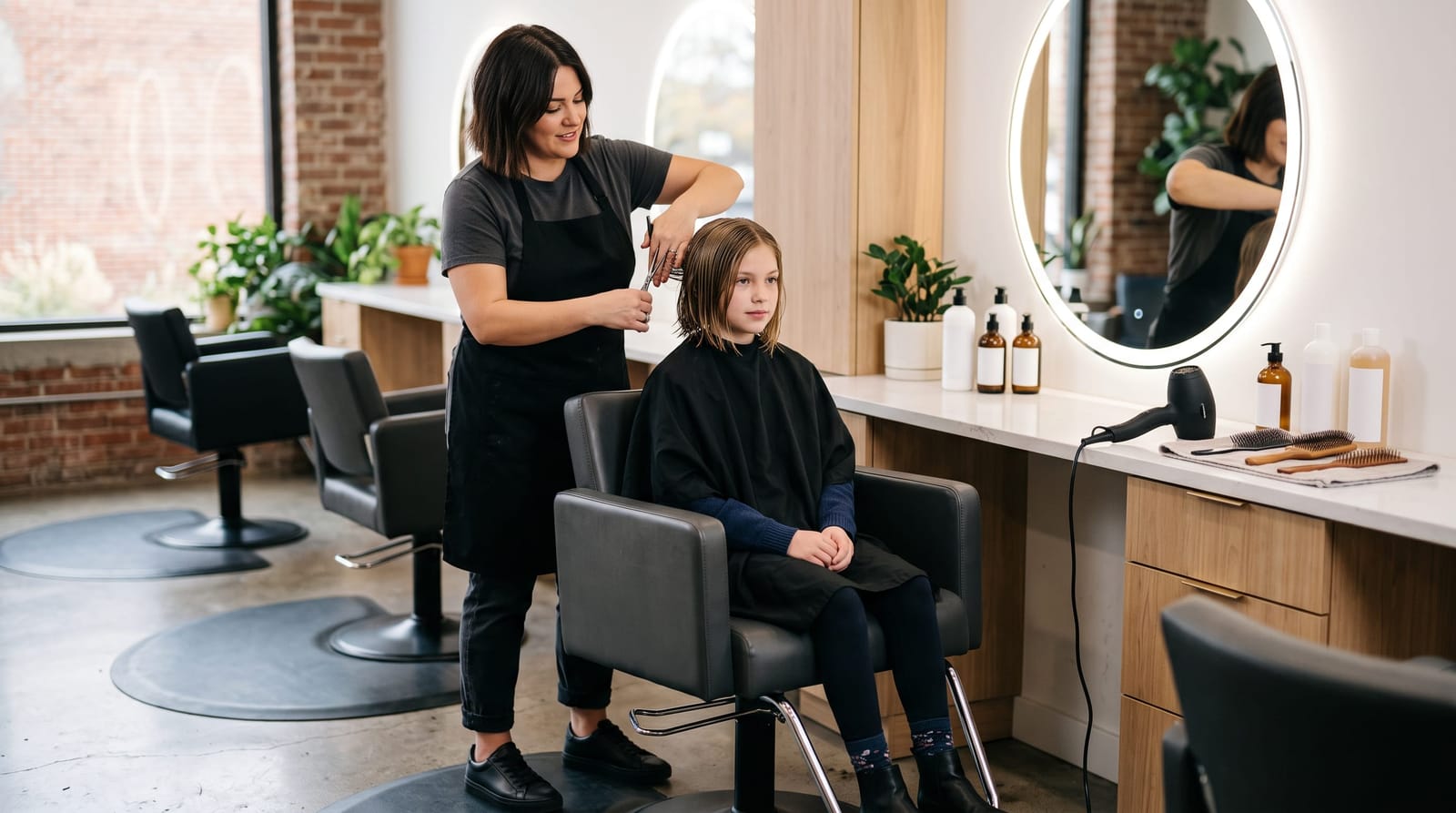
Once kids hit school age, hair care becomes a little more purposeful. They start developing opinions about how they want to look, and styles start to matter, whether that's a neat, polished cut for school or something with a bit more personality.
For most elementary-age kids, every 6 to 10 weeks is the sweet spot. Here's how to break it down:
- Short styles (boys' cuts, pixie cuts, cropped styles): These grow out the fastest in terms of visible shape loss. Plan for a trim every 6 to 8 weeks to keep the cut looking intentional rather than grown-out.
- Medium-length styles: A little more forgiving. Every 8 to 10 weeks typically works well to maintain the shape while allowing for some natural growth.
- Growing out or maintaining length: Even kids who are trying to grow their hair longer benefit from a light trim every 10 to 12 weeks to prevent split ends and keep the ends looking neat rather than scraggly.
This is also the age where extracurricular activities start influencing hair decisions. Kids involved in swimming, gymnastics, or sports often need styles that are practical and easy to manage, which can mean more frequent trims to keep hair out of the way.
If you're juggling multiple kids' schedules alongside your own salon visits, it helps to think about everyone's appointments as a coordinated plan. Our guide on family salon appointment scheduling tips covers practical strategies for making that process a lot smoother.
Tweens and Teens (Ages 12+): Style Preferences Take the Lead
By the time kids reach the tween and teen years, their relationship with their hair is deeply personal. This is when individual style, peer influence, and self-expression really drive the conversation, and that's a good thing. Hair is one of the easiest ways for young people to explore their identity.
Frequency at this stage varies more widely, but a general framework still applies:
- Teens with short or styled cuts: Every 6 to 8 weeks keeps things sharp and intentional.
- Teens with medium to long hair: Every 10 to 12 weeks for a trim is usually sufficient, especially if they're focused on maintaining length.
- Teens experimenting with color or chemical services: Trims should align with their color appointments to keep the overall look polished and the ends healthy.
The key shift at this stage is involving your teen in the scheduling conversation. When they feel ownership over their hair care routine, they're much more likely to stick with it. Work with them to build a trim schedule that supports whatever style they're working toward: growing out, cutting short, or maintaining something in between.
How Hair Type Changes the Equation
Age is only part of the picture. Hair type plays a significant role in how quickly a cut loses its shape and how often trims are genuinely needed.
Fine or Straight Hair
Fine and straight hair tends to show growth quickly because the structure is smooth and visible. Split ends and uneven lengths are more obvious, which means trims every 6 to 8 weeks typically keep things looking neat. That said, if your child is growing their hair out, you can stretch to 10 weeks as long as the ends still look healthy.
Thick or Coarse Hair
Thick hair is more forgiving in terms of shape retention, but it can become heavy and difficult to manage as it grows. Depending on the style, every 8 to 10 weeks is a reasonable schedule. Regular trims also help thick hair sit better and reduce bulk that makes daily brushing a battle.
Curly or Wavy Hair
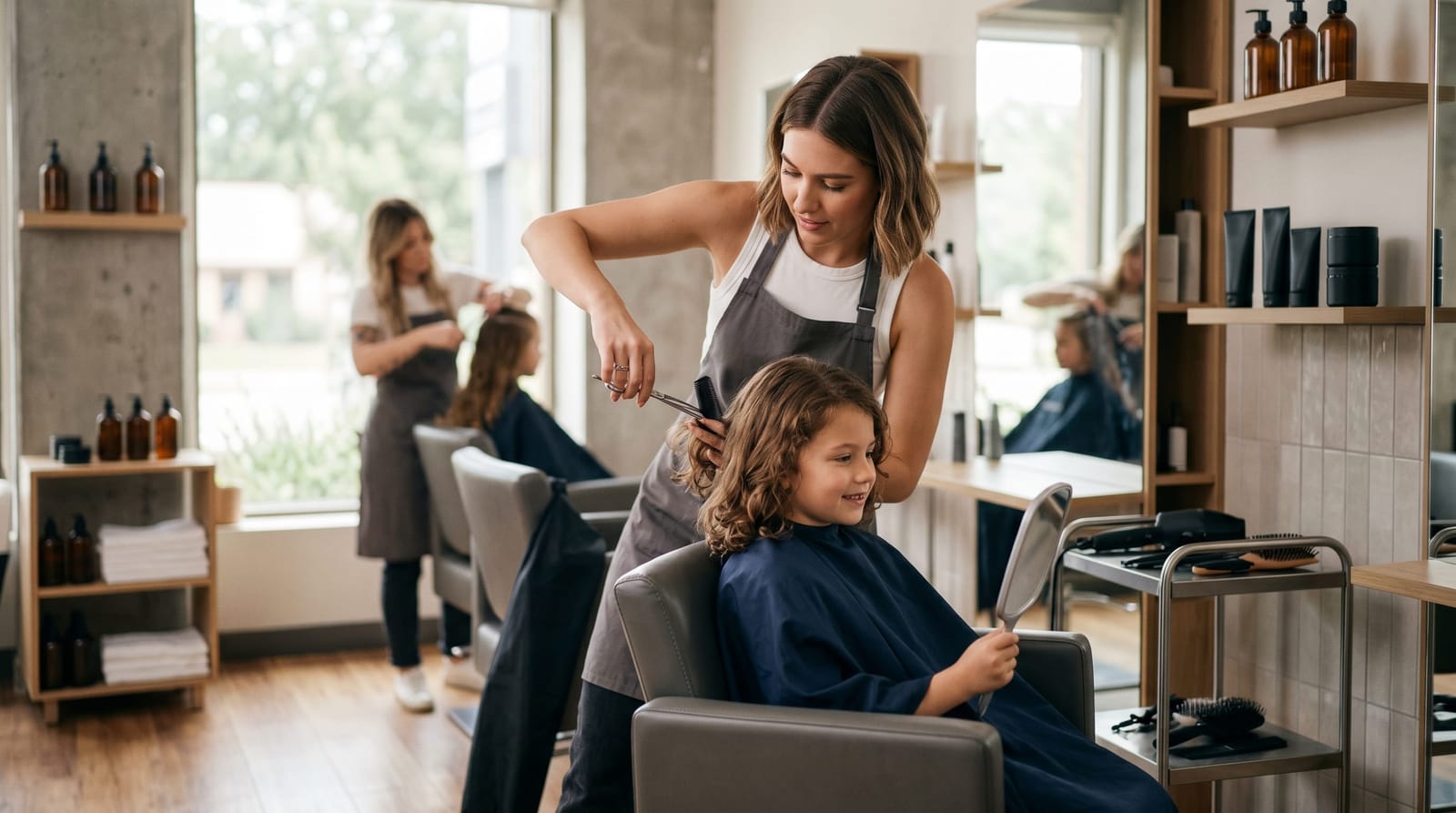
Curly and wavy hair is uniquely beautiful and uniquely unpredictable. Because curl patterns can mask uneven growth, many parents stretch appointments to every 10 to 12 weeks, and that's often completely fine. The focus for curly hair should be on maintaining shape and removing any dry or frizzy ends that disrupt the curl pattern. A stylist experienced with curly hair can make a significant difference in how manageable and defined curls look between appointments.
Natural and Textured Hair
For kids with natural or highly textured hair, trim frequency depends heavily on the style. Protective styles may mean less frequent salon visits overall, while wash-and-wear natural styles may benefit from a shape-up every 8 to 10 weeks. Prioritizing moisture and gentle detangling at home supports healthy growth and means trims are about maintenance rather than damage control.
Frequently Asked Questions
Does trimming kids' hair make it grow faster?
Trimming hair doesn't change the rate of growth, which happens at the scalp. What regular trims do is remove split or damaged ends before they travel up the hair shaft, which keeps hair looking and feeling healthier. The result is that hair retains more of its length over time because you're not losing inches to breakage.
What if my child refuses to get a haircut?
This is more common than most parents expect, especially with toddlers and younger kids. Choosing a salon that has experience with children, and stylists who know how to work at a toddler's pace, makes a significant difference. Keeping the first few visits short and low-pressure helps kids build comfort over time. Bringing a favorite toy or snack can also help redirect attention during the appointment.
Can I skip a trim if my child is growing their hair out?
You don't need to skip trims entirely when growing out hair, in fact, doing so can work against the goal. A light dusting of the ends every 10 to 12 weeks keeps the hair looking intentional and healthy, rather than scraggly and uneven. Ask for a minimal trim that removes only what's necessary while preserving as much length as possible.
How much does a kids' haircut typically cost at a NJ salon?
Pricing varies depending on the salon, the stylist's experience level, and the complexity of the cut. A detailed breakdown of what to expect when budgeting for kids' haircuts at a New Jersey salon, including what factors affect pricing, will be covered in our upcoming guide on kids' haircut costs at NJ salons.
Building a Routine That Works for Your Family
When it comes to kids' haircut frequency, the best schedule is one you'll actually stick to. For most children, somewhere between 6 and 12 weeks covers the full range, with age, hair type, and style all helping you land on the right number for each individual kid. Building that rhythm early makes hair care feel like a normal, positive part of life rather than a last-minute scramble. And when you're managing appointments for multiple kids alongside the rest of the household, a little planning goes a long way toward keeping everyone looking and feeling their best.