Kids' Home Hair Care Routine: What Parents Should Be Doing Between Haircuts
If you've ever left a salon with your child looking polished and put-together, only to wonder two weeks later what happened to that fresh cut, you're not alone. As part of our broader conversation in The Busy Family's Complete Guide to Managing Everyone's Hair Care in NJ, this post zooms in on one of the most overlooked pieces of the puzzle: what happens at home between appointments. The truth is, a great haircut can only do so much on its own. The daily and weekly habits you build around your child's hair, from washing frequency to detangling technique, directly affect how long that style holds up, how healthy the hair feels, and how much resistance you get at bath time. Here are 10 practical things every parent should be doing at home to keep kids' hair looking and feeling its best.
1. Wash Based on Hair Type, Not Just Habit
One of the most common mistakes parents make is either washing too frequently or not frequently enough, usually out of habit rather than intention. Kids' hair has different needs than adult hair, and those needs vary by texture, thickness, and activity level.
General Washing Guidelines by Hair Type
- Fine, straight hair: 2-3 times per week. Fine hair can look oily faster, but over-washing can strip it and cause it to lie flat.
- Wavy or medium-texture hair: 2 times per week is usually ideal for maintaining moisture balance without buildup.
- Curly or coily hair: Once per week, or even every 10 days, is often sufficient. Over-washing curly hair removes the natural oils that define and protect the curl pattern.
- Very active kids (sports, swimming, outdoor play): A rinse with water is often enough between wash days to remove sweat and dirt without disrupting the scalp's natural balance.
There's no universal rule that says hair must be washed every night. Skipping unnecessary wash sessions protects young scalps and keeps hair healthier between visits to the salon.
2. Choose Age-Appropriate, Gentle Products
Kids' hair and scalps are more sensitive than adults', which means the products you use matter more than many parents realize. Look for formulas that are free from harsh sulfates, heavy silicones, and artificial fragrances, especially for children under 10.
What to Look For on Labels
- pH-balanced formulas designed specifically for children
- Gentle, plant-derived cleansers instead of stripping detergents
- Lightweight conditioners that rinse clean without leaving residue
- Fragrance-free or naturally scented options for kids with sensitive scalps
Avoid using the same products on your child's hair that you use on yours, especially if you're working with color-treated or chemically processed hair care lines. What works beautifully for adult hair can be unnecessarily heavy or drying for a child's finer, more delicate strands. When in doubt, ask your stylist at your next appointment: they're a great resource for product recommendations tailored to your child's specific hair type.
3. Condition Every Single Time You Shampoo
Skipping conditioner after shampooing is one of the easiest ways to make a child's hair harder to manage, and more prone to breakage. Shampoo opens the hair cuticle to clean; conditioner closes it back down, sealing in moisture and making detangling dramatically easier.
How to Condition Kids' Hair Properly
- Apply conditioner from mid-length to ends, not directly on the scalp, which can cause buildup.
- Use a wide-tooth comb to gently work through tangles while the conditioner is still in. This is the easiest, most tear-free approach to detangling (more on that below).
- Let the conditioner sit for 1-2 minutes before rinsing with cool or lukewarm water.
- For very curly or thick hair, a leave-in conditioner applied after washing can provide extra moisture support between wash days.
Kids with curly or textured hair often benefit from a more generous application of conditioner and even a detangling spray on dry days. Building this step into your routine from an early age makes hair care feel like less of a battle and more of a rhythm.
4. Master the Art of Gentle Detangling
Detangling is where most hair care frustration happens for parents and kids alike. The good news is that with the right tools and technique, it doesn't have to be a struggle. For a deeper dive into this specific topic, our guide on kids hair care routine home and tear-free detangling walks through stylist-tested strategies in detail.
The Right Order Makes All the Difference
- Start from the ends, not the roots. Working from bottom to top prevents you from dragging tangles through the entire length of the hair.
- Use a wide-tooth comb or a detangling brush specifically designed to move through knots without snapping hair.
- Apply a detangling spray or leave-in conditioner before you begin on dry hair days.
- Section the hair into manageable parts if your child has long or thick hair: this makes the process faster and less overwhelming for everyone.
Daily gentle brushing, even on non-wash days, prevents small tangles from becoming matted sections that are much harder to deal with. It also distributes natural oils from the scalp down the hair shaft, which supports shine and overall hair health.
5. Protect Hair at Bedtime
What happens overnight has a bigger impact on hair health than most parents expect. Cotton pillowcases create friction against hair while kids sleep, which can lead to tangles, frizz, and over time, unnecessary breakage, especially for curly or textured hair types.
Easy Nighttime Hair Protection Habits
- Switch to a satin or silk pillowcase for less friction and smoother hair in the morning.
- Loose braids or a low ponytail keep longer hair contained and reduce the amount of detangling needed in the morning. Avoid tight styles at bedtime: they can put tension on the scalp overnight.
- A silk or satin sleep bonnet is a wonderful option for kids with curly or coily hair: it protects the curl pattern and keeps moisture locked in.
- Refresh hair in the morning with a light mist of water and a small amount of leave-in product if needed, rather than full re-wetting.
These simple nighttime habits extend the life of a fresh haircut and make the morning routine significantly more manageable.
6. Approach Heat Styling Thoughtfully
For girls who occasionally use heat tools, blowdryers, flat irons, or curling wands, heat protection is non-negotiable. Children's hair tends to be finer and more fragile than adult hair, which means it responds to heat differently and can show signs of stress more quickly when tools are used without proper prep.
Smart Heat Habits for Kids' Hair
- Always apply a lightweight heat protectant spray before using any heat tool, even a blowdryer on high.
- Use the lowest effective heat setting: kids' hair typically doesn't need the same temperatures required for coarser adult hair.
- Limit heat tool use to special occasions rather than daily styling. Air-drying is always the gentler option.
- Keep blowdryer nozzles moving rather than holding heat in one spot.
If your daughter loves styling her hair, teaching her these habits early builds a healthy relationship with her hair and the tools she uses on it. Your salon stylist can also show her age-appropriate techniques during her next visit that are both fun and hair-friendly.
7. Avoid Styles That Put Ongoing Stress on the Hair
Tight ponytails, high buns, and overly snug braids might look neat, but worn repeatedly, they can put tension on the scalp and hairline that takes a toll on hair health over time. This is especially worth being mindful of with school-age girls whose hair is in the same tight style five days a week.
Style Smarter for Everyday Wear
- Opt for loose braids, half-up styles, and low ponytails for everyday school wear.
- Use soft, snag-free elastics rather than rubber bands, which can pull and break hair when removed.
- Rotate where you place ponytails and buns so the same section of hair isn't under constant tension.
- Give hair a rest day on weekends: wearing hair down or in a very loose style gives the scalp a break.
Healthier daily styling habits mean the hair that arrives at the salon for a trim is in better overall condition, which always leads to a better result.
8. Trim on a Consistent Schedule
Home care and salon visits work together. No amount of great at-home routine will replace the benefits of a regular trim, and conversely, a fresh haircut looks and lasts longer when it's backed up by consistent home maintenance.
For most kids, a trim every 8-12 weeks keeps the ends healthy and the style looking intentional rather than grown-out. Kids with naturally curly or textured hair may find they can go a little longer between trims if their hair is well-moisturized and cared for at home. If you're managing multiple kids' appointments alongside your own, planning these appointments together can save real time: something we explore in depth through the family scheduling strategies covered across this content series.
9. Teach Kids to Be Part of Their Own Routine
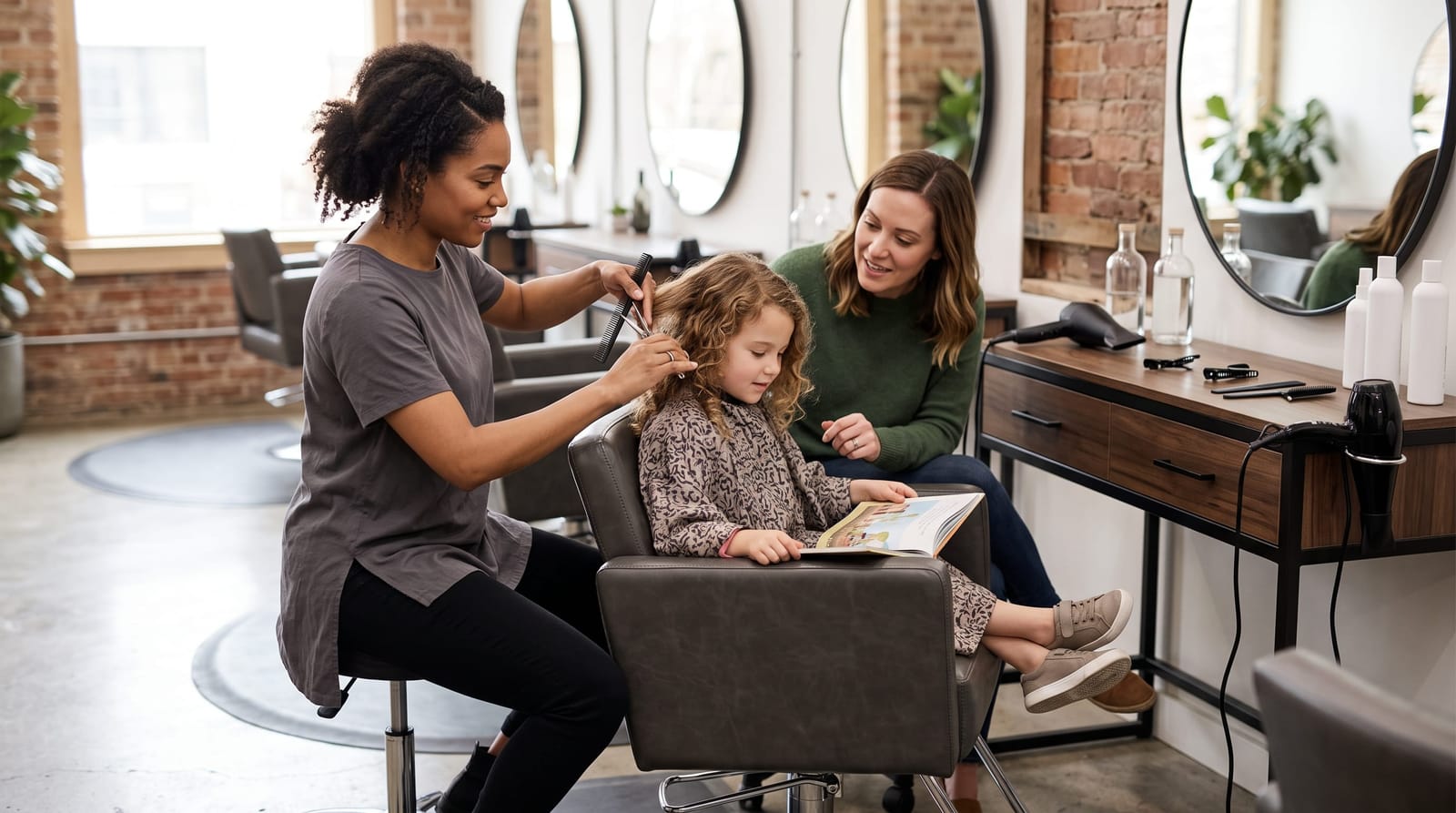
Starting around age 6 or 7, kids can begin taking on small parts of their hair care routine themselves, and building those habits early pays off as they get older. Giving children some ownership over how their hair is cared for also tends to reduce resistance at wash time.
Age-Appropriate Hair Care Independence
- Ages 5-7: Learning to brush their own hair with guidance, choosing their own gentle hair ties, and understanding why we condition.
- Ages 8-10: Taking more responsibility for daily brushing, learning how to do a simple braid or ponytail, and understanding their own hair type.
- Ages 11+: Capable of managing most of their own routine with occasional guidance, choosing products with a parent's help, and developing a sense of personal style.
This is also a wonderful age to start bringing kids into the salon conversation: letting them have input on their style builds confidence and makes them look forward to their appointments rather than dreading them.
10. Use Your Stylist as a Resource
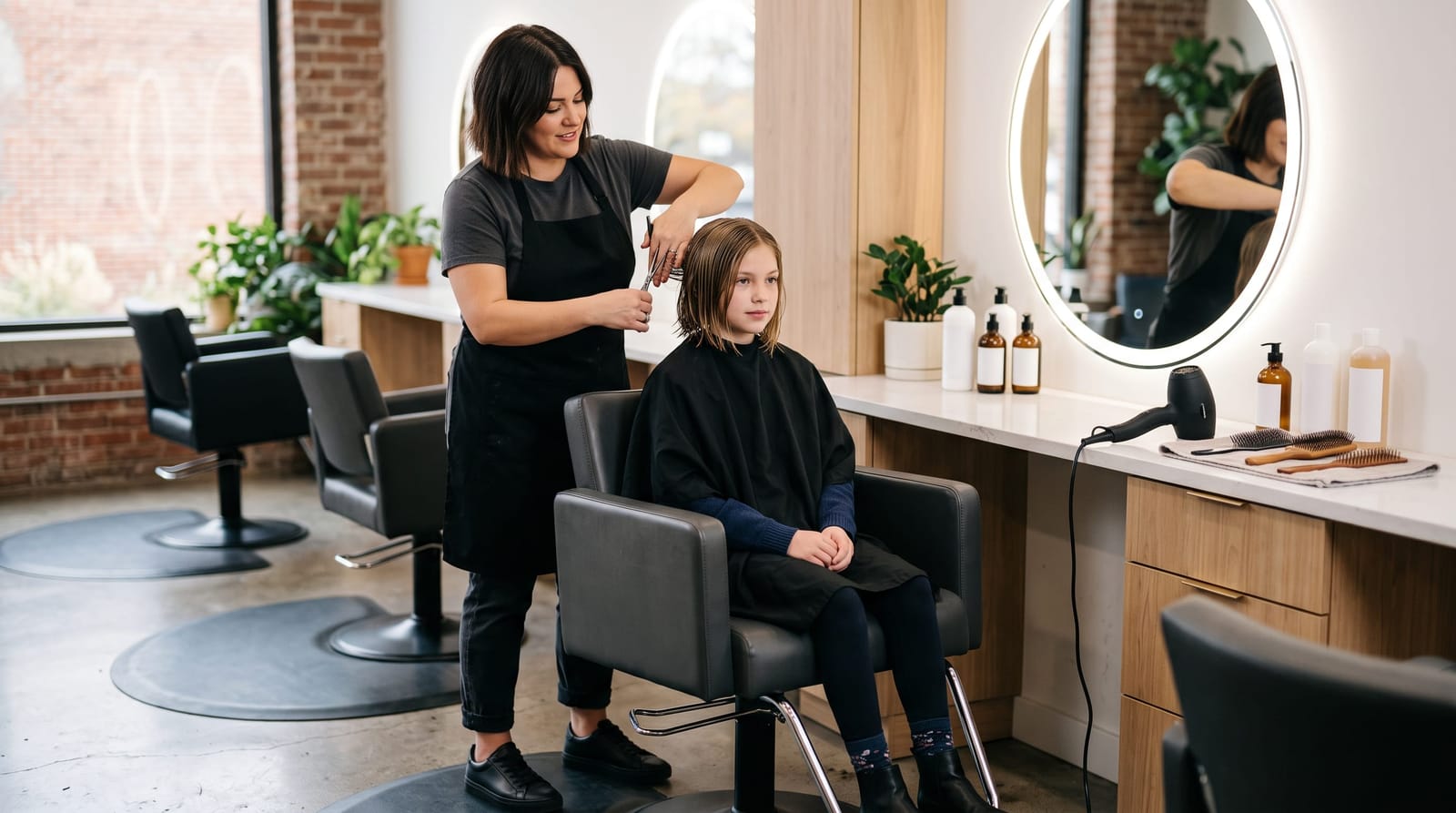
Your child's salon appointment isn't just a haircut: it's an opportunity. A skilled stylist who works regularly with kids can assess the condition of your child's hair, flag anything worth paying attention to, and give you personalized guidance on products and techniques that will work for your child's specific hair type and texture.
Don't hesitate to ask questions during the appointment. Things like "what's the best way to detangle her hair at home?" or "is there a product you'd recommend for his dry ends?" are exactly the kinds of conversations that make a salon relationship genuinely valuable beyond the chair. If you're also managing your own hair care routine alongside your family's, you might appreciate the approach behind low maintenance haircuts busy moms find actually work for real life: another topic we cover in this series.
Bringing It All Together
A consistent kids' hair care routine doesn't have to be complicated or time-consuming. With the right products, a few smart techniques, and a regular salon schedule, keeping your child's hair healthy and manageable between appointments becomes second nature. The habits you build now, gentle washing, proper conditioning, protective styling, and regular trims, are what make the difference between hair that just gets cut and hair that's genuinely cared for. If you're ready to build a family hair care routine that actually works for your household, the team at Substance Salon is here to help. Book an appointment and let's talk about what your family's hair really needs.