How to Handle a Difficult Child at a Hair Salon: Tips for Parents and Stylists
Managing hair care for the whole family is one of the many invisible tasks that falls on busy parents, and if you have a child who dreads the salon, that task can feel genuinely stressful. Whether your little one is anxious about scissors, sensitive to sounds, or simply resistant to sitting still, you are far from alone. Studies suggest that up to 1 in 6 children experience some degree of sensory processing sensitivity, which can make routine grooming feel overwhelming. Difficult child haircut tips are some of the most searched parenting topics for a reason. This post is part of our broader family hair care guide and breaks down exactly what parents can do before, during, and after an appointment, plus what experienced stylists do to make the whole experience easier for everyone.
Why Some Children Struggle with Haircuts (And Why It Makes Sense)
Before diving into solutions, it helps to understand what is actually happening when a child resists a haircut. For many kids, the salon environment is genuinely a lot to process. The sound of clippers, the feeling of a cape around the neck, water being sprayed on their head, and a stranger standing close with sharp tools: these are not small things. For a child with sensory sensitivity or anxiety, each of those elements can feel amplified.
Research from pediatric occupational therapy communities notes that sensory-related haircut resistance is especially common in children between ages 2 and 6, though it can persist much longer. Some children have a specific fear of scissors or clippers based on a previous startling experience. Others simply dislike the loss of control that comes with sitting still in an unfamiliar chair.
Common Triggers to Know
- The sound of electric clippers or blow dryers
- The physical sensation of hair falling on the face or neck
- The tight or unfamiliar feeling of a salon cape
- Strangers entering their personal space
- Bright salon lighting and busy visual environments
- Unpredictability, not knowing what will happen next
Identifying your child's specific triggers is the most useful first step. Once you know what sets them off, you can build a preparation plan that actually addresses the real issue rather than just hoping for the best.
Preparation Strategies That Make a Real Difference Before the Appointment
The work that happens before you ever walk into the salon often determines how the appointment goes. Parents who invest 10 to 15 minutes in preparation at home consistently report smoother experiences. Here are the strategies that experienced stylists and child development specialists most frequently recommend.
Schedule Strategically
Timing matters more than most parents realize. Book the appointment during your child's best window of the day: typically after a good night of sleep and not too close to a meal or nap. A hungry or tired child has fewer emotional resources to manage an already challenging situation. Morning appointments on weekends tend to work well for most families, though you know your child's rhythms better than anyone. Avoid scheduling right before or after another major activity that might add to the day's stress load.
Do a Practice Run at Home
Several days before the appointment, do a casual "pretend salon" at home. Let your child sit in a chair while you drape a towel around their shoulders. Use a comb gently. Narrate what you are doing in simple, calm language. This desensitizes them to the physical sensations and removes the element of surprise. Some occupational therapists suggest doing light scalp massage at home in the week before a haircut to help kids get comfortable with head-touching. Even 3 to 5 minutes of this can reduce resistance significantly.
Bring Comfort Items and Familiar Objects
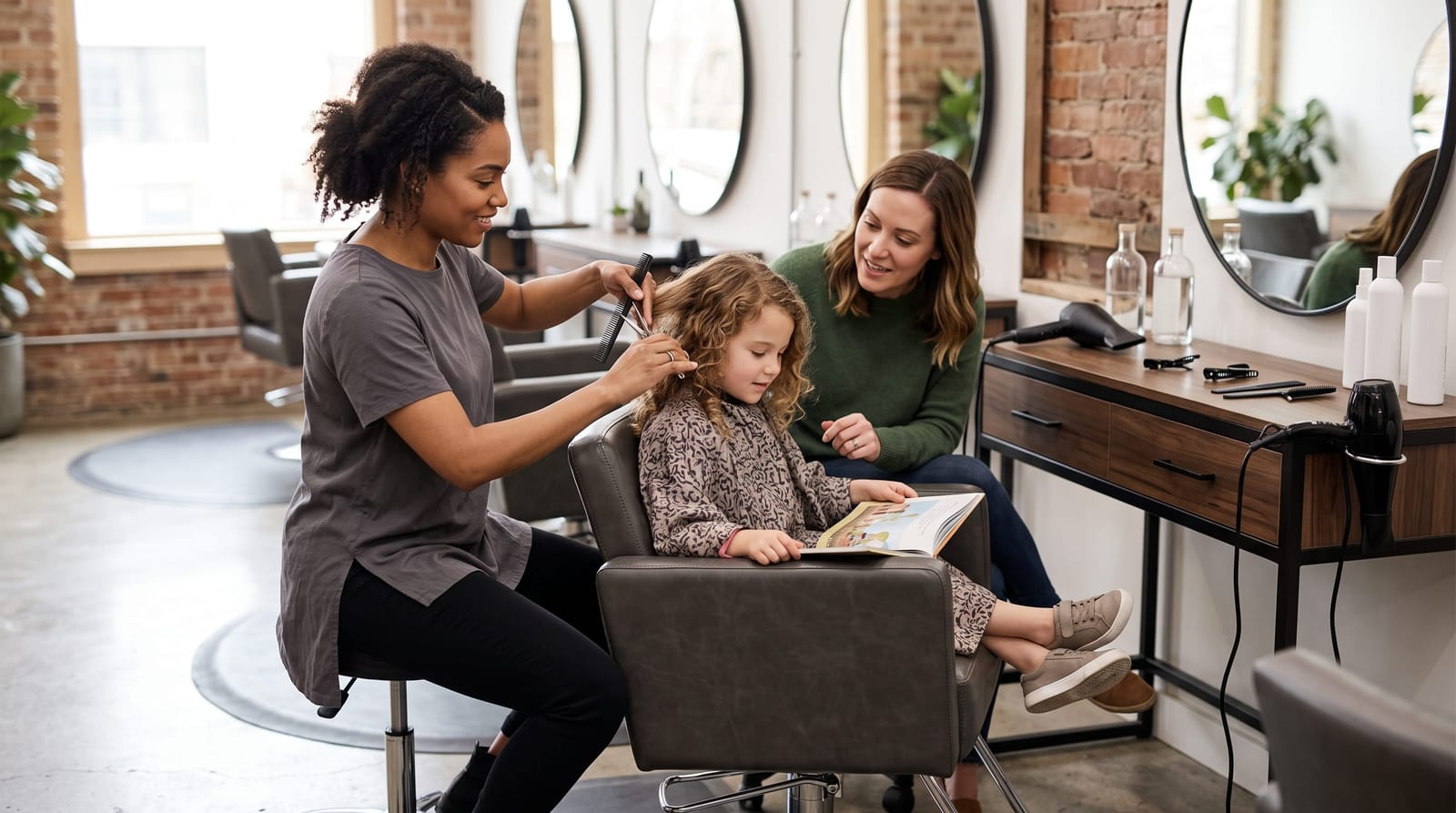
If your child has a favorite small toy, stuffed animal, or comfort object, bring it. Some families even bring a small towel or a cape from home to replicate what will be placed around their child's shoulders: familiarity with the sensation can reduce the startle response. A tablet loaded with their favorite show or a pair of earbuds playing calming music can also work as powerful distraction tools during the actual cut.
Difficult Child Haircut Tips: What to Do During the Appointment
Even with great preparation, the moment of truth can still be rocky. Having a plan for during the appointment helps both you and your stylist work as a team.
Communicate with Your Stylist Before You Sit Down
This is one of the most impactful steps parents can take. Before the appointment begins, take 2 to 3 minutes to speak privately with your stylist and share what you know about your child. Let them know specific triggers, for example, "she really hates the clippers near her ears" or "he needs to see the scissors before you start." An experienced stylist will adjust their approach based on this information. Hiding the challenge to seem polite does not serve anyone, especially your child.
Let Your Child Take Small Decisions
Children who feel a loss of control often escalate their resistance. Give your child small, manageable choices to restore that sense of agency. Let them choose which chair, whether they want the cape on or off at first, or whether they want to hold a mirror. These micro-decisions cost nothing and can dramatically shift a child's engagement. Approximately 70% of child behavior experts cite perceived autonomy as a key factor in reducing anxiety-driven resistance during medical and grooming appointments.
Use Distraction Actively
Distraction during the cut is not a cheat: it is a legitimate and effective tool. Earbuds with a favorite playlist, a tablet playing a familiar video, fidget toys, or even a simple conversation about something the child loves can redirect attention away from the sensory experience. Many stylists are happy to work with a child who is focused on a screen, and some family-friendly salons build this into their approach by default.
What Experienced Stylists Do Differently with Nervous Children
Not all stylists have the same level of experience with young or anxious clients, and there is a real difference between a stylist who works regularly with children and one who does not. Here is what the most skilled child-friendly stylists tend to do naturally.
They Move Slowly and Narrate Every Step
Experienced stylists working with nervous children slow everything down. They show the child the comb, the scissors, the spray bottle, before using them. They explain in simple language what they are about to do. "I'm going to use this spray bottle to get your hair a little wet. It feels like a light mist, like rain." This removes unpredictability, which is one of the primary drivers of anxiety in young children.
They Build Trust Before They Begin
A skilled stylist does not rush toward a nervous child with scissors. They take a minute or two to simply talk with the child: asking about their favorite cartoon, showing them a fun comb, or letting the child touch the spray bottle first. This relationship-building phase might add 3 to 5 minutes to the appointment, but it often saves 15 minutes of tears and resistance. Trust is the foundation of every successful children's appointment.
They Adjust Their Tools When Needed
Clippers are often the single biggest source of distress for sensory-sensitive children. Many experienced stylists are willing to complete an entire cut with scissors only, especially for children who react strongly to the sound or vibration of clippers. If this is relevant to your child, mention it during your pre-appointment conversation.
When to Consider a First-Visit Consultation Instead of a Full Haircut
For children with significant anxiety or sensory sensitivities, jumping straight into a full haircut is not always the right first move. Some families benefit enormously from booking a shorter introductory visit, just 15 to 20 minutes, with no cutting involved at all.
During a consultation visit, the child gets to come into the salon, sit in the chair, meet the stylist, and get comfortable with the environment without the pressure of an actual service. Some salons even let the child "practice" with a cape and a comb while watching a short video. When the child returns for the actual haircut, the environment is already familiar, the stylist is already a known face, and the anxiety level is noticeably lower.
This approach is especially worth considering if your child has had a distressing haircut experience in the past. One difficult appointment can create a lasting association, and a low-pressure introduction can help rewrite that narrative over 2 to 3 visits. It is a worthwhile investment of time for families dealing with ongoing resistance.
For parents building out a broader home routine between appointments, our guide on kids hair care routine home has practical tips on keeping hair healthy and manageable in ways that also reduce tangles and resistance at the salon.
How Parents Can Stay Calm: And Why It Matters
Children are extraordinarily attuned to parental stress. Research in child development consistently shows that a parent's own anxiety level during a challenging situation directly influences how escalated the child becomes. If you walk into the salon visibly tense and braced for a battle, your child will pick up on that signal and often mirror it back.
This is easier said than done, especially if you have had several difficult appointments in a row. A few practical strategies: take a breath before you walk in, use a calm and matter-of-fact tone when talking about the appointment beforehand (not overly reassuring, which can signal that something scary is coming), and avoid bribing with excessive rewards, which can accidentally reinforce the idea that haircuts are traumatic enough to warrant compensation.
Frame the appointment as a normal, routine part of life, because with the right salon and the right approach, it genuinely can be. And while you are building better routines for the kids, it is worth noting that low maintenance haircuts busy moms can make your own appointments faster and less frequent, freeing up time in the family schedule.
Related Topics Worth Exploring
If you found this post helpful, the following topics go deeper into specific aspects of family hair care that often come up alongside difficult haircut situations:
- First haircut milestone planning: what to expect and how to make it special without adding pressure
- Haircut frequency by age - how often kids actually need trims, and how to build a predictable schedule
- Sensory-friendly salon features to look for: what makes a salon genuinely welcoming for sensitive children
The Takeaway for Parents Navigating Difficult Haircut Appointments
Difficult child haircut tips work best when they are layered: preparation at home, strategic scheduling, honest communication with your stylist, and distraction tools during the visit. No single trick works every time, but combining several approaches significantly improves the experience for most children. The right stylist and the right salon environment make a genuine difference, too.
At Substance Salon, we work with children of all comfort levels and are happy to have a conversation before your appointment about what will help your child feel at ease. If your family is ready to build a more positive salon routine, reach out to book an appointment or a brief consultation visit: we will figure out the right approach together.