How to Detangle Kids' Hair Without Tears: Parent Tips from a Stylist
If detangling your child's hair has ever ended in tears, yours or theirs, you're not alone. Building a consistent kids hair care routine at home is one of the most common challenges parents bring up at the salon. The good news? With the right tools, a simple technique, and a little patience, detangling doesn't have to be a battle. This beginner's guide walks you through everything a stylist would tell you, so you can care for your child's hair confidently between visits, and actually enjoy the process.
Why Detangling the Right Way Actually Matters
Detangling isn't just about getting a brush through: it's one of the most important steps in protecting your child's hair from unnecessary breakage. Studies on childhood hair care suggest that up to 60% of hair breakage in young children occurs during brushing and detangling, most of which is preventable with proper technique and tools.
Young hair, especially fine, curly, or textured hair, is more delicate than adult hair. The cuticle layer is thinner and more vulnerable to friction, which means aggressive brushing, particularly on dry, knotted hair, does real damage over time. A healthy detangling habit, done consistently 3 to 4 times per week depending on hair type, keeps hair smooth, reduces split ends, and makes your child's next salon visit much easier for everyone involved.
It also shapes how your child feels about their hair long-term. Research in child development consistently shows that early hair care experiences, particularly whether they feel painful or positive, influence a child's relationship with their own hair well into adulthood. Creating a calm, comfortable routine now builds genuine confidence later.
The Right Tools Make All the Difference
Before technique, you need the right equipment. Using the wrong brush or comb is the number one reason detangling hurts. Here's what to keep in your kit:
- Wide-tooth comb: The gold standard for working through wet, conditioned hair. The wider spacing between teeth allows knots to loosen gradually rather than being yanked apart. Start here for most hair types.
- Wet Brush or a flexible-bristle detangling brush: These brushes are designed with flexible bristles that bend through knots rather than pulling against them. They're especially helpful for fine, straight, or lightly wavy hair.
- Detangling spray: A lightweight leave-in spray adds slip to dry or damp hair, allowing the comb to glide instead of drag. Look for alcohol-free formulas designed specifically for children's hair.
- Leave-in conditioner: For curlier or thicker textures, a leave-in conditioner provides deeper moisture and more substantial slip than a spray alone. Apply to damp hair before combing.
- Sectioning clips: Dividing hair into 4 to 6 sections before you begin keeps the process organized and prevents re-tangling sections you've already worked through.
Pro tip from the salon: avoid fine-tooth combs and paddle brushes on wet or knotted hair, they create the most friction and cause the most discomfort. Save those for smooth, dry styling only.
Step-by-Step: How to Detangle Kids' Hair Without the Drama
This technique works for most hair types and is the same approach our stylists use in the chair. Follow these steps in order:
- Start with damp hair. Dry hair is the hardest to detangle. After a bath or shower, leave hair about 70 to 80% damp, not soaking wet, but not fully dry. Dry detangling causes the most breakage.
- Apply your product first. Spray a detangling spray or apply a small amount of leave-in conditioner evenly through the hair before you touch the comb. This is non-negotiable: product creates the slip that makes the whole process easier.
- Divide into sections. Use clips to separate hair into manageable sections: start with 4 for shorter hair and up to 6 for longer or thicker hair. Work through one section at a time.
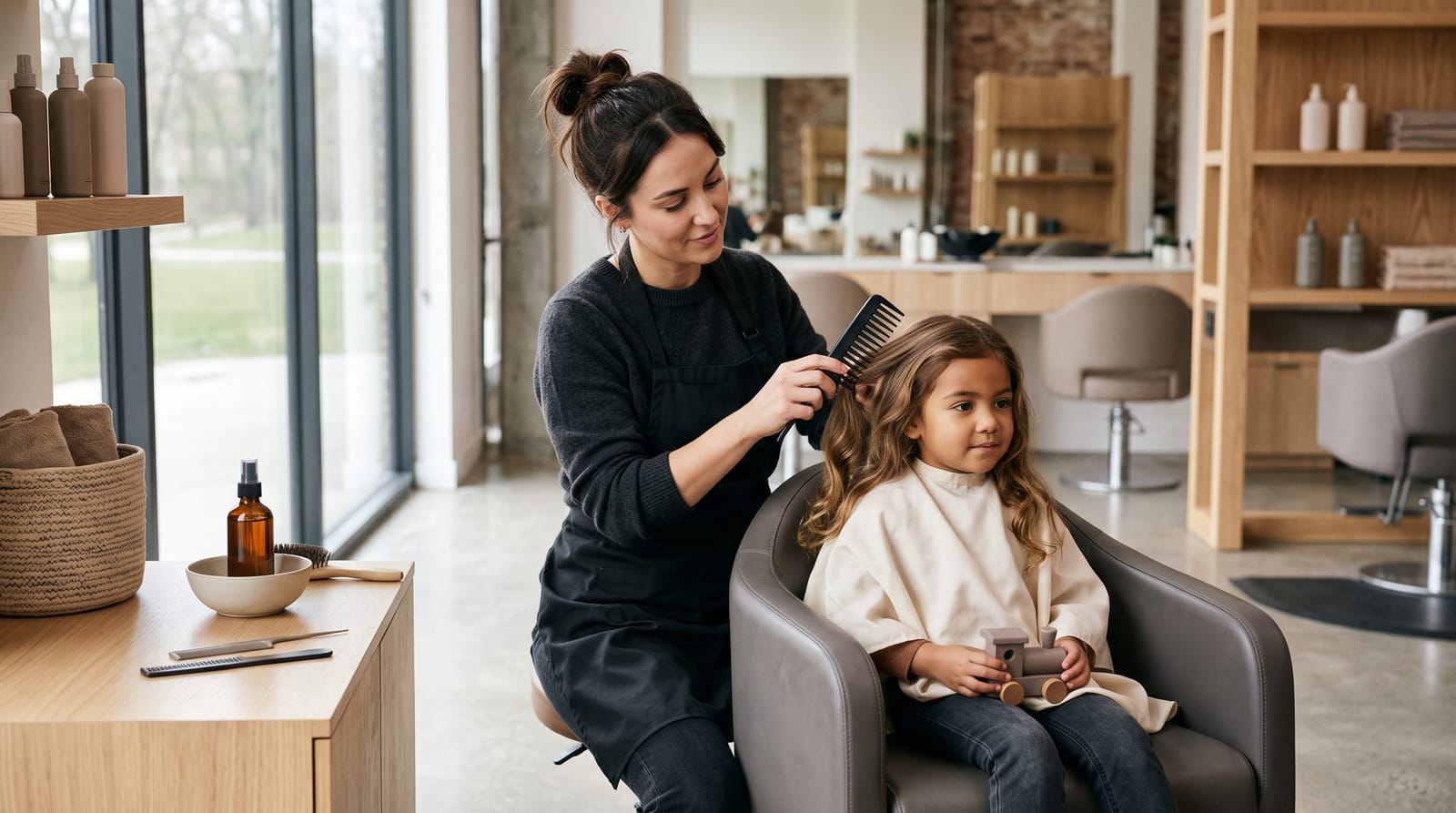
- Start at the ends, not the roots. This is the single most important technique shift most parents need to make. Begin combing at the bottom 2 to 3 inches of the section, gently releasing knots. Once those are clear, move up another few inches. Work upward gradually until you reach the root. Starting at the root and dragging downward through knots causes pain and unnecessary breakage.
- Hold the hair above where you're working. Use your free hand to hold the section above the area you're detangling. This prevents tugging at the scalp and reduces any pulling sensation significantly.
- Be patient with stubborn knots. Use your fingers first to gently separate a tough knot before the comb touches it. Never force a comb through: stop, use fingers or add more product, and try again.
- Finish with a smooth pass. Once each section is tangle-free, do one smooth pass from root to end to check your work and add shine.
Making the Experience Calmer for Your Child
Technique matters, but so does environment. Many children who resist hair care are responding to past experiences that felt uncomfortable, and that association builds quickly. Here's how to reset the experience:
- Give them some control. Let your child choose the detangling spray scent, pick a show to watch during the process, or hold the brush. Small choices make a big difference in how cooperative they feel.
- Narrate what you're doing. Saying "I'm starting at the bottom so it doesn't pull" helps children understand the process and feel less like something is just being done to them.
- Keep sessions short and consistent. A 10-minute detangling session done 3 times a week is far easier than an hour-long session once a week on severely tangled hair. Frequency is your friend.
- Celebrate the routine. End with something positive: a fun hairstyle, their choice of bow or accessory, or simply a moment of genuine praise. Building a positive association with hair care early pays off for years.
If your child has particularly sensitive hair or a difficult texture to manage, ask your stylist at your next appointment. Our team works with families across NJ regularly and can recommend specific products and techniques tailored to your child's hair type in person.
How Home Detangling Supports Healthy Hair Between Salon Visits
A solid kids hair care routine at home is directly connected to how your child's hair looks and feels at every salon appointment. When hair is regularly detangled, moisturized, and handled gently, it arrives at the salon in a much healthier state, which means less time in the chair correcting buildup or working through severe tangles, and more time on the actual cut or style.
Most stylists recommend children come in for a trim every 8 to 12 weeks depending on hair length and growth rate. Between those visits, consistent at-home care prevents split ends from traveling up the hair shaft, keeps the style looking intentional longer, and reduces the amount of length that needs to be removed at each appointment.
Think of it this way: the 10 minutes you spend on your child's hair at home 3 times a week is an investment that shows up in the quality of every salon visit. It's one of the simplest ways to stretch the value of a professional cut and keep hair looking healthy all season long.
Frequently Asked Questions
How often should I detangle my child's hair?
For most hair types, 3 to 4 times per week is a good baseline. Curlier or more textured hair types may need daily moisture and gentle detangling to prevent knot buildup, while straighter fine hair may only need it every other day. Consistency matters more than frequency: smaller, regular sessions are always easier than one long, difficult session.
What's the best detangling product for kids' hair?
Look for alcohol-free detangling sprays or leave-in conditioners formulated specifically for children. Products designed for kids are gentler on young scalps and typically free of harsh sulfates or fragrances. For curlier textures, a cream-based leave-in conditioner provides more slip and moisture than a spray alone. When in doubt, ask your child's stylist: they can recommend specific products based on your child's actual hair type and texture.
Should I detangle my child's hair wet or dry?
Damp hair with product applied is the ideal state for detangling, not soaking wet, and not fully dry. Dry hair creates the most friction and causes the most breakage. Soaking wet hair (without conditioner) can also be fragile. Aim for hair that's about 70% dry with a detangling spray or leave-in conditioner worked through it before combing begins.
My child cries every time I brush their hair. What am I doing wrong?
The most common culprits are: starting at the roots instead of the ends, not using enough product for slip, using the wrong brush type, or working on hair that's too dry. Start with the technique changes in this guide, particularly the bottom-to-top approach and always applying product first, and most children experience immediate improvement. If sensitivity continues, it's worth mentioning at your child's next salon appointment so your stylist can assess their specific hair texture and make personalized recommendations.
Building a Routine That Works for the Whole Family
A great kids hair care routine at home doesn't require a lot of time or products, just the right tools, a simple technique, and a little consistency. Starting at the ends, working with damp hair, and applying product before you comb will transform the experience for both you and your child. These habits also pay off at every salon appointment, keeping hair healthier and your visits more enjoyable. Managing hair care for an entire household is something we understand well: it's part of why we work closely with NJ families to build routines that actually fit real life.