How to Tell When Your Keratin Treatment Is Wearing Off
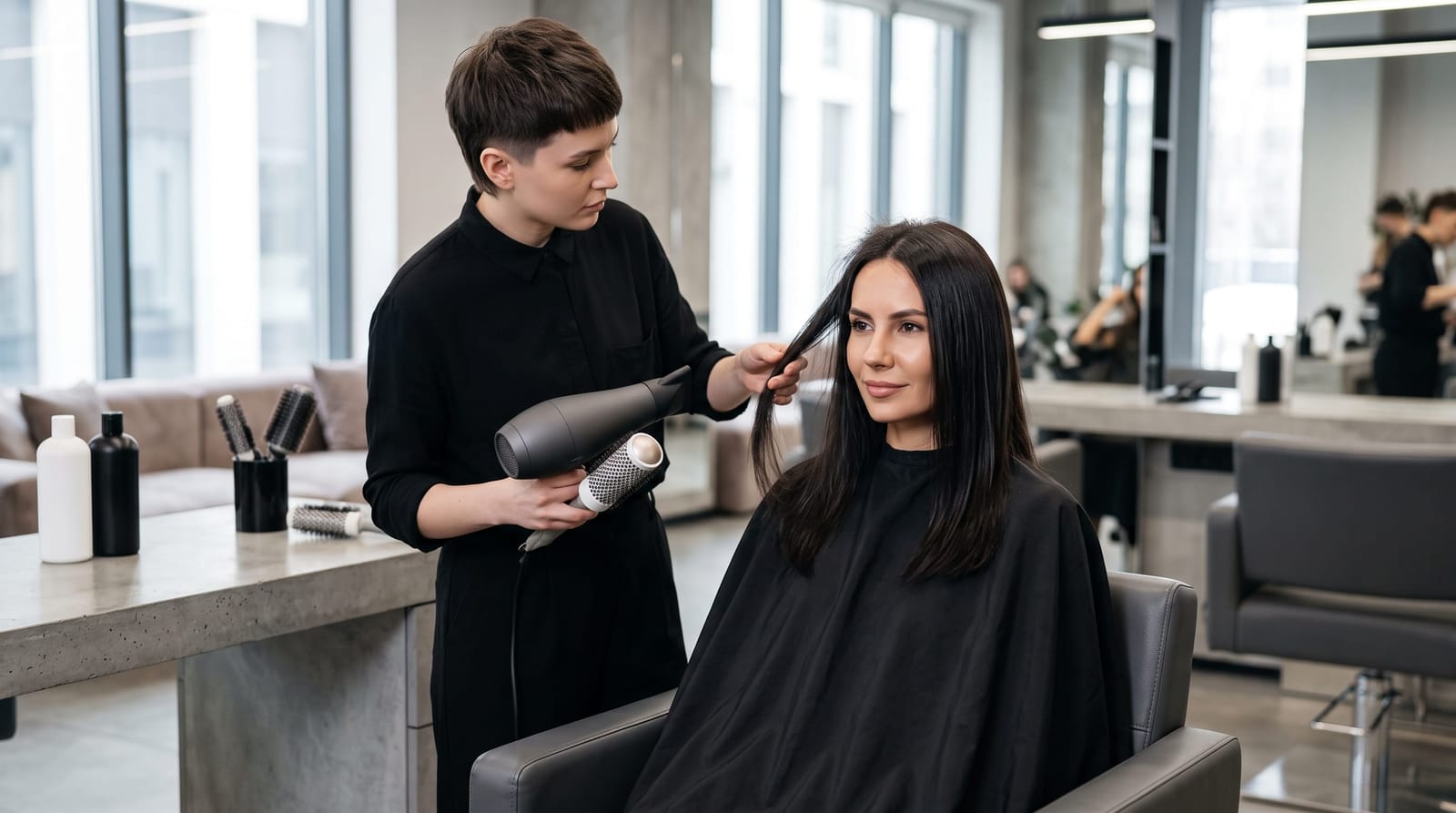
You invested in a smoothening treatment for a reason: fewer frizzy mornings, more manageable hair, and that effortless, polished finish that makes getting ready feel easy. But like all good things, the results are temporary. Knowing how to read the early signs of fade means you can plan your next appointment at exactly the right time, keeping your hair at its best without any awkward in-between stages. This guide breaks down exactly what to look for and when to act.
The Frizz Patterns That Signal Your Treatment Is Fading
Frizz doesn't return all at once: it creeps back in specific patterns that tell you a lot about where your treatment stands. Most clients start noticing changes between weeks six and ten, though results can last anywhere from 10 to 16 weeks depending on hair type, home care routine, and the specific treatment used.
The first place frizz typically reappears is around the hairline and the nape of the neck. These areas experience the most friction from pillows, scarves, and everyday movement, so the smoothing effect breaks down here first. If you're running your fingers along your roots and noticing a slightly rougher texture or tiny flyaways framing your face, that's your first signal.
Next, watch for the mid-shaft frizz pattern: a subtle puffiness through the middle lengths of your hair that wasn't there in the first few weeks post-treatment. This is different from the overall volume you might want; it's an uneven, slightly chaotic texture that doesn't respond the way it used to. By the time frizz reaches the ends consistently, your treatment has faded significantly.
A good rule of thumb: if you're spending more than 10 extra minutes managing frizz during your morning routine compared to right after your treatment, the formula has likely broken down by at least 50%.
Texture Changes Worth Paying Attention To
Beyond frizz, the actual texture of your hair shifts as a smoothening treatment wears off. Right after a keratin or Brazilian blowout treatment, strands feel noticeably silkier and more uniform: each hair sits flat and the overall feel is polished and smooth. As the treatment fades, that uniformity disappears.
Specific texture changes to watch for include:
- Returning wave pattern: If your hair had a natural wave or curl before treatment, you'll see it reappear, usually starting at the roots and working downward over several weeks.
- Uneven drying: Hair that used to air-dry straight or softly wavy in under 30 minutes may start drying unevenly, with some sections behaving differently than others.
- Reduced shine: The glossy finish that keratin treatments are known for comes from the way the formula seals the hair cuticle. As it breaks down, light scatters more across the surface, and that mirror-like shine gradually softens.
- Increased product absorption: When your treatment is intact, hair products, especially oils and serums, tend to sit on the surface longer. As the treatment fades, your hair absorbs products much faster, often requiring more product to achieve the same effect.
None of these changes happen overnight, which is actually useful. They give you a two-to-three-week window to rebook before the full fade sets in.
How Your Hair Responds to Humidity Changes
Humidity response is one of the most reliable indicators of where your hair smoothening treatment aftercare stands. One of the primary functions of both Brazilian blowout and keratin treatments is creating a barrier that reduces how much moisture your hair absorbs from the air. When that barrier is working, humid days feel manageable. When it starts to break down, the change is noticeable almost immediately.
Studies on hair porosity show that high-porosity hair can absorb up to 30% more moisture from the environment compared to low-porosity hair, and smoothening treatments work by temporarily reducing that porosity. As the treatment wears off, your hair's porosity gradually returns to its natural state, which means humid air affects it more and more each week.
Practically speaking, this means:
- Hair that stayed smooth on a rainy day in week two starts to expand or puff slightly by week eight.
- Your blowout that used to last three days now reverts to its natural state by day two.
- You start instinctively reaching for anti-frizz products you stopped needing right after your treatment.
If you live in a naturally humid climate or visit the beach or pool regularly, keep in mind that chlorine and saltwater accelerate treatment fade significantly: sometimes by as much as 30 to 40% faster than average. This is worth accounting for in your rebooking timeline.
The Ideal Time to Rebook: Before Full Fade vs. After
Here's something most clients don't realize: rebooking before your treatment fully fades delivers noticeably better results than waiting until you're back to square one. There are two practical reasons for this.
First, when there's still some smoothening formula in the hair, your next treatment has an easier, more even foundation to build on. The results tend to set more uniformly, and the finish lasts longer. Second, applying a treatment to hair that's been properly maintained, rather than hair that's been through weeks of humidity exposure, friction, and product buildup, means the formula can actually do its job rather than spending energy correcting damage.
The sweet spot for rebooking is typically around the 10-to-12-week mark for most clients, or when you notice the early frizz and texture signs described above, not when you've lost all smoothness. Think of it like getting a trim: the best time is when your ends are just starting to feel different, not when they've fully lost their shape.
Solid hair smoothening treatment aftercare at home also plays a major role in how long you can stretch your results. Using sulfate-free, sodium-chloride-free shampoo and conditioner, waiting 48 to 72 hours after your treatment before the first wash, and incorporating a weekly deep conditioning mask can add two to four weeks to your results. Choosing the best shampoo after hair smoothening is one of the simplest ways to protect your investment between appointments.
Frequently Asked Questions
How long does a keratin treatment typically last?
Most keratin treatments last between 10 and 16 weeks, depending on your hair type, maintenance routine, and how often you wash your hair. Finer hair or hair that's washed more than three times per week may see results fade closer to the 8-to-10-week mark. Coarser or curlier textures treated with stronger formulas can sometimes maintain results for up to four months.
Can I make my treatment last longer at home?
Yes: significantly. Using sulfate-free, sodium-chloride-free shampoo and conditioner is the single most impactful thing you can do. Sulfates strip the keratin formula from the hair much faster. Beyond that, limiting heat styling, avoiding chlorine and saltwater, and doing a weekly deep conditioning treatment all contribute to longer-lasting results. Clients who follow a proper aftercare routine often get an additional two to four weeks out of their treatment.
Is it bad to wait until my treatment fully fades before rebooking?
It's not harmful, but it's not ideal either. Booking when your hair is at its best, rather than after it's been through weeks of unprotected exposure, tends to produce more even, longer-lasting results. It also makes the process easier on your hair overall. Think of it as maintaining your hair's health proactively rather than reactively.
Why is my hairline frizzing out before the rest of my hair?
The hairline is one of the most delicate and high-friction areas of your hair. It rubs against pillowcases overnight, gets touched frequently, and is exposed to sweat during workouts, all of which break down the smoothening formula faster than other areas. This is completely normal and one of the first signs your treatment is beginning to fade. A silk or satin pillowcase can help slow this process.
Wrapping It Up
Your smoothening treatment gives you a clear signal when it's winding down: you just have to know what to look for. Frizz that returns around the hairline first, texture that starts behaving unevenly, and hair that responds to humidity again are all reliable indicators that it's time to rebook. The best move is to schedule your next appointment before you've lost all the smoothness, not after. Consistent aftercare and smart timing keep your hair looking its best throughout the entire treatment cycle.