Curly Hair Color: How Balayage and Highlights Work Differently on Curls
If you've ever looked at a gorgeous balayage on dark hair brunette inspiration photo and thought, "that's exactly what I want", only to leave the salon feeling like something got lost in translation, you're not alone. Color placement on curly hair operates by a completely different set of rules than it does on straight or wavy hair, and understanding those rules makes the difference between a color result that feels flat and one that feels like it was made specifically for you. This guide breaks down how balayage and highlights interact with curl patterns, why the technique has to shift when curls are involved, and how to keep color-treated curls looking their best long after your appointment.
Why Curl Pattern Changes Everything About Color Placement
Straight hair lies flat against the head, which means light hits it in a fairly predictable, uniform way. Curly hair is structurally different: it spirals, coils, bends, and folds, which means light catches it at dozens of different angles simultaneously. This is actually one of the most beautiful things about curly hair, and it's also exactly why color placement has to be intentional in a way that's unique to textured hair.
When a colorist paints balayage onto curly hair, they're not just thinking about where the color lands on the strand: they're thinking about how that strand will behave once it springs back into its natural curl. A section that looks like it sits near the mid-shaft in its stretched state might actually land closer to the root or the ends once the curl contracts. This is why experienced curly hair colorists often work with the hair in or near its natural state rather than stretching it out completely.
The Spring Factor
Curl shrinkage is real and significant. Depending on curl type, hair can shrink anywhere from 25% to 75% of its stretched length once it dries naturally. A highlight that appears to start two inches from the root while the hair is pulled straight might actually sit much closer to the scalp once the curl forms. Without accounting for this, color can end up looking patchy, too concentrated in one area, or simply not where you expected it.
How Light Reflects on Curls vs. Straight Hair
Because curly hair has more surface area exposed at varying angles, color, particularly balayage, tends to read as more multidimensional on curls than it does on straight hair. Even subtle color shifts create visible contrast and depth. This is a genuine advantage: curly-haired clients often achieve a richly dimensional result with less lightening than their straight-haired counterparts, which is a win for overall hair health.
Balayage on Curly Hair: What Makes It Different
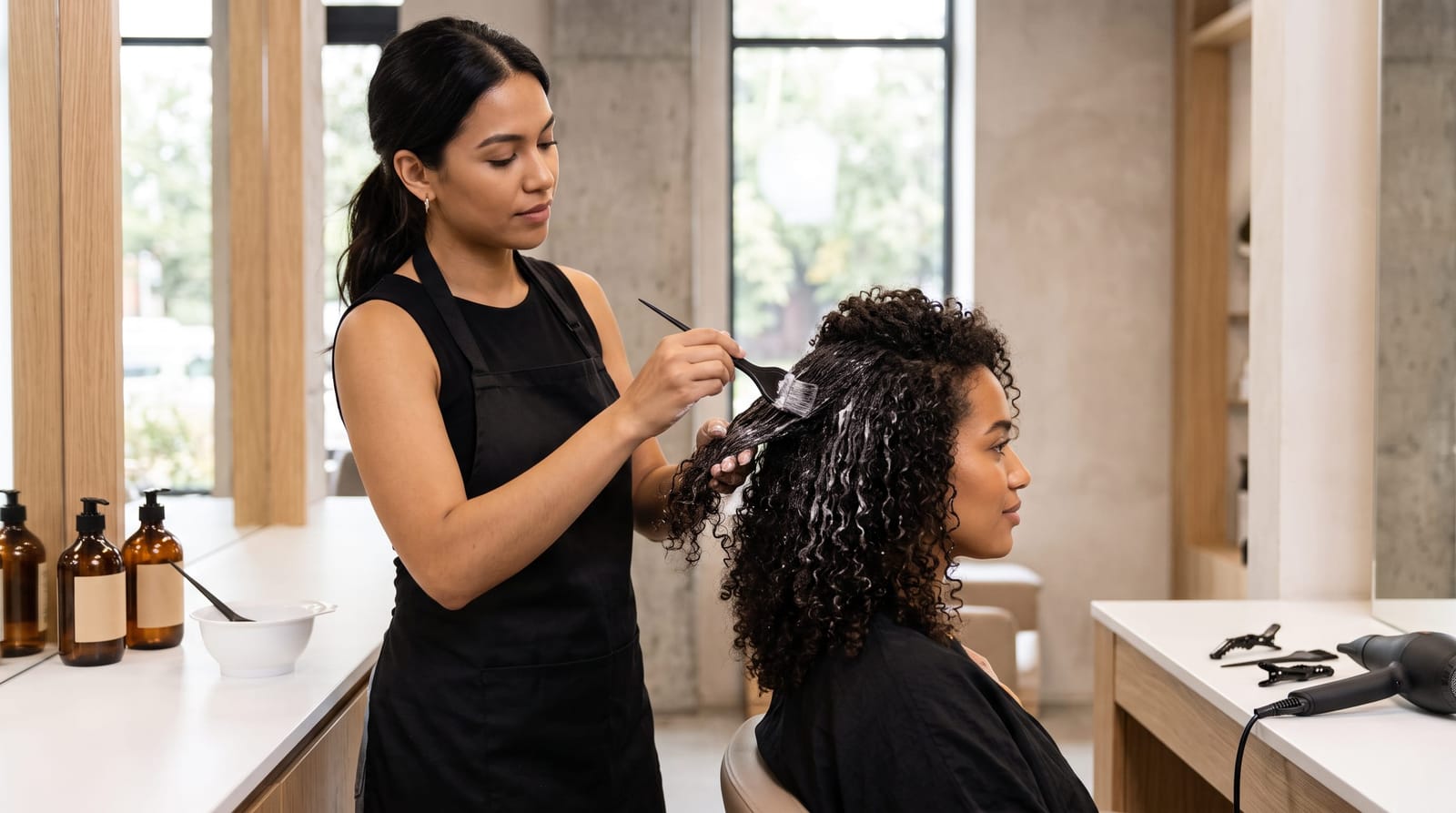
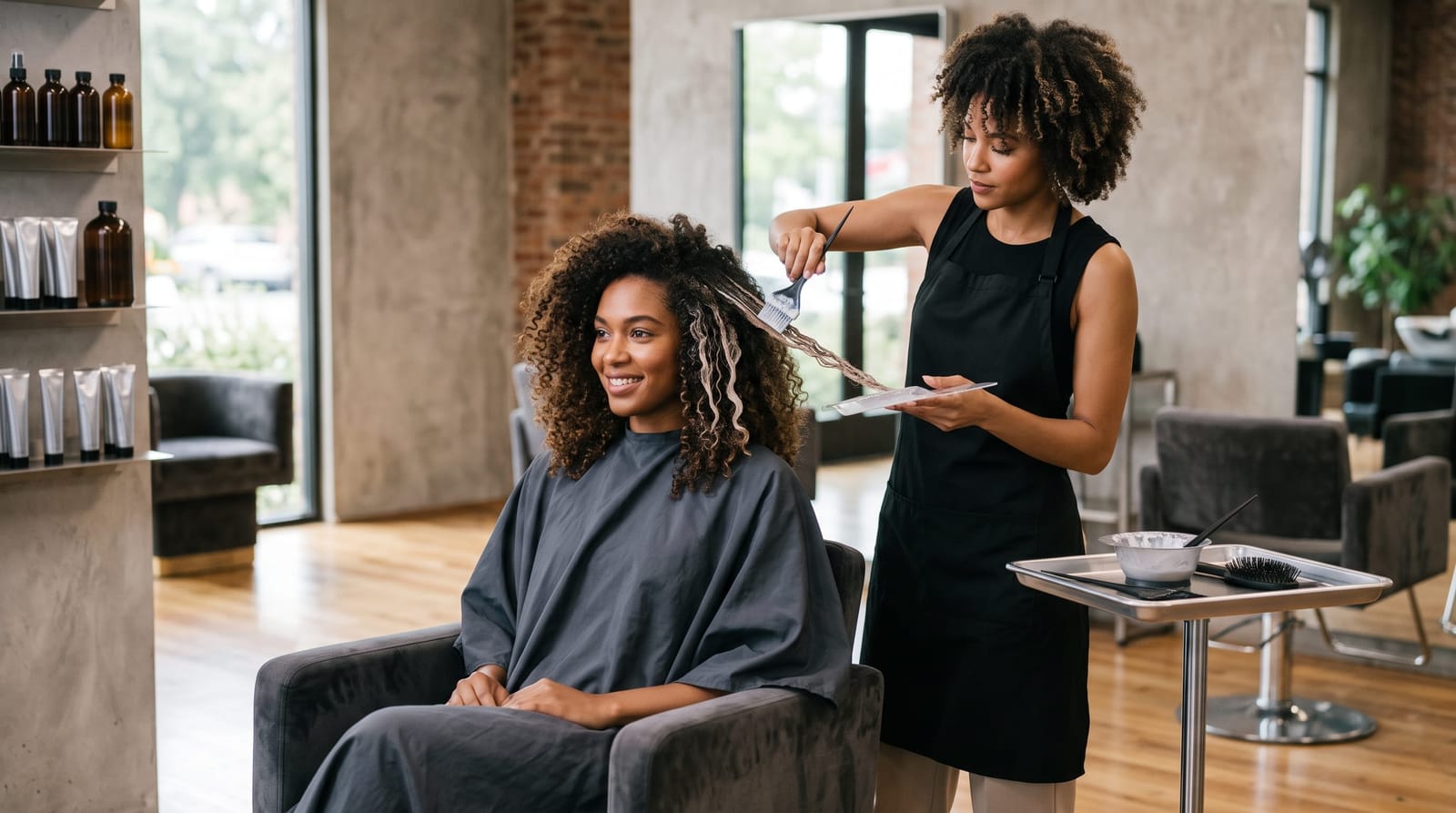
Balayage is a freehand painting technique where color is applied directly to the surface of the hair without foils, creating a gradual, blended result that mimics the natural way sunlight would hit hair. On straight hair, that sweep of color from mid-shaft to ends reads clearly and cleanly. On curly hair, the result looks entirely different, and when done well, it's stunning.
On curls, balayage highlights tend to wrap around the outside of each curl, catching on the ridges and peaks of the pattern. This creates a natural, glowing effect that looks almost like the hair was kissed by sunlight from every direction. Popular shades like caramel, chocolate, and warm light brown work especially well on brunette curl patterns because the contrast is visible without being harsh: the color moves with the curl rather than sitting on top of it.
Why Sectioning Technique Matters More on Curls
On straight hair, balayage sections are typically clean and precise. On curly hair, a skilled colorist often takes smaller, more thoughtful sections and considers how each curl cluster will group together once dry. Painting too heavily on one section can result in a clump of highlights that look stripy rather than blended. The goal is for the color to feel woven through the curls, not layered on top of them.
The Case for Seeing Color in the Natural Curl State
One of the most important things curly clients can ask their colorist is to evaluate the result while the hair is in its natural curl state, not blown out, not stretched, not flat-ironed. A color result that looks beautifully blended when dry and curly might look uneven or disconnected when the hair is straightened. The reverse is equally true. Your hair's daily reality is its curl pattern, and that should be the frame of reference for your color.
Highlights on Curly Hair: Foils vs. Balayage: Which Works Better?
This is one of the most common questions curly-haired color clients ask, and the answer isn't one-size-fits-all. Traditional foil highlights create very precise, even lightening in isolated sections. Balayage creates a softer, more blended, lived-in result. Both can work beautifully on curly hair, but they produce distinctly different effects.
Foil highlights on curly hair tend to create more defined pops of color. Because the foil isolates the section and processes it more intensely, the result can be bolder and more uniform within each highlighted piece. When those curls spring back together, though, the highlighted sections can look almost chunky or striped if the placement isn't carefully mapped out for the curl pattern. This isn't necessarily a bad thing, some clients love that level of contrast, but it requires a colorist who understands how the sections will cluster.
When Balayage Is the Better Choice for Curls
For most curly clients, especially those with tighter curl patterns (Type 3A through 4B), balayage tends to be the more flattering approach because it respects the natural movement of the curl. Rather than creating hard lines between highlighted and non-highlighted sections, balayage paints color onto the parts of each curl that naturally catch the light. The result grows out gracefully, typically requiring less frequent touch-up appointments: many clients go 12 to 16 weeks or longer between color services when they choose balayage over traditional foils.
When Foils Make More Sense
Foil highlights are often a better choice when a client wants significant lift from a very dark base, more dramatic contrast, or a specific color result that requires more controlled processing. They can also be combined with balayage in a technique sometimes called "foilayage," which gives colorists the ability to lift certain sections more intensely while still maintaining that soft, blended finish around the face and throughout the rest of the hair.
How Color Interacts with Curl Health
This is where the conversation gets especially important for curly clients. Curly and coily hair textures are naturally more porous than straight hair, which means they can absorb and release color, and moisture, more quickly. This affects how color takes, how long it lasts, and how the hair feels after color services.
Highly porous curls (which are common in naturally textured hair) may grab color faster and more intensely, sometimes resulting in a darker or brassier result than expected. They may also fade more quickly, particularly with fashion colors or lighter blonde tones. On the flip side, lower porosity curls can resist color and require more processing time to achieve even results.
Keeping Color-Treated Curls Healthy
The good news is that healthy curls and beautiful color are absolutely compatible: it just requires some intentionality. A few practices that make a real difference:
- Deep conditioning regularly: Color-treated curls benefit from a weekly or bi-weekly deep conditioning treatment to maintain elasticity and moisture balance.
- Using color-safe, sulfate-free products: Sulfates can strip both color and moisture from curly hair significantly faster than gentler alternatives.
- Washing with cool or lukewarm water: Hot water opens the hair cuticle and accelerates color fade: a simple habit shift that extends the life of your color noticeably.
- Refreshing with a leave-in conditioner: A quality leave-in applied to damp curls adds a layer of protection between wash days and helps maintain curl definition alongside color vibrancy.
Protein vs. Moisture After Color Services
After any lightening service, curly hair may temporarily need a bit more structural support. Protein-based treatments can help restore some of the strength that lightening processes affect, but it's important not to over-do them: too much protein can make curly hair feel stiff and brittle. A well-balanced routine cycles between moisture-rich and protein-containing products based on how the hair feels, not a fixed schedule.
What to Ask Your Colorist Before a Curly Color Appointment
Walking into a color appointment prepared with the right questions is one of the most practical things a curly client can do. Not every colorist has specific training in curly hair color placement, and it's worth understanding how your stylist approaches this before you sit in the chair.
Some questions worth asking:
- Will you be evaluating placement while my hair is in its natural curl state?
- Have you worked with my curl type before, and what techniques do you typically use?
- Can we discuss how much color to use in each section to avoid clumping or striping?
- What products do you recommend for maintaining this color at home with my curl routine?
If you're already working with a curly hair cut salon NJ that specializes in textured hair, there's a good chance their colorists already think about curl pattern as part of their color approach, but it's always worth the conversation.
It's also worth knowing whether your salon offers a consultation before booking a full color appointment, especially if you're making a significant change. Understanding the process ahead of time helps set realistic expectations and allows your colorist to plan the service properly.
For clients who are weighing whether to go into a color appointment with their hair in its natural state or blown out, the answer is usually: come as curly as possible. It also connects to the broader question of curly hair blowout vs natural styling, and how the decision you make about your styling approach influences every service your stylist provides, from cuts to color.
If you've been considering a smoothening treatment alongside color, it's also worth reading about hair smoothening for curly hair before booking, since the order of services and product compatibility matters significantly when you're combining color with any chemical treatment.
Product Recommendations for Color-Treated Curly Hair
The right product lineup makes a meaningful difference in how long your color lasts and how healthy your curls look between appointments. Here are the categories that matter most:
- Sulfate-free shampoo: This is non-negotiable for color-treated curls. Look for formulas specifically labeled for color-treated or chemically processed hair.
- Moisturizing conditioner: A rich, hydrating conditioner used after every wash helps maintain softness and curl definition while supporting color longevity.
- Weekly deep conditioning mask: Color services, particularly lightening, benefit from a weekly or bi-weekly mask that restores moisture and smooths the cuticle.
- UV-protecting styling products: Sun exposure fades color: UV-filtering sprays or leave-ins protect both color and curl health during warmer months.
- Color-depositing conditioner: Toning conditioners in warm tones (caramel, gold, copper) or cool tones (ash, violet) can refresh balayage between salon visits and keep color looking fresh for longer.
Your colorist is genuinely the best resource for specific product recommendations based on your curl type, porosity, and color formula. What works beautifully for one client's loose waves may not be right for someone with tighter coils: personalized guidance matters here just as much as it does with the color itself.
Conclusion
Balayage and highlights on curly hair aren't just a straight-hair technique applied to a different texture: they're a genuinely different craft that requires specific knowledge, technique, and artistic vision. When done by someone who truly understands curly hair, color can enhance your curl pattern, add dimension that moves with your texture, and create results that feel effortless and intentional at the same time. The key is working with a colorist who sees your curls as the feature, not a variable to work around. If you're ready to explore what color can do for your curly hair, reach out to the team at Substance Salon to schedule a consultation, and come in as curly as you'd like.