Hair Smoothening for Curly Hair: What You Need to Know Before Booking
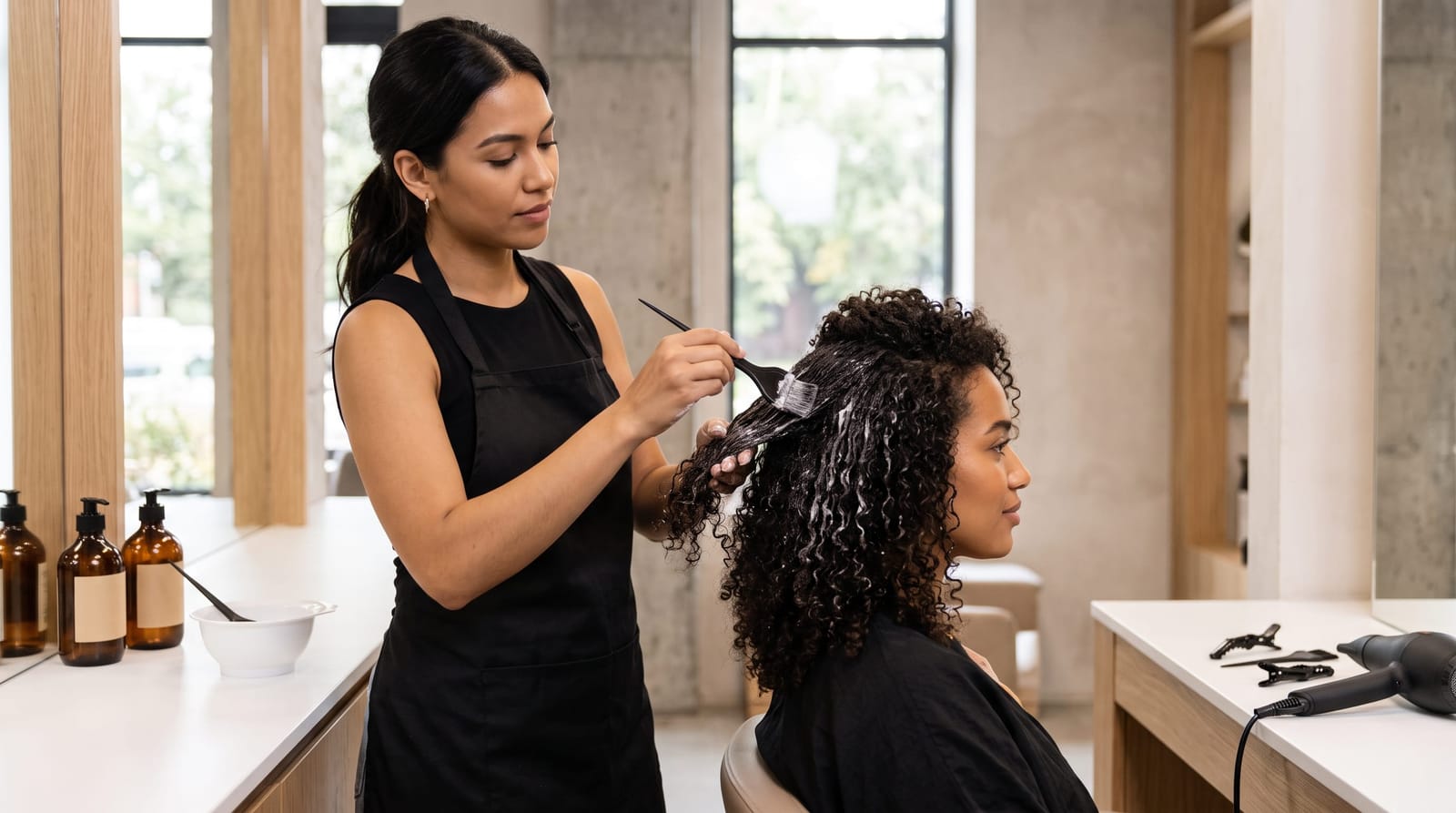
If you have curly hair, you've probably spent a fair amount of time thinking about frizz. Whether your waves go haywire in humidity or your curls feel more like a challenge than a celebration, the idea of a smoothening treatment is understandably appealing. But hair smoothening for curly hair isn't a one-size-fits-all solution, and walking into a salon without the right information can leave you disappointed or, worse, with results you didn't actually want.
This beginner's guide is here to change that. As part of our complete approach to curly hair care at Substance Salon, we want every curly-haired client to feel informed, empowered, and genuinely excited about whatever service they choose. So before you book, let's walk through everything you need to know, from what "smoothening" actually means, to realistic expectations, to how these treatments fit into your long-term curl care routine.
What Does Hair Smoothening for Curly Hair Actually Mean?
The term "hair smoothening" gets used loosely in the beauty world, and that ambiguity is the first thing to clear up. For curly-haired clients, smoothening can refer to anything from a professional blowout to a chemical keratin treatment, and the results, maintenance, and impact on your curl pattern vary significantly between each option.
At its core, hair smoothening for curly hair is about reducing frizz, adding shine, and making the hair more manageable. It does not necessarily mean permanently straightening your hair, though some treatments can loosen your curl pattern over time depending on the formula used and how frequently you repeat the service.
The Main Types of Smoothening Treatments
- Blow-dry smoothening: A temporary result achieved through professional blow-drying techniques, often combined with a round brush. Results last until your next wash.
- Heat styling (flat iron): Another temporary option. Offers very smooth results but requires consistent heat protectant use. Lasts wash-to-wash.
- Keratin treatments: A semi-permanent smoothening service that coats the hair shaft with a keratin-based formula. Results typically last 3 to 5 months depending on your hair porosity and how you maintain it.
- Chemical relaxers: A permanent option that breaks down the protein bonds in the hair to change its structure. Results are long-lasting but require careful consideration and professional application.
Understanding which category a treatment falls into is step one before any consultation or booking.
Realistic Expectations: How Much Will Your Curl Pattern Change?
This is the question most curly-haired clients have, and it deserves an honest, detailed answer. Hair smoothening for curly hair does not deliver the same results for everyone, and that variability is largely tied to your natural curl type, hair porosity, and the specific treatment you choose.
Studies and industry surveys consistently show that client dissatisfaction with smoothening treatments most often comes from unrealistic expectations going in, not from the treatment itself being ineffective. That's a meaningful distinction.
What to Expect Based on Treatment Type
Keratin treatments are among the most popular smoothening options for curly-haired clients because they reduce frizz significantly, often by 70 to 95 percent, without completely eliminating curl. Looser wave patterns (Type 2A to 2C) may see their waves nearly relax, while tighter curl patterns (Type 3A to 4C) generally retain more curl movement with a smoother, more defined texture overall. Many clients describe the result as their "best hair day, every day", not straight, but polished, manageable, and frizz-free.
Chemical relaxers work differently. They permanently alter the curl's protein structure, which means tighter curl patterns will become significantly straighter. This is a bigger commitment, and it's important to discuss it thoroughly with your stylist during a consultation before moving forward.
Temporary options like blowouts and flat iron styling leave your natural curl pattern completely intact: your curls return fully with the next wash.
Curl Type Matters More Than You Think
Type 2 waves tend to respond more dramatically to smoothening treatments than Type 4 coils. If you have a tighter curl pattern, you'll likely still see beautiful frizz reduction and enhanced definition, but expecting a bone-straight result from a single keratin treatment isn't realistic, nor is it what most curly clients actually want once they understand the full picture.
Temporary vs. Long-Lasting Results: Finding the Right Fit for Your Lifestyle
One of the most important decisions in hair smoothening for curly hair is choosing how permanent you want your results to be. This isn't just about aesthetics: it's about your lifestyle, your maintenance tolerance, and how much you love your natural curl pattern.
According to professional stylist surveys, approximately 60 percent of clients who start with a keratin treatment report that they continue the service regularly once they experience the results. That suggests that for many curly-haired clients, a semi-permanent smoothening approach hits the sweet spot between manageability and maintaining some natural texture.
When Temporary Is the Right Choice
If you're new to smoothening services or simply want smooth hair for a special event, a professional blowout is a low-commitment, zero-risk way to explore what your hair looks and feels like when smoothed. It's also a smart way to "test drive" the look before investing in a longer-lasting treatment. Blowouts typically last 3 to 7 days depending on your hair type, climate, and how you protect your style overnight.
When a Keratin Treatment Makes Sense
If you find yourself spending 45 to 90 minutes daily fighting frizz, which is a very common reality for curly-haired clients in humid climates like New Jersey, a keratin treatment is worth a serious conversation with your stylist. The investment pays off in time saved, styling flexibility, and overall hair health when applied correctly and maintained properly.
You can learn more about comparing your options in our detailed breakdown of Brazilian blowout vs keratin treatment for curly hair.
How Smoothening Treatments Affect Curl Health (and How to Protect It)
A well-founded concern among curly-haired clients is whether smoothening treatments cause damage. The honest answer is: it depends entirely on the product formula, the application process, and your aftercare routine. Hair smoothening for curly hair done professionally, using quality formulas and proper technique, should not leave your hair significantly compromised.
That said, curly hair already tends to be drier than straight hair because its structure makes it harder for natural oils to travel down the hair shaft. This means curly clients need to approach smoothening treatments with extra attention to moisture retention before, during, and after the service.
Before Your Treatment
- Schedule a consultation so your stylist can assess your curl pattern, porosity level, and overall hair condition
- Avoid overlapping a smoothening treatment with a fresh color service: give your hair at least 2 weeks between chemical services when possible
- Deep condition in the week leading up to your appointment to maximize moisture levels
After Your Treatment
- Use sulfate-free shampoos to extend the life of keratin treatments: sulfates can break down the treatment up to 40 percent faster
- Incorporate a weekly deep conditioning or hydrating mask into your routine
- Always use heat protectant before any heat styling, even post-treatment
- Avoid tying hair back tightly in the first 72 hours after a keratin treatment to prevent unwanted bends or indentations
For a deeper look at what to use after your salon visit, our guide on best shampoo after hair smoothening covers product picks and routines that keep your results lasting longer while protecting your curl health.
How Hair Smoothening Fits Into a Curly Hair Care Routine
Here's something that surprises many first-time smoothening clients: getting a smoothening treatment doesn't mean abandoning your curly hair routine. For most curly-haired clients, the goal isn't to stop being curly: it's to make the curly hair journey less exhausting and more enjoyable.
Hair smoothening for curly hair works best when it's treated as one tool within a broader curl care strategy, not a replacement for it. After a keratin treatment, many clients find that their existing curl-enhancing products, creams, gels, leave-ins, actually perform better because the frizz-reducing effect of the treatment lets the product work with a smoother canvas.
Building Your Post-Smoothening Routine
In the weeks following your smoothening treatment, pay attention to how your curl pattern responds. Some clients find their curls come back slightly looser and more uniform; others find they have the same curl shape with dramatically less frizz. Both are normal, and both can be styled beautifully. The key is working with what your hair is doing post-treatment rather than forcing it into a shape it no longer naturally takes.
If you're also thinking about whether a blowout service or natural styling approach suits your lifestyle better day-to-day, our guide on curly hair blowout vs natural styling walks through that decision in detail, including how to mix both approaches depending on the occasion.
Questions to Ask Before You Book a Smoothening Treatment
Walking into a salon consultation prepared makes a significant difference in getting results you'll love. Hair smoothening for curly hair is a service that requires real dialogue between you and your stylist, not just a booking and a hope for the best.
Key Questions for Your Consultation
- What formula do you recommend for my curl type and hair condition? Not all keratin treatments are the same. Some are formulated specifically for tighter curl patterns; others work better on wavy hair.
- How much of my curl pattern will I retain? Ask your stylist to set realistic expectations based on your specific texture, and ask to see examples of results on similar hair types.
- What's the maintenance commitment? Understand the shampoo restrictions, styling adjustments, and timeline for touch-ups before you commit.
- Are there any services I've had recently that could affect the treatment? Recent color, bleaching, or other chemical services can affect how your hair responds.
- What does aftercare look like for my specific hair type? Aftercare for a Type 2 wave and a Type 4 coil look very different: make sure your stylist addresses yours specifically.
Related Details Worth Exploring
If you're diving deeper into the world of smoothening services for curly hair, a few specific topics are worth reading before or after your appointment:
- Understanding the differences between a Brazilian blowout vs keratin treatment, including which formulas work best for different curl types and what results to realistically expect from each
- Finding the best shampoo after hair smoothening to protect your investment and keep your curls healthy between appointments
Final Thoughts: Smooth, Healthy, and Still You
Hair smoothening for curly hair is one of the most transformative services available to curly-haired clients, when it's approached with the right information, realistic expectations, and a skilled stylist. The goal isn't to erase your curl pattern. It's to make your hair easier to live with, more responsive to styling, and genuinely enjoyable to wear every day.
At Substance Salon in North Jersey, our curly hair specialists take the time to understand your texture, your lifestyle, and your goals before recommending any smoothening service. Because your curls deserve a treatment plan that's as individual as they are.
Ready to explore your options? Book a curly hair consultation at Substance Salon and let's find the smoothening approach that works with your curls, not against them.