How to Find a Curly Hair Specialist Salon in NJ: What to Look For
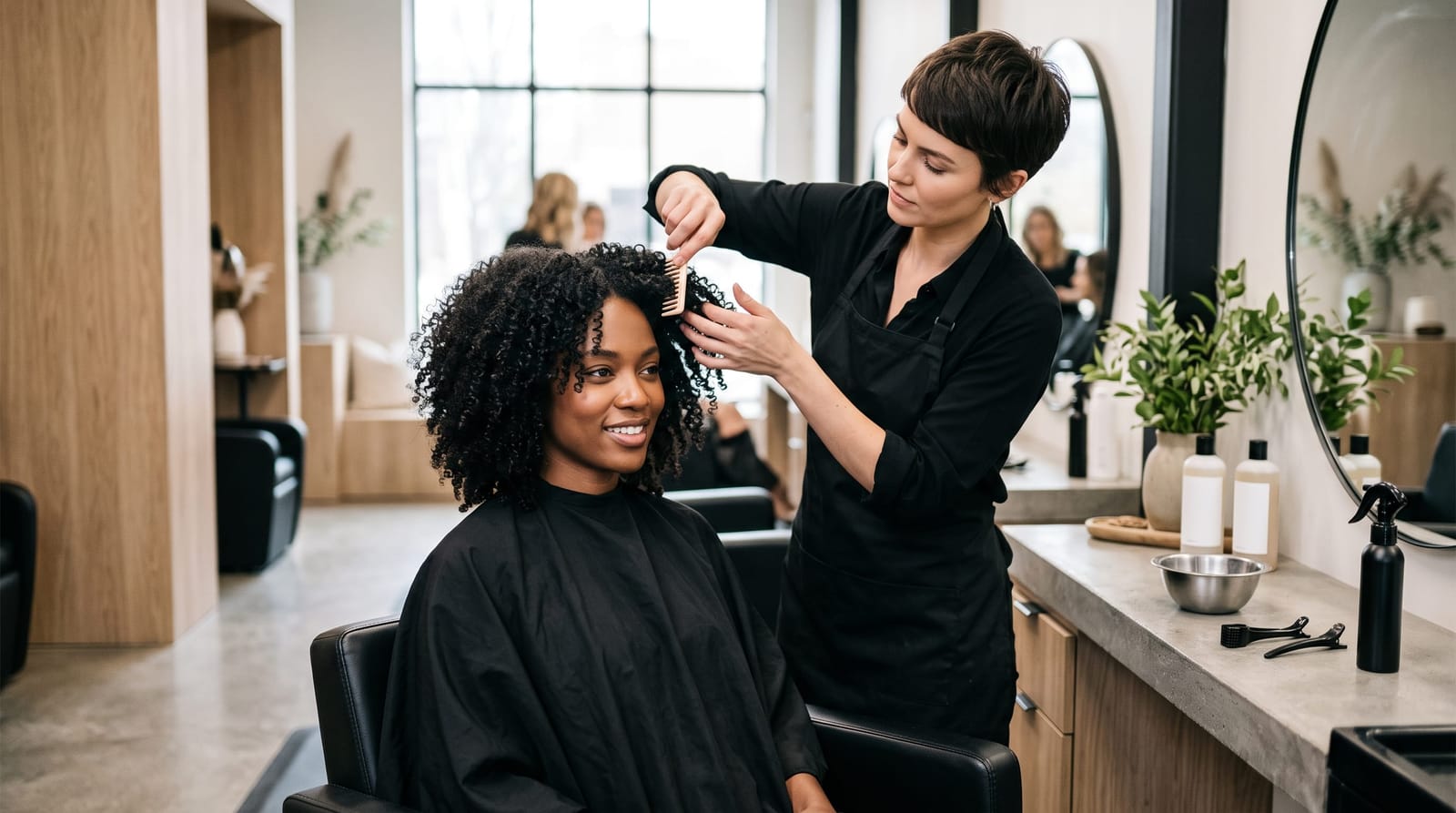
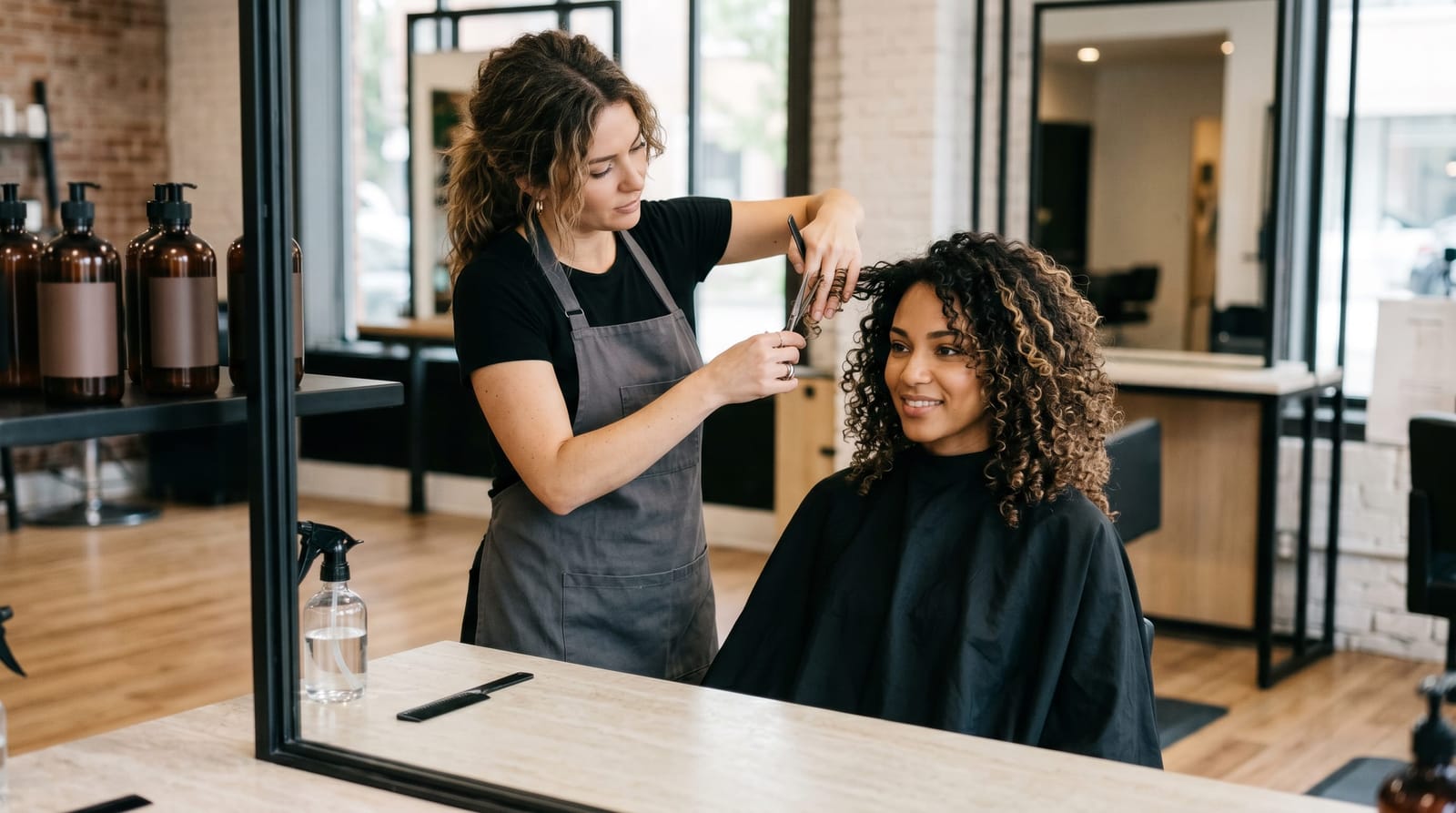
Finding the right salon for curly hair is one of the most common frustrations curly-haired women face, and for good reason. Not every stylist who offers a haircut is trained to work with the way curly hair actually moves, dries, and behaves. If you've ever walked out of a salon with curls that felt chopped, frizzy, or completely shapeless, you're far from alone. Studies suggest that more than 65% of women with naturally curly hair report being unhappy with at least one professional haircut they've received. That's a staggering number, and it speaks directly to the gap between general salon training and true curly hair expertise. This guide is here to close that gap. Whether you're searching for a curly hair cut salon in NJ for the first time or you're ready to leave a stylist who just isn't getting your curls, here are the essential tips for finding someone who actually specializes in what your hair needs.
1. Understand What "Curly Specialist" Actually Means
The term "curly specialist" gets used loosely, so it's worth knowing what it should actually mean before you start your search. A true curly hair specialist has sought out additional education beyond standard cosmetology training, which, on average, dedicates fewer than 10 hours of instruction to textured and curly hair types out of a full 1,500-hour curriculum. That's a significant gap in foundational training.
A curly specialist typically has training in methods specifically designed for curl patterns, waves, and coils. They understand that curly hair requires a completely different approach than straight hair: different cutting angles, different sectioning techniques, and a deep understanding of how each curl type springs up and shrinks once dry. They've also invested time learning how products interact with different porosity levels and curl densities.
What Credentials and Training to Look For
- Training in recognized curl-specific cutting methods (such as the Rëzo method or Ouidad-style techniques)
- A portfolio that shows consistent results across multiple curl types, not just one
- Experience with wavy (Type 2), curly (Type 3), and coily (Type 4) textures
- Ongoing education in texture-focused styling and product knowledge
In New Jersey, salons like Rëzo Salon and Milk Honey Soul in Springfield, NJ are well-known examples of studios that center their entire approach around curly and textured hair. When a salon's identity is built around curls, not just a side service offered alongside blowouts and color, that's a meaningful distinction.
2. Ask About Dry Cutting: It's Non-Negotiable
If there's one single technique that separates a curly hair specialist from a generalist salon, it's dry cutting. Traditional haircuts are performed on wet, straight-combed hair, which gives a stylist zero information about how your curls will actually fall, cluster, or coil once dry. Cutting curly hair wet is essentially cutting blind.
Dry cutting, or at minimum a combination of wet shaping followed by dry detailing, allows the stylist to see each curl as it naturally lives on your head. They can identify where weight needs to be removed to encourage curl definition, where a heavier section is pulling curls straight, and how the overall shape balances once your hair is completely dry and natural.
Questions to Ask About Cutting Technique
- "Do you cut curly hair dry or wet?"
- "How do you approach shaping curly hair differently than straight hair?"
- "Do you cut each curl individually, or do you section and cut in bulk?"
- "Will I see the final result before I leave, with my hair fully dry and styled?"
A specialist who cuts curly hair dry or uses a thoughtful dry-detailing finish will answer these questions with confidence and specificity. If a stylist's response is vague, or if they tell you they'll wet your hair first and blow it out before cutting, that's a sign their technique isn't curl-centered. Your curls deserve to be cut as they are, not as they appear when forced straight.
3. Evaluate the Consultation Before You Commit
A great curly hair cut starts well before the scissors come out. The consultation is where a skilled stylist gathers the information they need to truly personalize your service, and it should feel like a real conversation, not a rushed two-minute check-in.
During a proper curly hair consultation, your stylist should be asking about your daily routine, how much time you want to spend styling each morning, what products you currently use, and what your biggest frustrations with your hair have been. They should be touching your hair, assessing your curl pattern and density, and observing how your curls behave naturally, not just how they look when you walk in that day.
Signs of a Thorough Consultation
- The stylist asks about your lifestyle and maintenance preferences
- They assess your curl type, density, and porosity, not just the length you want
- They explain their planned approach and why it suits your specific curl pattern
- They ask about past experiences and what has or hasn't worked for you before
- They discuss product needs as part of the overall service plan
If you're preparing for your first appointment with a new curly specialist, our detailed guide on haircut consultation what to expect walks you through exactly what to bring and how to prepare so you get the most out of that first conversation.
4. Red Flags to Watch for When Choosing a Curly Hair Cut Salon in NJ
Knowing what to look for in a great curly specialist is important, but knowing what to walk away from is just as valuable. There are a few consistent warning signs that a salon isn't truly equipped to serve curly clients at the level they deserve.
Red Flags That Suggest a Salon Isn't Curl-Specialized
- No curly hair portfolio. If a stylist's social media or website shows mostly straight, blown-out, or heat-styled results, with very few natural curl transformations, their experience with curls is likely limited.
- They recommend blowing out your hair before cutting. This is one of the clearest indicators that a stylist isn't trained in curl-specific techniques. Blowing curls straight before cutting removes all of the information that makes a curly cut personalized.
- Vague answers about technique. A specialist should be able to clearly explain how and why they approach curly cuts differently. Hesitation or generic answers suggest they don't have a curl-specific methodology.
- No mention of curl typing or texture assessment. If a stylist never asks about your curl type, density, or porosity, they're likely treating your curls the same way they'd treat any other hair, which is exactly how curly clients end up disappointed.
- Heavily discounted "curl cuts" with no further detail. Deep discounting often signals a high-volume, low-specialization approach. Curly cuts require more time, more skill, and more personalized attention than a standard haircut.
Trust your instincts during a consultation. If you feel rushed, unheard, or like your stylist doesn't fully understand what you're asking for, it's completely appropriate to pause the appointment or seek a second opinion before committing to the cut.
5. Look for a Salon That Educates as Well as Executes
One of the most overlooked qualities in a great curly hair specialist is their willingness to teach you about your own hair. A truly skilled curly specialist doesn't just cut your hair and send you home: they leave you with the knowledge to maintain and style your curls between appointments.
This includes explaining which products work for your specific curl type and why, demonstrating how to apply them for the best definition and hold, and giving you honest guidance on styling methods, whether that means air drying, diffusing, or something else entirely. Curly hair care is highly individualized. What works for a Type 2 wavy might do nothing for a tight Type 3 coil, and a specialist understands that distinction clearly.
What Client Education Should Look Like
- Product recommendations explained in terms of your hair's specific needs, not just brand promotions
- A demonstrated styling technique before you leave so you can replicate results at home
- Honest guidance on styling decisions, for example, understanding the differences between curly hair blowout vs natural styling so you can make an informed choice for your lifestyle
- Maintenance advice for how often to trim, refresh, or restyle between salon visits
Research consistently shows that curly-haired clients who receive post-cut styling education report significantly higher satisfaction with their results, and they're far more likely to rebook with the same stylist. Education is part of the service, not an afterthought.
6. Consider the Full Range of Services a Curl Salon Offers
A salon that truly specializes in curly hair will offer a range of services built around the complete needs of curly clients, not just the cut itself. This matters because your curl journey often involves more than one decision at a time. You might be weighing a trim against a more significant shape change, or considering a smoothing treatment to manage volume without losing your natural texture.
Before booking at a curly hair cut salon in NJ, take a look at the full service menu and ask whether their stylists are trained across all curly-related services. For example, if you're curious about smoothing or frizz-reduction options, it's worth understanding your choices. Our guide to hair smoothening for curly hair covers the key things to know before booking that type of service, including how it affects your natural curl pattern over time.
The best curly hair salons will also carry a curated selection of professional products formulated specifically for curl and texture care, and their stylists will be able to explain why each product works, not just hand you a bag at checkout.
Related Topics Worth Exploring
Finding the right curly hair cut salon in NJ is the essential first step, but there's a lot more to explore when it comes to caring for and styling your curls with confidence. Some of the detailed topics covered in this content series include:
- What to prepare and bring to your first curly hair consultation with a new stylist
- How to identify your curl type and why it matters for product and styling choices
- The differences between diffusing, air drying, and blowout styling for curly hair
- Understanding curl-specific cutting methods and how they shape different curl patterns
Finding Your Curly Hair Specialist in NJ
Your curls are not a problem to be managed: they're a defining part of your style, and they deserve a stylist who understands that completely. The right curly hair cut salon in NJ will offer more than a haircut. They'll bring technique, education, a genuine consultation process, and a real investment in how your hair looks and feels every day. Look for dry cutting expertise, a strong curly portfolio, thoughtful client communication, and a salon culture that puts your curl type at the center of every decision. When you find that combination, the difference in your results will be immediate, and lasting.
Ready to experience a curly hair cut from a specialist who truly gets it? Book a consultation at Substance Salon and let's build a cut and care plan that works with your natural curl pattern, your lifestyle, and your personal style goals.