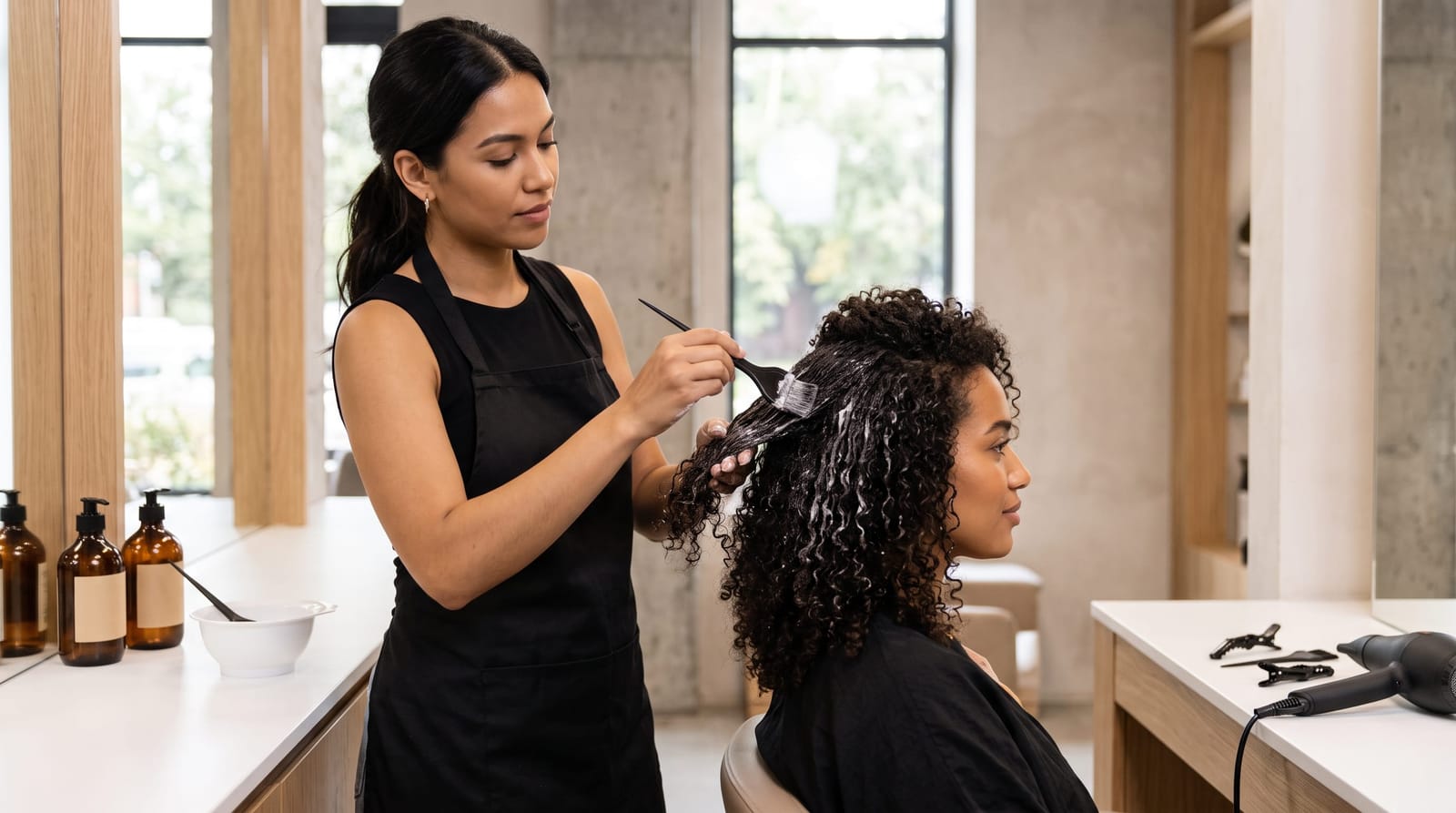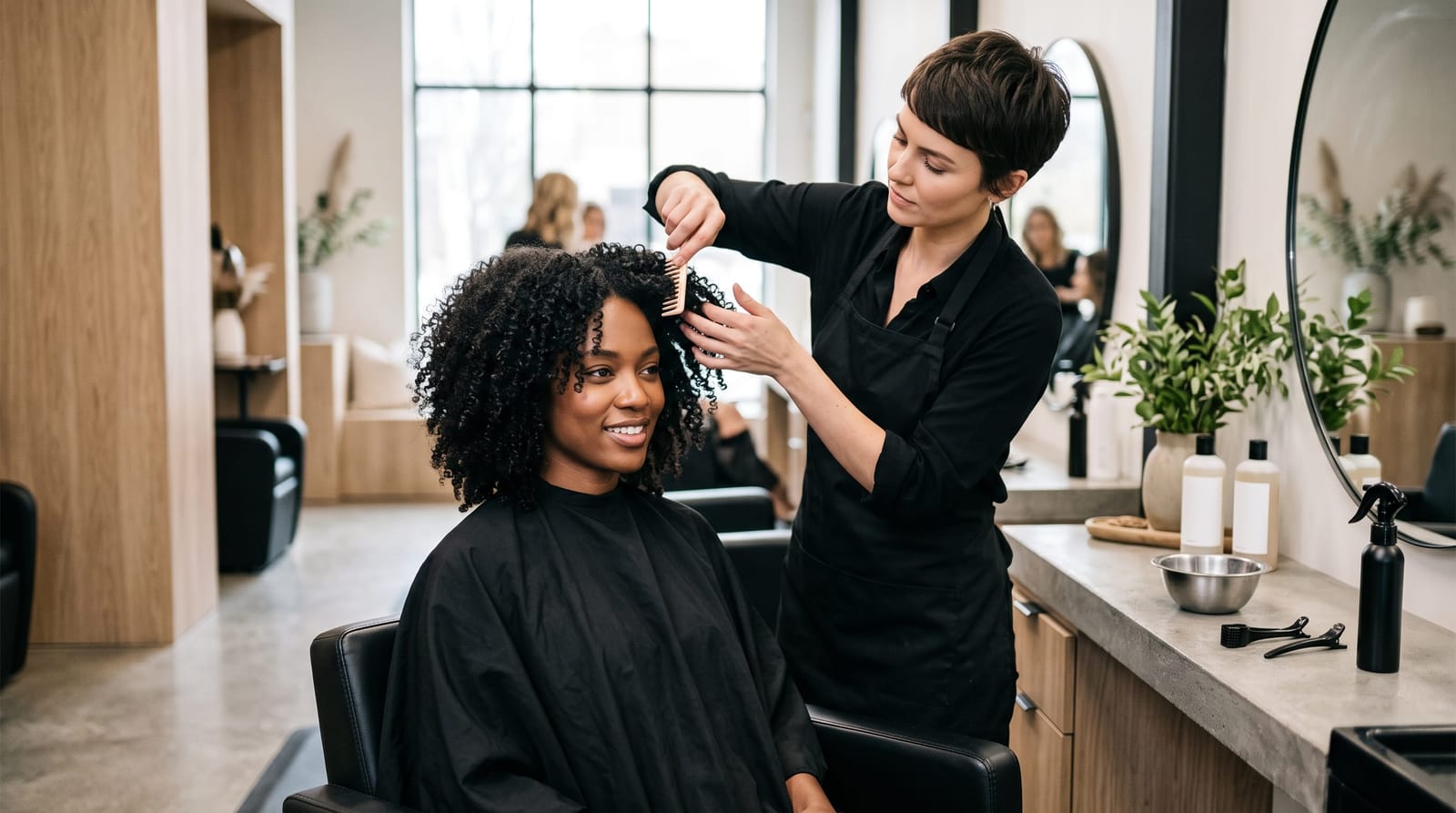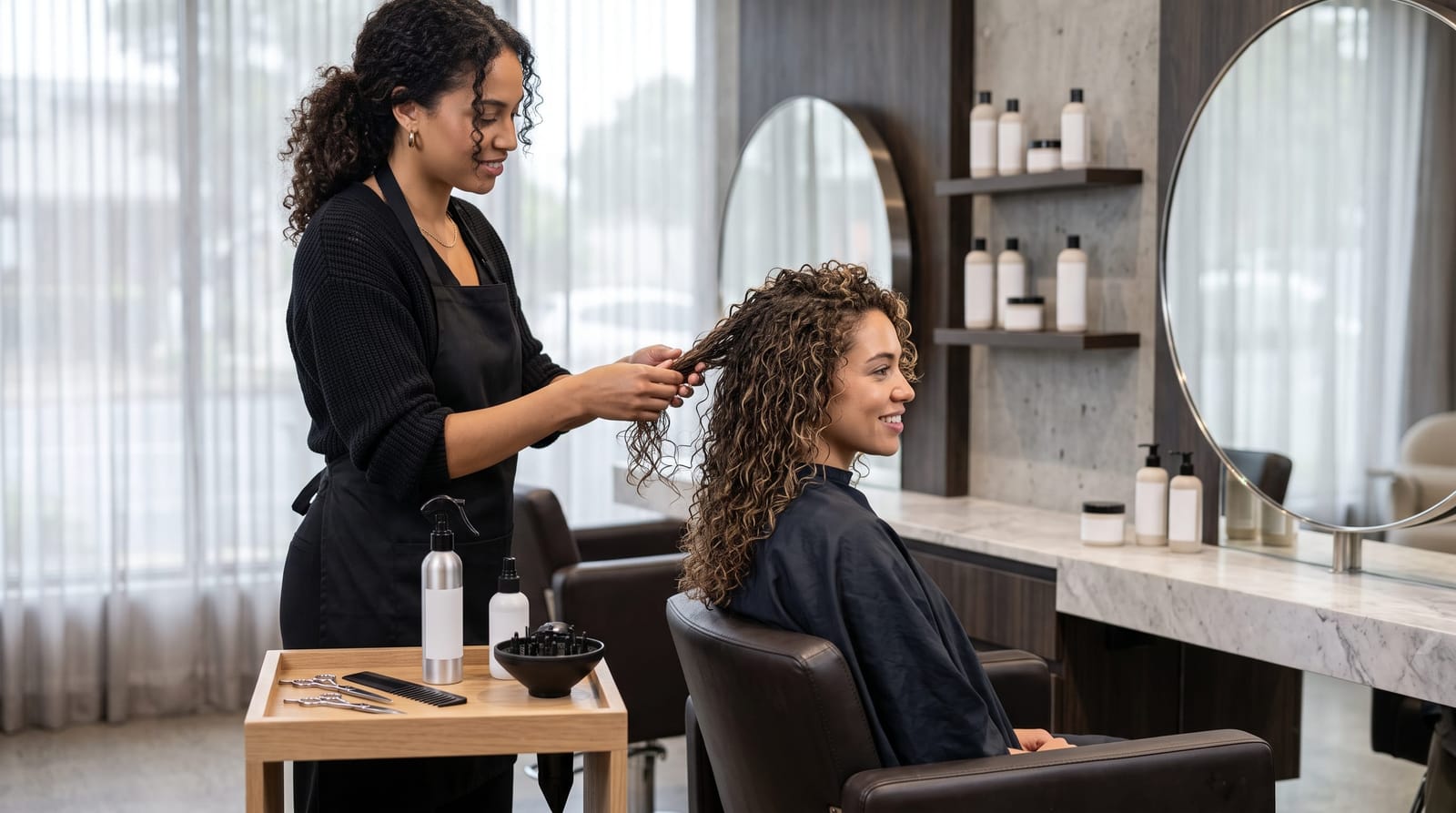
What Is a Curly Haircut and How Is It Different from a Regular Haircut?
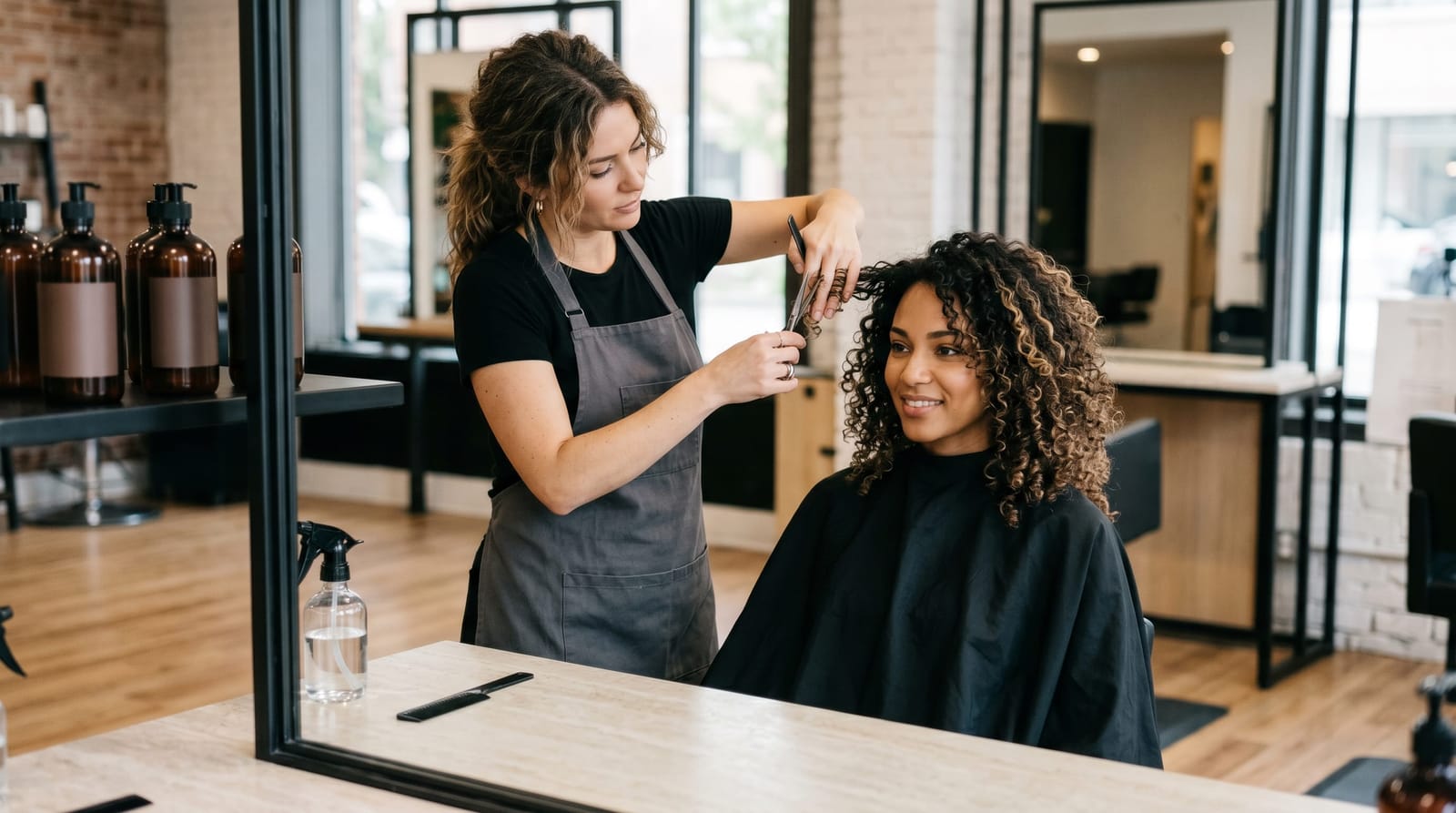
If you've ever left a salon with a gorgeous, bouncy cut, only to watch it shrink up, lose its shape, or go completely lopsided once your curls dried, you already know that something was missing from the process. That something is a curly-specific cutting technique. As part of our broader guide to curly hair care, cuts, and styling, this post breaks down exactly what a curly haircut is, how it differs from a standard salon cut, and why that difference matters so much when you're searching for the best haircuts for curly hair women actually love and can maintain at home.
The Standard Haircut: Why It Doesn't Always Work for Curly Hair
A traditional haircut is designed around straight or slightly wavy hair. The stylist works with wet hair, combing it down, sectioning it evenly, and cutting based on length measurements in a stretched state. The logic makes sense for straight hair: what you cut is essentially what you get.
For curly hair, this approach creates a fundamental problem. When curly hair is wet, it can stretch anywhere from 30% to 50% longer than its dry, coiled state. That means a stylist cutting your hair at a wet length of ten inches may actually be cutting it to a dry, curled length of six or seven inches, without realizing it. The result? You ask for a shoulder-length cut and end up with something much shorter once your curls spring back into shape.
Beyond length miscalculation, traditional cutting also tends to create bulk in the wrong places, flatten volume at the crown, and leave curly hair looking triangular or overly rounded rather than defined and balanced. It's not necessarily the stylist's fault: it's simply a technique designed for a different hair type.
What Makes a Curly Haircut Different: Dry Cutting and the Curl-by-Curl Approach
A curly-specific haircut is built around one core principle: work with the hair in its natural state. This typically means cutting dry, or at least finishing dry, so the stylist can see exactly how each curl behaves, where it falls, and how the overall shape comes together.
Here's how the approach breaks down in practice:
- Dry cutting: The stylist cuts hair after it has been washed, conditioned, and allowed to dry naturally. This gives a true picture of curl pattern, shrinkage, and volume before a single snip is made.
- Curl-by-curl cutting: Rather than pulling sections taut and cutting straight across, the stylist works with individual curl clusters, trimming each one based on how it naturally coils and sits.
- Shape-first thinking: The goal isn't just removing length: it's creating a specific silhouette that flatters the client's curl pattern, face shape, and lifestyle.
- Shrinkage awareness: A skilled curly hair stylist factors in shrinkage at every stage. Tighter curl patterns (Type 3B, 3C, 4A) can shrink up to 75% of their stretched length, while looser waves may only shrink 20-30%.
- Strategic layering: Layers are placed to remove weight and encourage curl definition rather than added randomly to create movement.
The result is a haircut that looks intentional and balanced, not just when freshly styled, but consistently, wash after wash.
Understanding Shrinkage: The Most Overlooked Factor in Curly Cuts
Shrinkage is the single biggest reason curly-haired clients end up unhappy after a traditional haircut. It's also one of the least-discussed topics in mainstream salon culture, which is part of why so many people with curly hair feel underserved.
Here's a quick reference for how shrinkage typically works by curl type:
- Wavy hair (Type 2A: 2C): Approximately 10-25% shrinkage from wet to dry
- Loose curls (Type 3A): Approximately 25-40% shrinkage
- Medium curls (Type 3B: 3C): Approximately 40-60% shrinkage
- Tight coils (Type 4A: 4C): Approximately 60-75% shrinkage or more
When a stylist accounts for shrinkage, they can cut to your desired dry length rather than your wet length. This is why a curly-specific stylist will often ask you to describe how long you want your hair to look after it dries, not how long it looks right after the shampoo bowl.
At Substance Salon, our stylists take the time to assess your individual curl pattern before picking up the shears, because no two clients have the exact same shrinkage factor, even with the same curl type on paper.
How Results Actually Differ: What You Can Expect from Each Approach
The difference in outcome between a standard haircut and a curly-specific one isn't subtle. Here's a straightforward comparison:
- Standard cut on curly hair: May appear even when wet but become uneven or shorter than expected when dry; can create a boxy or triangular shape; individual curls may look disconnected or frizzy
- Curly-specific cut: Delivers a shape that holds wash after wash; curl clusters sit together naturally; the silhouette is balanced whether hair is worn fully defined or diffused loosely
The popular styles that consistently look their best on curly hair, the layered curly bob, voluminous chin-length cuts, side-parted shapes, and lived-in curly layers, all require this intentional approach to achieve the right result. Styles like these aren't just about trends; they're about understanding how curly hair moves, settles, and behaves in real life.
It's also worth noting that how often you schedule your curly haircut plays a role in maintaining that shape over time. How often women with curly hair should get haircuts depends on curl type and personal goals, but most stylists recommend a visit every 8 to 12 weeks to keep the shape intact and prevent unwanted bulk from building up.
Why the Right Technique Leads to the Right Shape: Every Time
Curly hair is not unpredictable: it just requires a stylist who understands its language. When the cutting technique aligns with how your hair actually behaves, you stop fighting your hair and start working with it.
A well-executed curly haircut means:
- Your curls clump together cleanly without frizzy gaps
- Your length looks consistent from one side to the other
- Your style dries into a balanced shape without extra manipulation
- Volume sits where you want it, typically at the crown and mid-length, rather than at the bottom
Many curly-haired clients also find that a great curly cut reduces daily styling time significantly. When the shape is built in correctly, you're not spending twenty minutes trying to coax your hair into something it doesn't want to do.
Some clients also choose to extend the life of their curly cuts with professional blowouts for special occasions. If that's part of your routine, understanding how long a professional blowout lasts on curly hair can help you plan around your cut schedule without compromising the shape you worked to achieve.
Frequently Asked Questions
Is a curly haircut always done dry?
Not always, but dry cutting is strongly preferred for curly hair because it shows the true curl pattern and shrinkage before any cutting begins. Some stylists do a light trim wet and then refine the shape dry. What matters most is that the stylist accounts for how your hair will look and behave once it dries completely.
Can a stylist trained on straight hair still cut curly hair?
They can attempt it, but curly hair cutting requires specific training and practice that goes beyond standard cosmetology education. Stylists who specialize in curly hair have typically sought out advanced education in curl-specific techniques, which is why seeking out a curl-specialist or someone with demonstrated experience is so important for consistent results.
Will a curly haircut make my hair look shorter than I want?
Only if the stylist doesn't account for shrinkage properly. A skilled curly stylist will discuss your desired dry length upfront and cut accordingly, which is the opposite of what happens in a traditional wet cut. This conversation is one of the most important parts of a successful curly haircut consultation.
What are the best haircuts for curly hair women tend to request most?
Among the most-requested styles are layered cuts that remove weight without losing length, curly bobs at chin or collar length, and longer cuts with face-framing layers. The best haircuts for curly hair women ultimately depend on curl type, face shape, and lifestyle, which is why a thorough consultation always comes before any cutting begins.
The Bottom Line
A curly haircut isn't just a regular haircut performed on curly hair. It's a completely different approach: one built around dry cutting, shrinkage awareness, curl-by-curl precision, and shape-first thinking. When the technique matches the hair, the results are consistent, wearable, and genuinely flattering. If you've ever felt like salons just don't "get" your curls, the technique is almost always where the disconnect begins. Understanding what to look for, and what to ask for, is the first step to finally getting the cut your curls deserve.