The Curly Girl Method and Salon Services: What Your Stylist Needs to Know
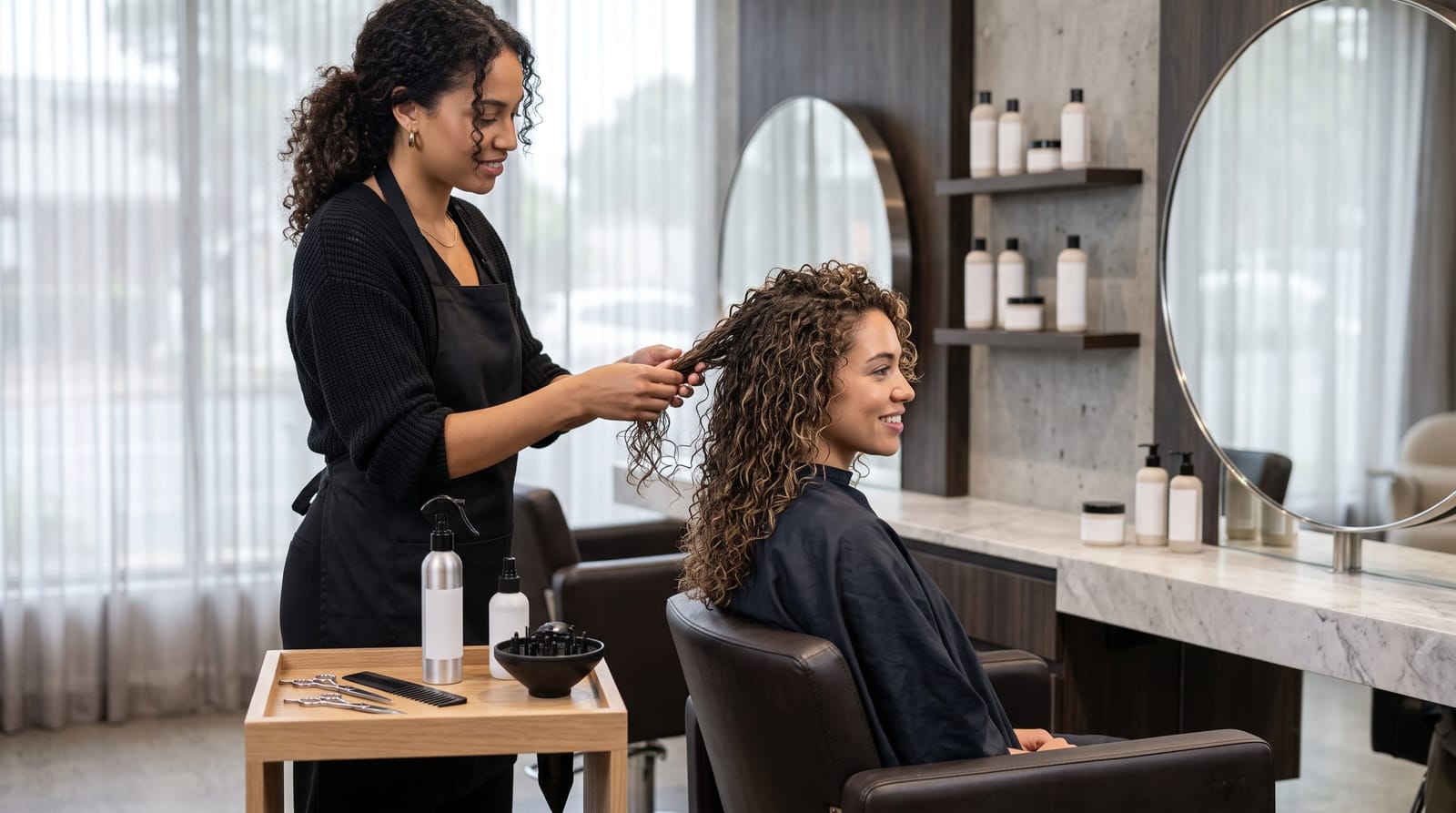
If you follow the Curly Girl Method, you already know that every product, technique, and tool you use matters. But what happens when you sit down in a salon chair? Bridging the gap between your at-home CGM routine and professional salon services can feel uncertain, especially if your stylist isn't familiar with curly-specific protocols. This post is part of our complete guide to curly hair care, and it focuses specifically on how to make salon visits work for you, not against your curls. Whether you're searching for the best haircuts for curly hair women or wondering which treatments are CGM-safe, understanding how to communicate with your stylist is one of the most important things you can do for your curl health and confidence.
1. Know What the Curly Girl Method Actually Requires Before Your Appointment
The Curly Girl Method, originally developed by Lorraine Massey and introduced in her book published in 2001, is a hair care philosophy followed by millions of people worldwide. Its core principles guide curly and wavy-haired people toward embracing their natural texture rather than fighting it. Before your next salon visit, get clear on what CGM means for your hair so you can communicate it confidently.
The Core CGM Principles That Affect Salon Services
- No sulfates: Sulfate-free cleansing is a CGM cornerstone. Harsh sulfates strip natural oils and disrupt curl pattern.
- No silicones: CGM followers avoid silicones that aren't water-soluble, as they can build up and weigh curls down over time.
- No heat without protection: Many CGM followers limit or eliminate heat styling entirely to preserve natural curl integrity.
- Diffusing over blow-drying: Air drying or diffusing on low heat is preferred over traditional blow-dry techniques.
- Moisture-first approach: Deep conditioning and hydration are prioritized over protein-heavy treatments in many CGM routines.
Studies on hair porosity and moisture retention show that curly hair has a structurally lifted cuticle compared to straight hair, making it approximately 3-5 times more prone to moisture loss. This is exactly why CGM principles focus so heavily on sealing moisture in. When your stylist understands these fundamentals, they can make informed decisions about every step of your service.
2. Communicate These 6 Things to Your Stylist Before the Service Begins
One of the biggest reasons curly clients leave salons disappointed is a breakdown in communication, not a lack of skill. Coming prepared with specific information transforms your consultation from a guessing game into a productive collaboration. The best haircuts for curly hair women always start with a thorough conversation, not scissors.
What to Tell Your Stylist at the Start of Every Visit
- Your CGM status: Simply say, "I follow the Curly Girl Method": any curly specialist will immediately understand what that means for product and technique choices.
- Your curl type and porosity: Whether you're a 2B wave or a 4A coil, and whether your hair is high or low porosity, shapes how products absorb and how cuts behave when dry.
- Your current at-home routine: Share what products you're using, specifically whether they contain silicones or sulfates, so your stylist can choose compatible backbar products.
- Your shrinkage factor: Curly hair can shrink anywhere from 30% to 70% when dry. Your stylist needs to cut with that in mind, especially for layering and length decisions.
- Your styling preferences: Do you diffuse? Air dry? Scrunch? Plop? These techniques affect how a cut behaves in real life, and your stylist should factor that into their approach.
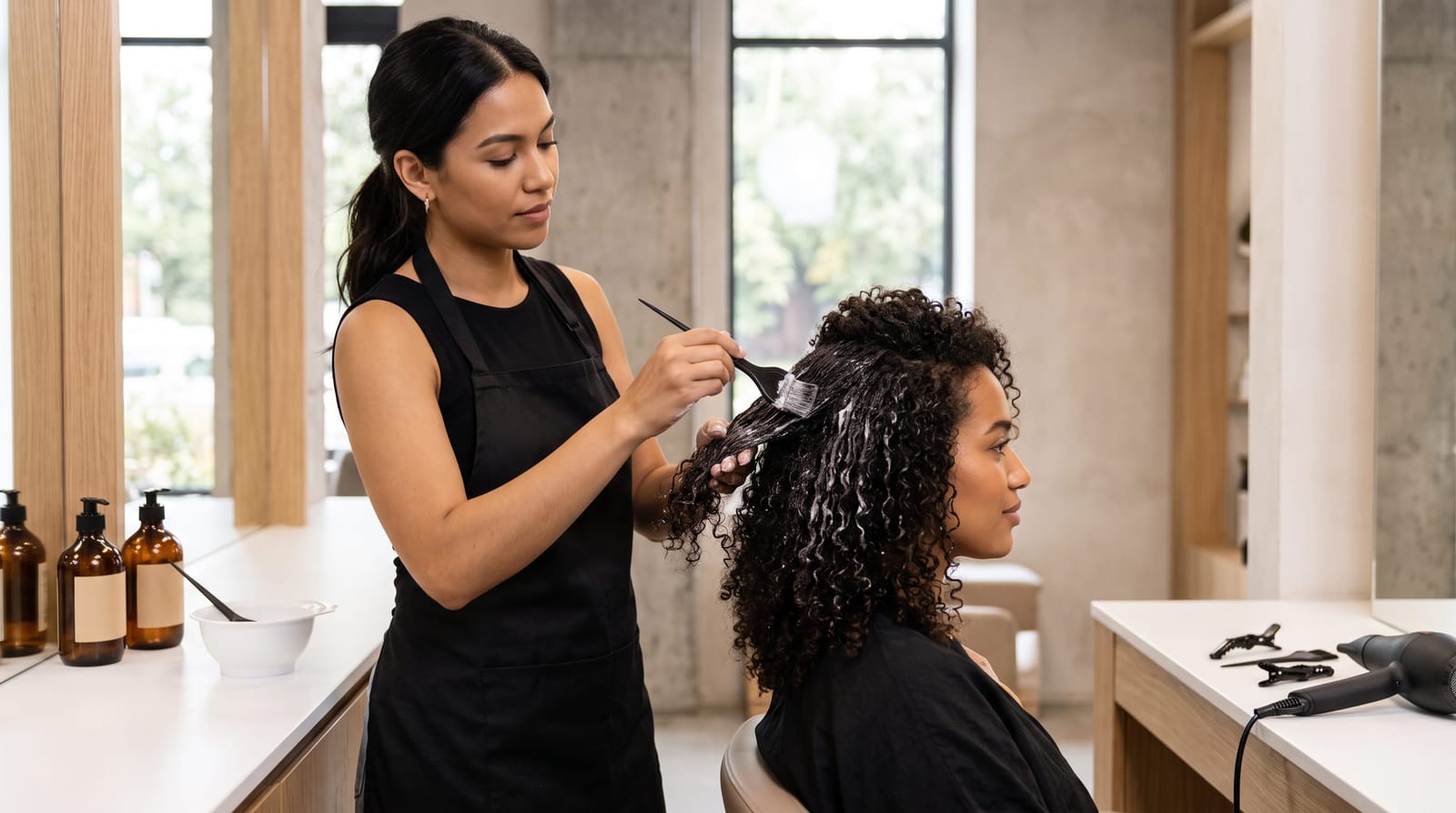
- Any previous chemical services: Color, relaxers, or keratin treatments change hair's texture and porosity. Full transparency here ensures your stylist chooses the right products and timing.
A curly-specialized stylist will ask most of these questions themselves, but being prepared to answer them clearly puts you both on the same page faster and leads to better results from the very first service.
3. Understanding Which Salon Products Are CGM-Compatible
One of the most common concerns for CGM followers visiting a salon is: what are they putting in my hair? It's a completely valid question, and a curly specialist should be able to answer it without hesitation. More curly-focused salons are building their backbar specifically around CGM-compliant formulas: a shift that reflects real demand from the curly community.
What to Look For in Salon-Used Products
- Sulfate-free shampoos and co-washes: Look for cleansers built around gentle surfactants like sodium cocoyl isethionate or decyl glucoside.
- Silicone-free conditioners and leave-ins: Any ingredient ending in "-cone," "-conol," or "-xane" is a silicone: check that the stylist's products don't include non-water-soluble versions.
- Glycerin-rich styling products: Glycerin is a humectant that draws moisture to the hair: a powerful ally for curls in the right humidity conditions.
- Alcohol-free or fatty alcohol-based products: Short-chain alcohols like isopropyl alcohol can dry out curls; fatty alcohols like cetyl or stearyl alcohol are moisturizing and CGM-friendly.
It's worth noting that not every CGM-following client is at the same level of strictness: some follow a "modified CGM" approach that allows certain silicones or occasional clarifying shampoos. That flexibility is perfectly fine, and a knowledgeable stylist will meet you where you are rather than applying a one-size-fits-all approach.
4. The Best Haircuts for Curly Hair Women: and How a CGM Stylist Approaches the Cut
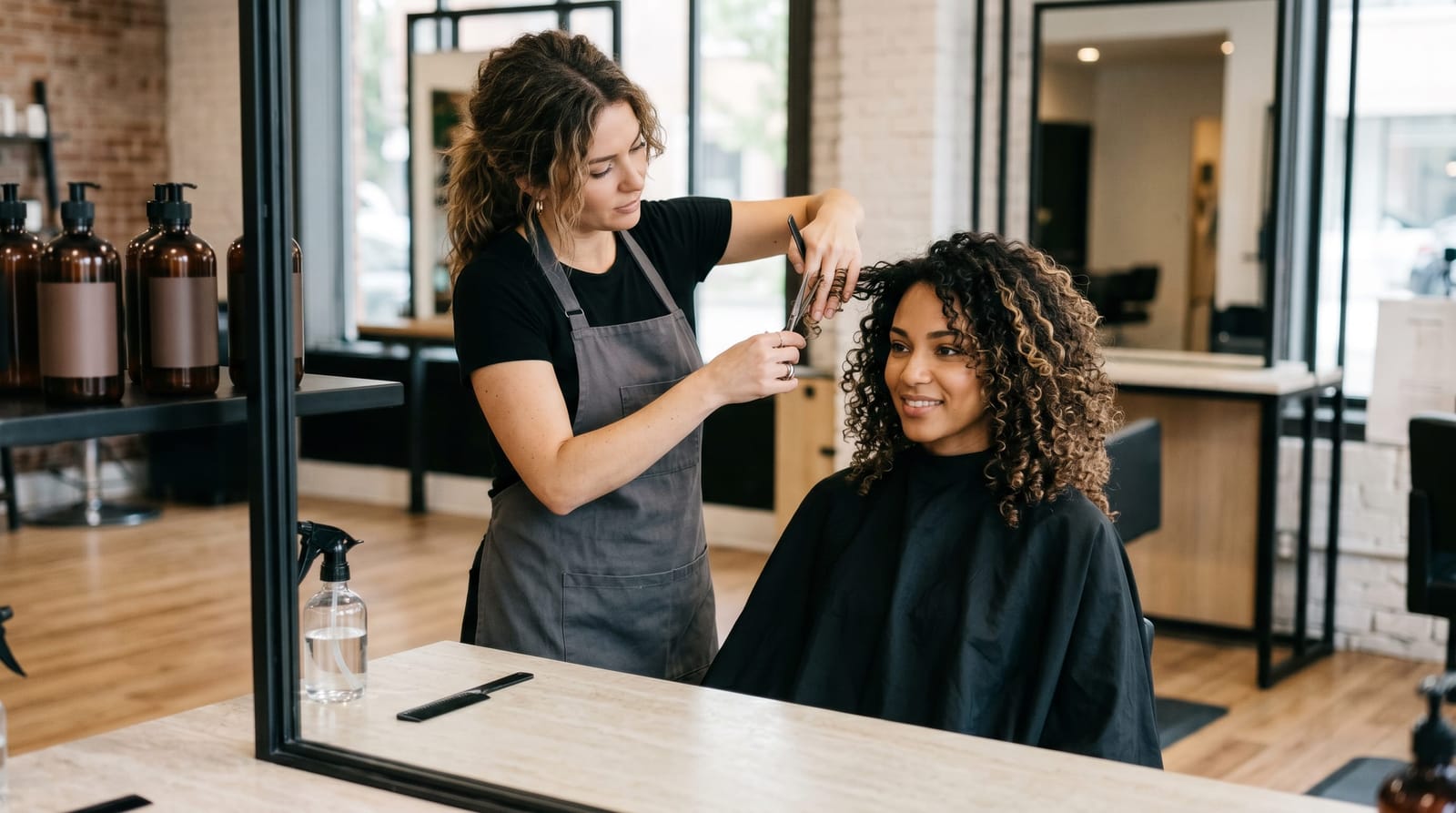
Cutting curly hair isn't simply a matter of applying a standard haircut technique to a different texture. The most skilled curly stylists use specific approaches that account for how curls behave, coil, and spring. Among the best haircuts for curly hair women, layered cuts and shape-based techniques consistently outperform blunt cuts because they remove bulk without sacrificing curl definition.
Popular CGM-Friendly Cut Styles
- The Curly Lob (Curl Bob): A shoulder-grazing length with internal layers that encourage curl formation rather than weigh it down. Ideal for 2C: 3B curl types.
- Layered Long Cuts: Long hair with strategic interior layers works beautifully for looser waves and spirals that need movement without losing length.
- The DevaCut or Dry Cutting Technique: Cutting hair while dry and in its natural curl pattern allows the stylist to see exactly how each curl falls, making this one of the most precise approaches available.
- The Curly Pixie: A bold, low-maintenance option for tighter curl patterns (3C: 4B) that celebrates natural shrinkage and curl volume as features rather than challenges.
Why Dry Cutting Matters for CGM Clients
Dry cutting is arguably the most important technical shift a stylist can make for curly clients. When hair is cut wet, it stretches: meaning a stylist is essentially guessing where each curl will land once it dries. Dry cutting removes that guesswork entirely. Research and professional consensus within the curly hair community consistently support dry cutting as the superior method for achieving consistent, wearable results across curl types. If your stylist always cuts your hair wet without discussing the alternatives, that's worth raising in your consultation.
5. CGM-Compatible Treatments: What Works and What to Reconsider
Beyond the cut, many curly clients want to explore salon treatments, and this is where CGM compatibility gets more nuanced. Some treatments can genuinely support a CGM routine, while others work against it. Knowing the difference helps you make informed decisions rather than feeling pressured into services that don't align with your hair goals.
Treatments That Tend to Work With CGM
- Deep conditioning treatments: Professional-strength moisture treatments using CGM-compliant ingredients are a perfect complement to an at-home curl routine, especially for high-porosity hair.
- Protein treatments (used strategically): Light protein treatments can restore curl elasticity without violating CGM principles, provided the formula is silicone-free. Frequency matters: over-proteining is a real concern for some curl types.
- Scalp treatments: Gentle, clarifying scalp care using CGM-safe ingredients addresses buildup without disrupting the moisture balance your curls depend on.
Treatments That Require a Deeper Conversation
If you're considering a hair smoothening for curly hair, it's important to understand how different smoothing systems interact with your CGM routine before booking. Some smoothing treatments use silicone-heavy formulas that essentially pause your CGM routine, not necessarily a dealbreaker, but something to make a conscious decision about with your stylist rather than discovering after the fact.
6. What to Expect From a Curly Specialist Consultation
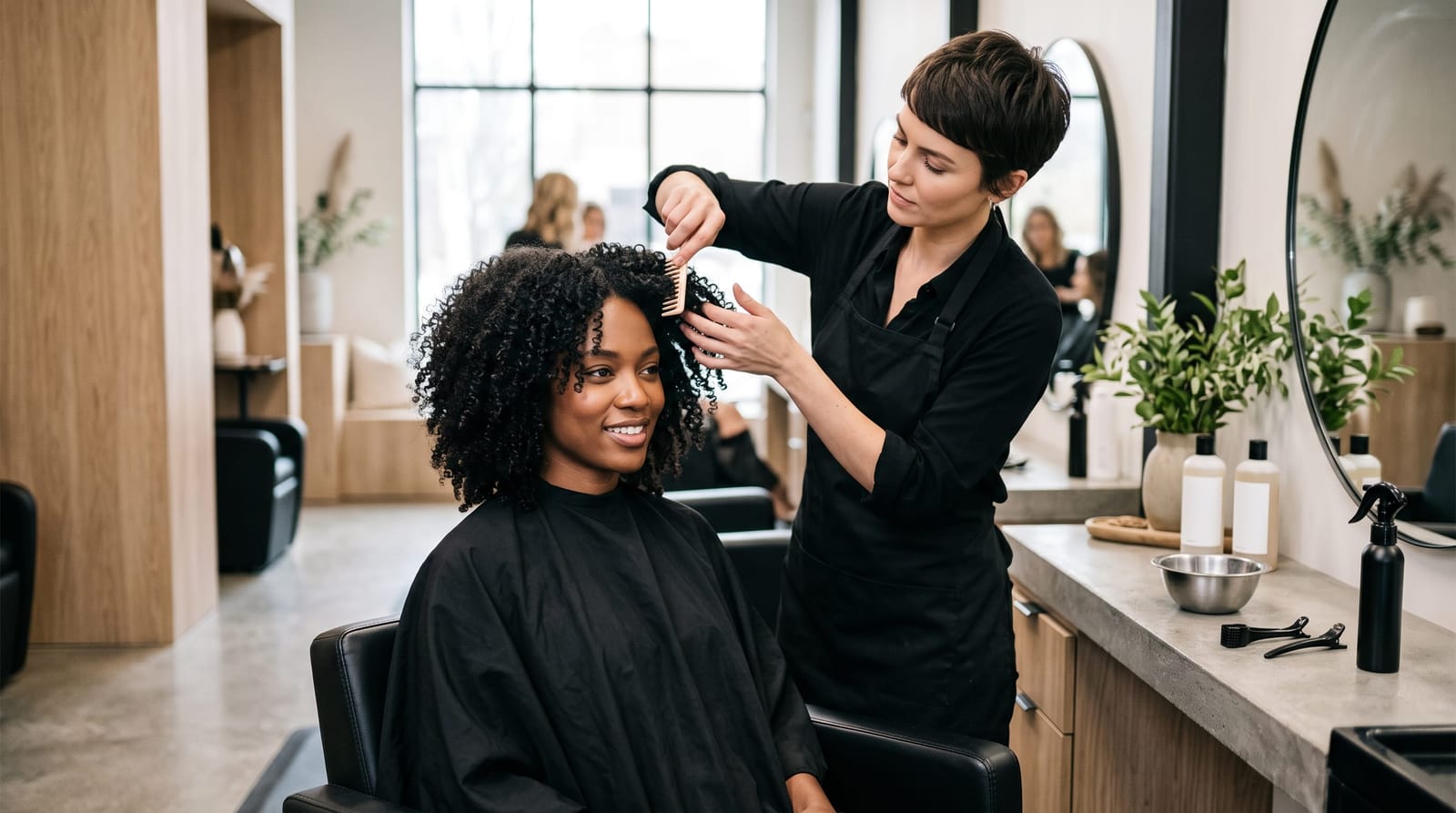
A thorough consultation with a curly specialist looks noticeably different from a standard salon consultation. It takes longer, covers more ground, and results in a customized plan rather than a generic service. If you're weighing your options between a curly hair blowout vs natural styling, for example, a good consultation will help you think through which approach genuinely supports your curl goals long-term.
What a Strong Curly Consultation Covers
- A detailed assessment of your curl pattern, porosity, and density: ideally with your hair in its natural, product-free state
- A review of your current at-home routine and any CGM adjustments you've already made
- An honest conversation about your lifestyle: how much time you realistically spend on styling each morning matters enormously for cut and length recommendations
- A clear explanation of what products will be used during your service and why
- Guidance on how to maintain your results at home, including specific product recommendations
- A realistic discussion of what results to expect from your first visit versus subsequent visits
Curly hair typically takes 2-3 salon visits before a new cut fully "settles" into its ideal shape, especially if your hair has been cut incorrectly in the past and is growing out of an unflattering shape. A specialist will set this expectation upfront, which is a sign of expertise, not limitation.
If you're still figuring out how to identify the right salon for your texture, our guide to finding a curly hair cut salon NJ walks through exactly what qualifications and red flags to look for before booking.
Related Topics Worth Exploring
This post covers how CGM principles connect with professional salon services, but there's more to the picture. Related topics within the curly hair care space include understanding your specific curl type and how it affects product choices, navigating the world of curly hair color services, and building a low-manipulation maintenance routine that extends the life of your salon cut. These details layer on top of the foundation covered here and help you build a truly cohesive curly hair care approach.
The Bottom Line
The Curly Girl Method doesn't have to create friction with your salon experience, in fact, the two should work together seamlessly when your stylist genuinely understands curly hair. The best outcomes happen when clients come prepared, stylists ask the right questions, and both parties are working toward the same goal: hair that looks and feels like the best version of itself. At Substance Salon, our curly specialists are trained in CGM-compatible techniques and products, and every curly service begins with the kind of consultation that puts your texture first. Ready to experience a curly-focused salon visit that actually gets it? Book your curly hair consultation at Substance Salon today.