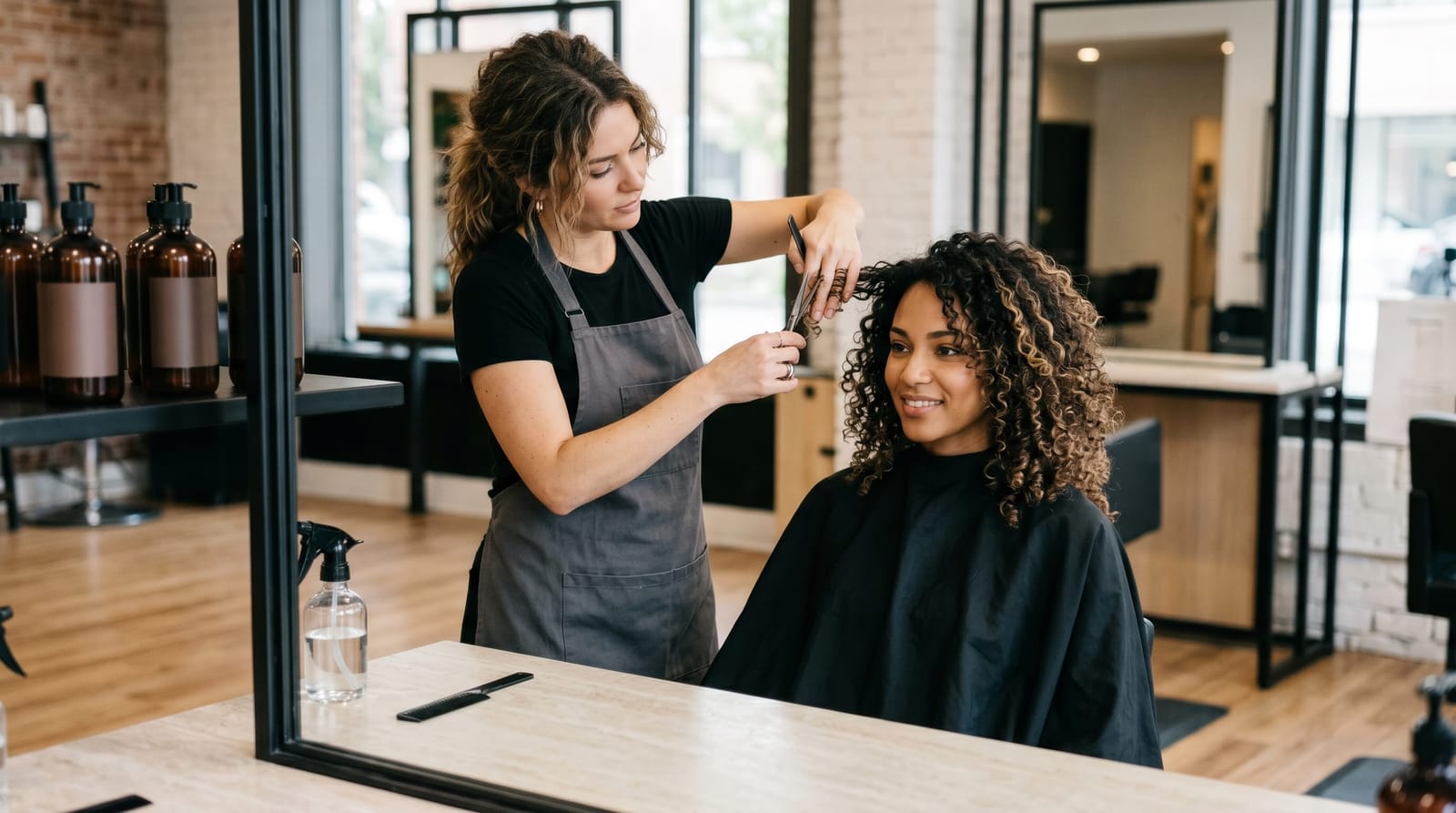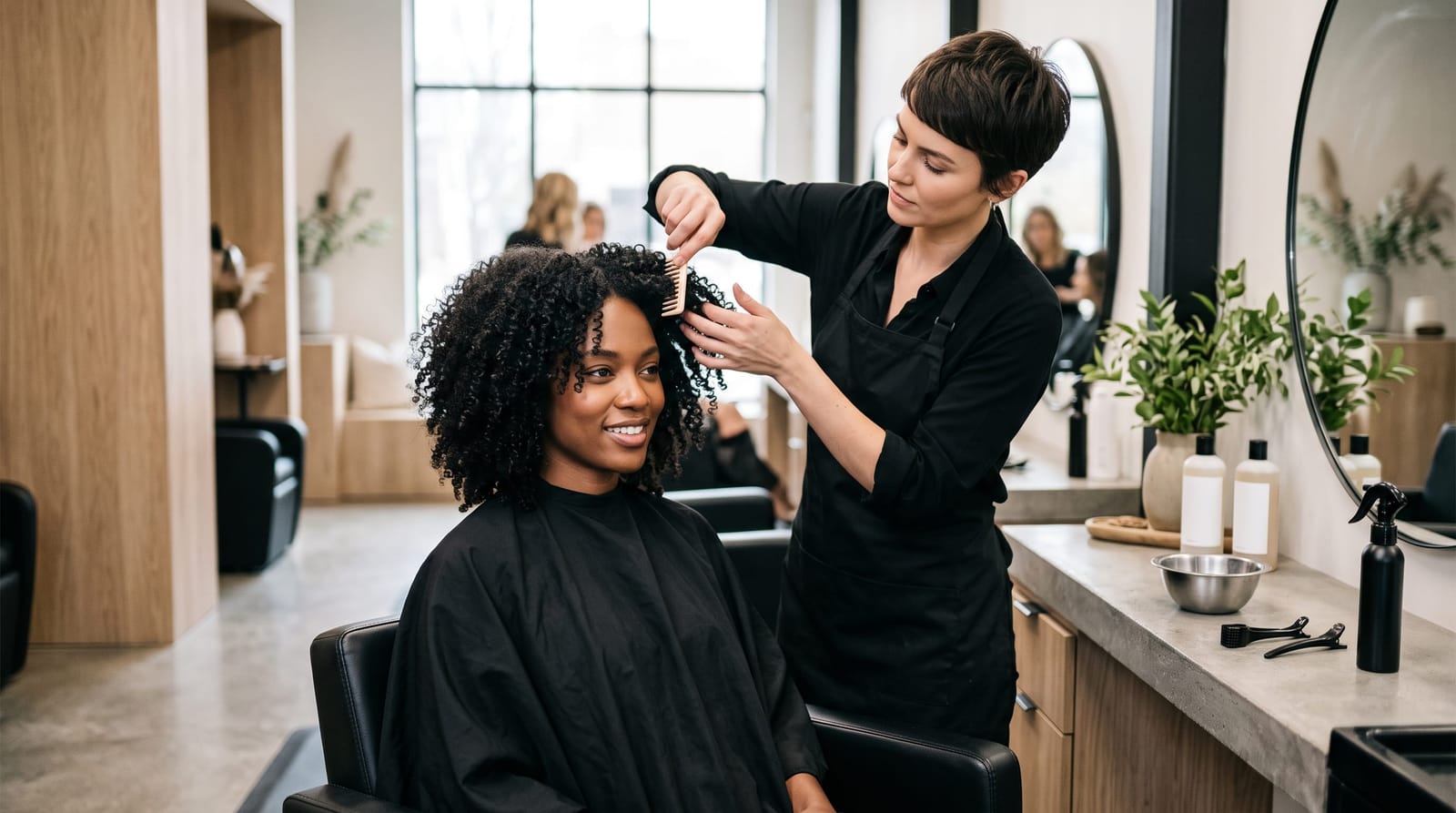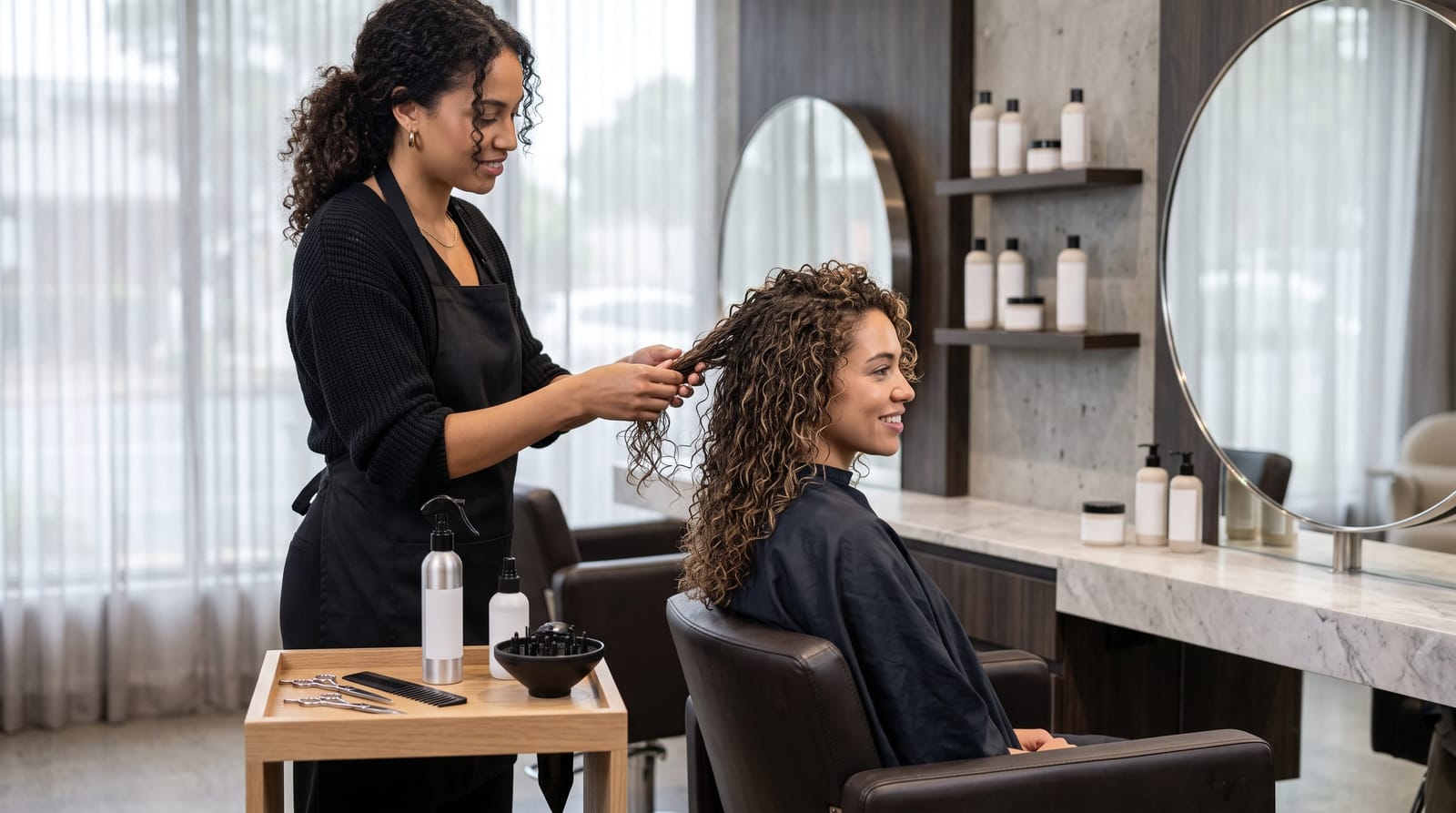
What to Bring to Your First Curly Hair Consultation
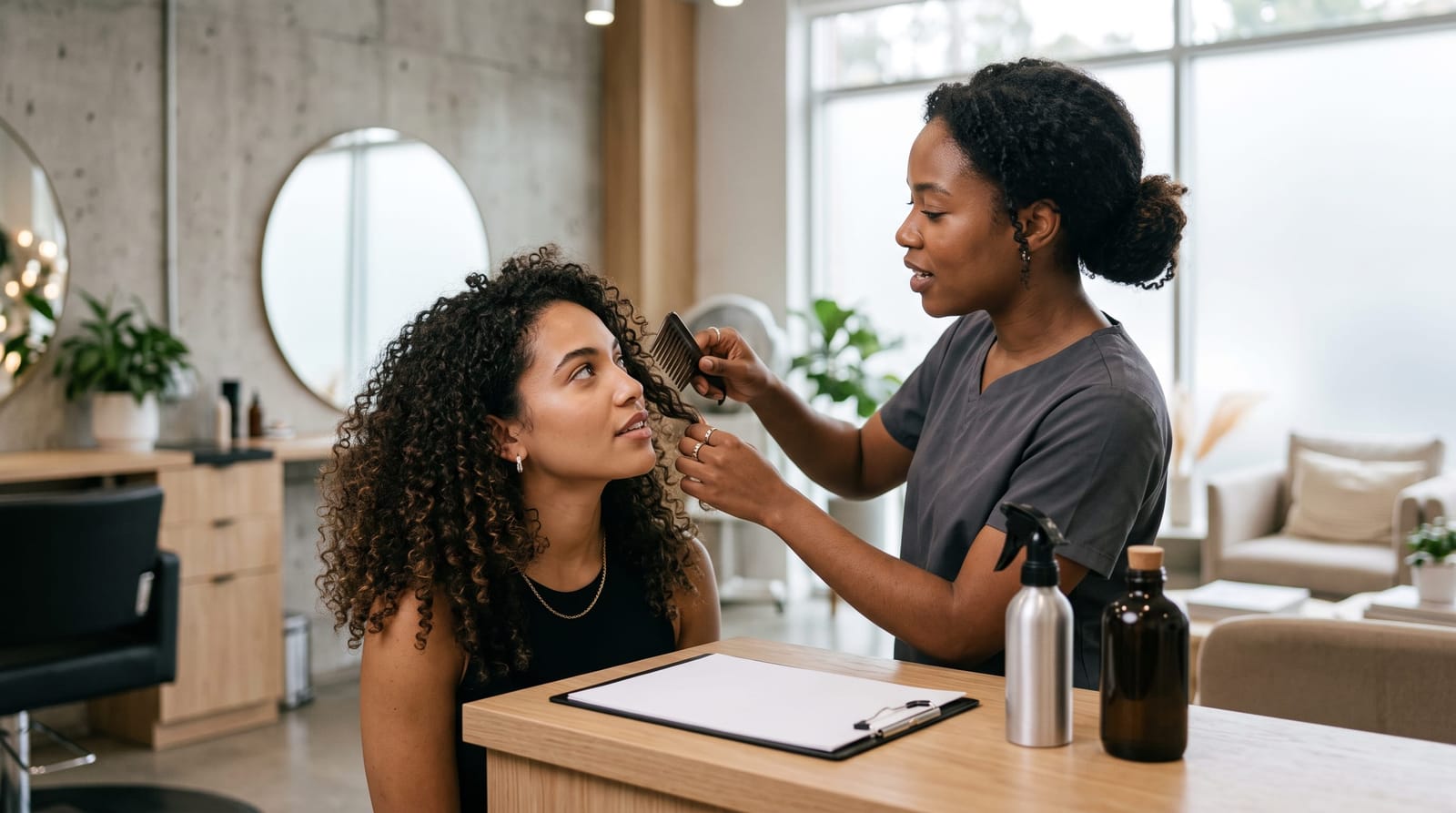
Booking your first appointment with a curly hair specialist is an exciting step, but walking in unprepared can mean leaving with results that don't quite match what you had in mind. A curly hair consultation is different from a standard haircut consultation. Your stylist needs specific information about your curl pattern, your hair history, and your lifestyle before a single snip happens. This guide covers exactly what to bring, how to show up, and what questions to ask so your first visit sets the foundation for a long, successful relationship with your curls.
How to Arrive: Natural Curls or Blown Out?
One of the most common questions before a first curly hair consultation is simple: should I come in with my hair curly or straight? The answer matters more than most people realize.
In most cases, arriving with your natural curl pattern is the best approach. When your curls are in their natural state, your stylist can see exactly how your hair moves, where it clusters, how much it shrinks, and where it tends to fall flat or lose definition. Curl shrinkage alone, which can range anywhere from 20% to 50% or more depending on your curl type, dramatically affects how a cut is shaped and where length is removed.
If you typically wear your hair both curly and straightened, let your stylist know during the booking call. Some curly specialists may want to see both states across two separate visits before committing to a major cut, particularly if you want a style that translates well either way. The key is transparency about how you actually wear your hair day to day, not just how you wear it on a good hair day.
Arriving with freshly washed, product-free hair or hair styled with your usual routine are both acceptable. What to avoid: arriving with heavy buildup, old product layering, or hair that's been slept on for several days without refreshing. Your stylist needs to see your curls behaving as normally as possible.
Inspiration Photos: What Actually Helps Your Stylist
Bringing reference photos to a haircut consultation is one of the most useful things you can do, but the photos you bring need to be the right kind. This is where many clients unintentionally make the process harder.
According to stylists who specialize in curly hair, approximately 70% of clients arrive with inspiration images featuring a curl type that differs significantly from their own. A fine 2B wave and a dense 4A coil behave completely differently and require entirely different cutting techniques. Your stylist isn't dismissing your inspiration: they're translating it to what will actually work for your specific texture.
Here's what makes a helpful inspiration folder:
- Photos of people with a similar curl type to yours, not just a similar length or color
- Multiple angles: front, side, and back views give your stylist a fuller picture of the shape you're drawn to
- Both "love it" and "not this" examples: showing what you want to avoid is just as valuable as showing what you love
- Real-life photos over editorial images: magazine-perfect curls are often professionally styled for hours; realistic lifestyle photos give a more honest reference point
If you use Pinterest or Instagram to collect hair inspiration, take a few screenshots and have them ready to pull up easily. A well-curated folder of four to six images is more useful than scrolling through hundreds.
Your Hair History: What Your Stylist Needs to Know
A curly hair specialist will ask questions during your consultation that go beyond "how much do you want to take off." Understanding your hair's background helps your stylist anticipate how it will behave during and after the cut.
Come prepared to share the following:
- Chemical history: Have you had any relaxers, keratin treatments, Japanese straightening, or color services? Even treatments done 12 to 18 months ago can affect curl pattern and how your hair responds to cutting techniques.
- Heat use habits: How often do you use a blow dryer, flat iron, or diffuser? Frequent high-heat styling can temporarily or progressively alter curl definition.
- Product routine: What are you currently using, and is it working? Bring a photo of your current product lineup if you're unsure how to describe it.
- Previous haircut experiences: What has worked in the past? What went wrong? If a past cut left your curls looking triangular or weighed down, that's critical information.
- Lifestyle and maintenance time: How much time do you realistically spend on your hair each morning? Be honest: a 10-minute routine and a 45-minute routine call for very different cut decisions.
None of this information is meant to limit your options. It helps your stylist make recommendations that will actually perform well in your real life, not just in the salon chair.
Questions to Ask During Your Curly Hair Consultation
The consultation is a two-way conversation. You're not just answering questions: you're also evaluating whether this stylist is the right fit for your hair and your goals. Studies show that clients who actively participate in their consultations report significantly higher satisfaction with their final results, with one survey noting that communication quality was the top factor in client retention at specialty salons.
Consider asking your stylist the following:
- "What cutting method do you use for curly hair?": A specialist should be able to explain whether they cut curly hair dry, wet, or a combination of both, and why they use that approach for your specific curl type.
- "How do you handle different curl patterns in the same head of hair?": Many people have multiple curl types from root to tip or section to section. A skilled curly specialist knows how to work with that variety rather than against it.
- "What would you recommend given my hair history and goals?": This open-ended question gives your stylist room to share their professional perspective, which may include a phased approach rather than one dramatic cut.
- "What should I expect the transition period to look like?", If you're moving away from a damaged or chemically treated section of hair, it's helpful to understand what the growth-out phase might involve.
A stylist who welcomes these questions and answers them clearly is demonstrating exactly the kind of expertise and communication style that leads to consistently great results. If you're exploring what makes curly hair cutting different from standard techniques, our guide on curly hair cutting methods and what to expect from a specialist stylist breaks down the key differences in approach.
Frequently Asked Questions
Do I need a separate consultation appointment, or does it happen the same day as my haircut?
At many curly hair specialist salons, the consultation happens at the beginning of your appointment, not as a separate visit. However, if you're planning a significant change, like transitioning from chemically straightened hair or making a major length change, booking a standalone consultation first can be worth it. It gives both you and your stylist more time to plan without the pressure of the cut itself happening the same day. Ask when you book which format works best for your situation.
What if I don't know my curl type?
That's completely fine: identifying your curl type is part of what the consultation is for. Curl typing systems (like the 2A through 4C classification) can be useful shorthand, but they're just one piece of the picture. Your stylist will also assess your curl density, porosity, and how your hair naturally clusters before making any recommendations. Arriving without a label is perfectly acceptable.
How long does a curly hair consultation typically take?
A thorough consultation with a curly specialist usually takes between 15 and 30 minutes before any cutting begins. During this time, your stylist will assess your hair in person, look at your inspiration photos, discuss your history and goals, and share their recommendations. Rushing this step shortchanges the process: the best curly cuts come from stylists who take the time to understand your hair before picking up their shears.
Should I wash my hair before my appointment?
Generally, yes: arriving with clean hair (or hair styled as you normally would within the last day or two) helps your stylist see your curl pattern clearly. If you're unsure whether to wash before or after, check with the salon when you book. Some curly specialists prefer to wash your hair in-salon so they can see how it behaves from a completely clean slate, while others prefer that you arrive already styled so they can evaluate your natural routine.
Setting Your Curls Up for Success
Walking into a haircut consultation with the right information, your hair history, thoughtful inspiration photos, honest answers about your lifestyle, and a few smart questions ready, transforms a standard appointment into the beginning of a real hair journey. Curly hair deserves that level of intention. At Substance Salon, our curly hair specialists in North Jersey take the time to understand your unique texture before making any decisions. For a deeper look at how we approach curly hair care from cut to styling, explore our complete guide to curly hair care, cuts, and salon services in NJ: it's the resource we wish every curly client had before their first visit.